On this page
Yes—inspect the roof before installing solar in most cases
Get the roof evaluated before solar panels are attached, especially if its age, repair history, or current condition is uncertain. A separate roof inspection may add less value when the roof is recent, its records are complete, and the solar project already includes a qualified, documented roof and structural assessment.
This is more than a search for active leaks. The decision is whether the roof covering, drainage details, penetrations, and supporting structure are suitable for the planned installation. The U.S. Department of Energy recommends confirming that the roof can support solar and notes that a solar installer, roofing expert, or structural engineer may help determine suitability.
Match the next step to what you know
| Current situation | Practical next step |
|---|---|
| Recent roof with permits, invoices, and no known problems | Confirm in writing what the installer will examine and whether structural capacity is included. |
| Roof age or replacement history is unknown | Arrange a roof-condition inspection before finalizing panel layout. |
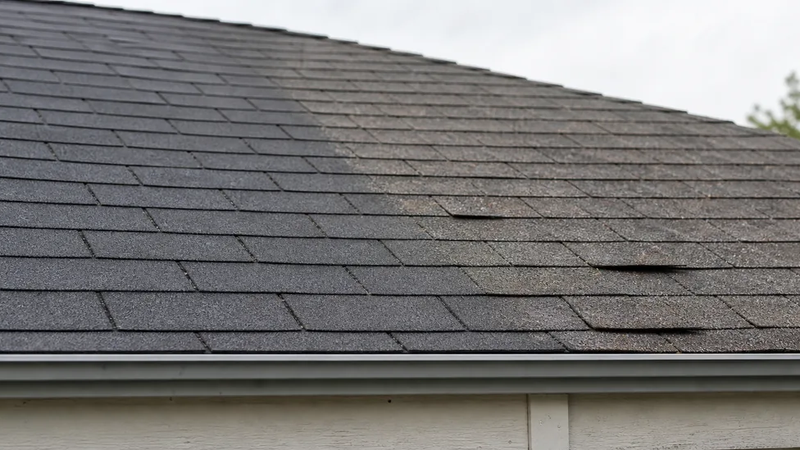
| Leaks, sagging, loose materials, damaged flashing, or recurring repairs are present | Resolve the roofing concern before installation proceeds. |
| The proposal changes penetrations, attachment points, or load paths | Ask whether a roofing specialist or structural engineer must review that specific plan. |
Roof age matters because panels can remain in place while the roof beneath them ages. If replacement is likely soon, coordinating the roof work and solar project can avoid placing an array over a covering already near replacement. Age alone, however, does not prove that a roof is sound or failing.
What the inspection should cover
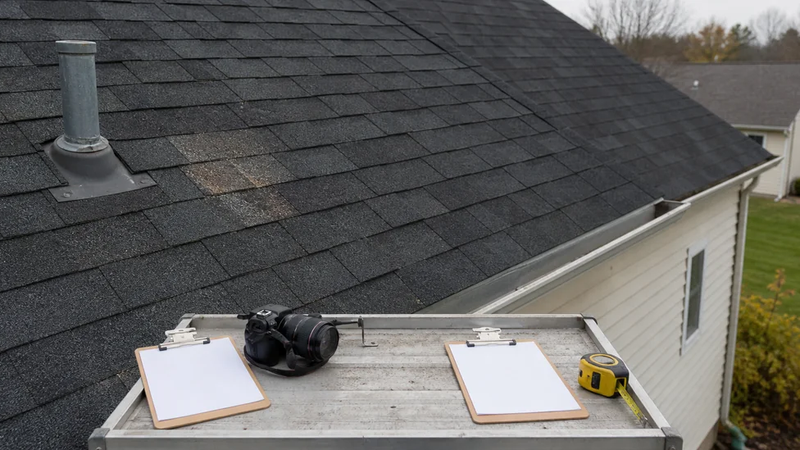
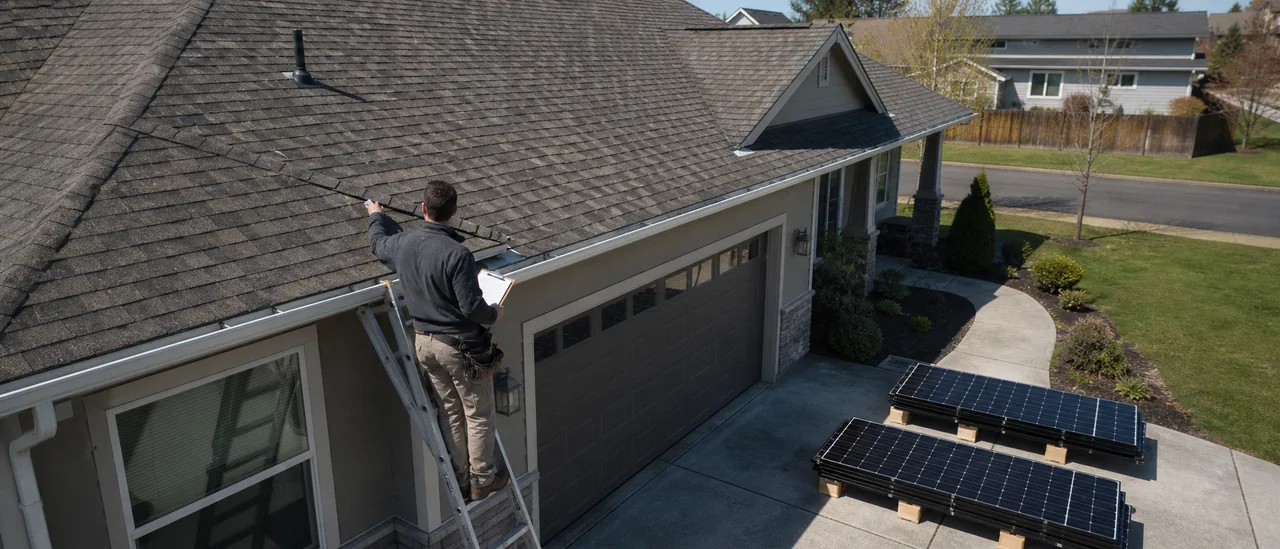
Define the scope before hiring anyone. The American Society of Home Inspectors’ standard includes visible roofing materials, drainage systems, flashing, skylights, chimneys, and roof penetrations. For a pre-solar decision, the report should also identify how the roof was viewed, which areas were inaccessible, and whether the planned mounting areas were actually examined.
Ask whether the assignment includes the accessible underside of the roof and signs of past moisture entry. Also clarify whether the evaluator is assessing only roof condition or is qualified to address structural capacity for the proposed panel and racking loads. Those are related questions, but they are not interchangeable.
A visual roof inspection has limits
It can document visible, accessible conditions on the inspection date. It generally cannot confirm concealed underlayment or decking, predict future leaks, establish remaining service life, or prove structural adequacy unless those tasks are expressly included.
Do not confuse three different inspections
A pre-installation roof-condition review answers whether the existing roof is a reasonable base for the proposed work. The solar designer’s structural and attachment review addresses the actual system plan. A permit or final inspection checks the installed project under local requirements; the Department of Energy notes that rules vary by jurisdiction.
One review does not automatically replace the others. Obtain a written report, read its exclusions, and compare it with the solar proposal. Useful records include the roof installation date, permits, repair invoices, warranty terms, leak history, inspection photographs, and the proposed attachment layout.
If condition or structural capacity remains unresolved, pause the installation decision until the appropriate roofing or structural professional evaluates that question. The goal is a defined answer to a defined scope—not a broad promise that nothing hidden can go wrong.