On this page
Submit a report when the written process calls for it
Do not automatically send every roof inspection report to the manufacturer. Submit one when the written warranty or claim procedure requires it, when the manufacturer requests it, or when a technical review is already open. Otherwise, keep the complete report with the roof records until the correct recipient and purpose are clear.
That rule changes when a deadline, active leak, safety concern, or planned repair requires prompt notice. Federal roofing guidance says roofs under warranty should be inspected according to the warranty terms and the warrantor should be contacted before repairs when coverage may apply. The Federal Trade Commission also advises consumers to check whether the claim goes to the manufacturer or seller and to retain the warranty and purchase record.
Submission and notice are not always the same step. A warranty may require notice first, followed by photographs, invoices, samples, access, or a particular form. Sending a long report to a general inbox does not necessarily complete that process.
Use the purpose to make the decision
| Situation | Practical decision |
|---|---|
| The warranty or written instructions request an inspection report | Submit it through the stated channel and retain proof of delivery. |
| A representative asks for specific findings or photographs | Send the requested material, plus the report pages needed to explain it. |
| The report documents routine maintenance with no open warranty issue | Keep it in the property file unless the warranty requires periodic submission. |
| The report is a preliminary visual review with unresolved findings | Clarify its limits or obtain the requested follow-up before treating it as final evidence. |
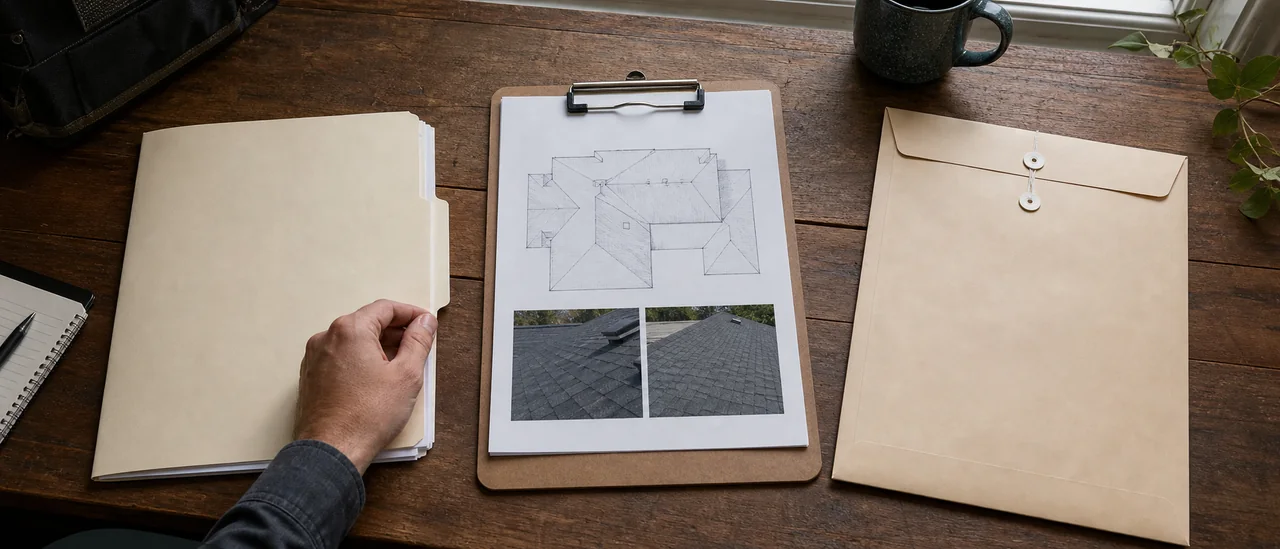
Before sending anything, identify the roof system, installation date, property, report date, inspector, and areas examined. Include photographs with locations, a description of observed conditions, access limitations, excluded areas, and any testing actually performed. Separate observed facts from opinions and recommendations.
Do not revise an inspector's conclusion to make it sound more definite. If the report contains unrelated personal, financial, or security information, provide only the relevant pages or a properly redacted copy unless the full document is required.
A report does not decide warranty coverage
An inspection report records observations within a stated scope. The applicable warranty defines its own covered conditions, exclusions, notice steps, and decision process; technical findings and coverage conclusions are different questions.
Check what the inspection could establish
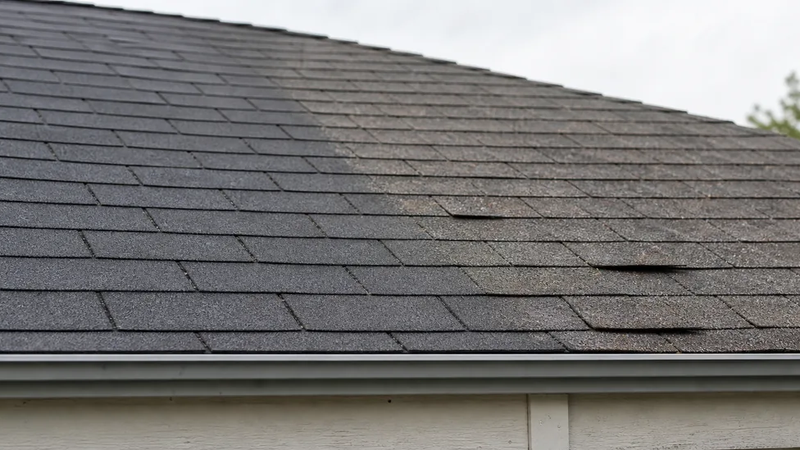
A visual inspection can document visible displacement, openings, surface wear, flashing conditions, drainage concerns, and accessible signs of moisture. It cannot by itself confirm every concealed layer, moisture extent, attachment condition, manufacturing cause, or remaining service life.
Professional roofing guidance describes visual review as valuable for locating and characterizing damage, while also identifying other methods for different questions. Those methods include water testing, moisture surveys, electronic leak detection, microscopy, and exploratory openings. Federal technical guidance likewise calls for core testing to confirm anomalies found by nondestructive methods.
The report should therefore name its inspection standard or method, roof areas included, weather and access conditions, exclusions, instruments used, and whether findings need destructive or laboratory confirmation. A manufacturer receiving a visual-only report may reasonably ask for additional evidence before reaching a technical conclusion.
Preserve the record and follow the stated channel
Read the current warranty and submission instructions before authorizing repairs that could alter the reported condition. Note the notice deadline, required recipient, file format, identifiers, and requested supporting documents. Send copies rather than the only originals, keep the unedited report, and save the confirmation number, email, or delivery receipt.
If the correct process or the report's technical limits remain unclear, ask the warranty administrator what evidence is required. A qualified roof evaluator can address unresolved condition questions, but the evaluation should match the specific issue instead of expanding into an unnecessary full-roof investigation.