On this page
Yes—at the right times
Solar-panel mounts should be inspected for leaks after installation and whenever there is a warning sign, roof work, or suspected movement. Routine checks also make sense within the roof and solar system’s documented maintenance plan. The answer changes when there are no roof penetrations: an inspection should then focus on membrane contact, drainage, and other attachment details rather than looking for penetrations that do not exist.
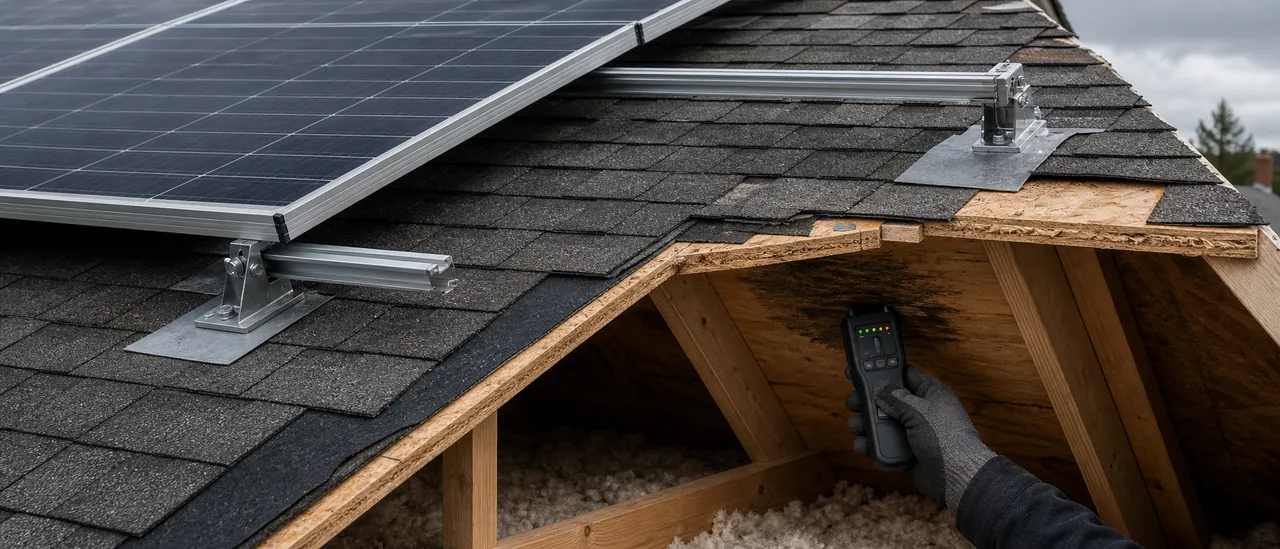
Here, “mounts” means the feet, brackets, rails, and attachment points that hold the array to the roof. A leak inspection is not merely a glance at the panels. It evaluates those attachment details, the flashing or weatherproofing around them, nearby roof covering, and accessible areas below.
When an inspection is worth doing
An inspection is justified when any of these conditions applies:
- The array was recently installed, removed, or reinstalled.
- Interior staining, damp insulation, peeling paint, or musty odors appear below or near the array.
- A roof repair or replacement disturbed attachment points or flashing.
- Strong wind, falling debris, or another event may have shifted racking or damaged nearby roofing.
- A mount looks loose, a flashing edge is lifted, sealant is split, or roof material is abraded.
- The installer’s, roof manufacturer’s, or maintenance documents call for a check.
The U.S. Department of Energy explains that a local-government inspection normally follows installation to check code compliance. That does not mean every mount is leaking—or guarantee that a later leak cannot develop. A leak-focused check still depends on current roof conditions and symptoms.
Inspection scope matters
A ground-level or interior review can document symptoms without confirming the condition of every concealed attachment. The report should state which mounts, roof surfaces, and areas below were actually accessible.
What changes the answer
Mounting design and roof type determine what the inspector should examine. A penetration-mounted system needs attention at fasteners, flashing, sealant where specified, and the surrounding roof covering. A ballasted or otherwise nonpenetrating system may still warrant checks for abrasion, compressed roofing, displaced pads, blocked drainage, or contact between racking and the roof surface.
The urgency also changes with evidence. Active dripping, wet electrical equipment, sagging material, or a visibly displaced array calls for prompt professional evaluation. A dry attic and intact-looking exterior details are reassuring, but they cannot rule out concealed moisture or a leak that appears only during wind-driven rain.
Do not loosen mounts, lift panels, or apply a hose test as a casual do-it-yourself check. Those actions can disturb the details being evaluated and may require roof and solar-system access. An inspection can begin from the ground and accessible interior areas, then move to qualified roof and solar evaluation if the evidence warrants it.
Documents and a sensible next step
Gather the array layout, installation photos, permit or final-inspection records, mounting instructions, roof warranty terms, and past repair records. These show where attachments should be and which flashing or sealing method was specified. Local permit inspection confirms code-related installation requirements at that time; it is not a guarantee against a later leak.
If there are no symptoms and the documentation shows appropriate inspection and maintenance, follow that schedule rather than inventing a universal annual deadline. If moisture is present or the roof details cannot be assessed safely, use a qualified roof inspector or roofer who can coordinate with a solar professional when panels or energized components affect access.