On this page
Do not buy the house unconditionally while extension cords are serving as permanent wiring. Proceed only if a licensed electrician defines the full scope and the contract gives you an acceptable, enforceable way to address it. The answer can change when the “permanent wiring” is actually one temporary, properly used cord that will be removed.
First confirm what you are seeing
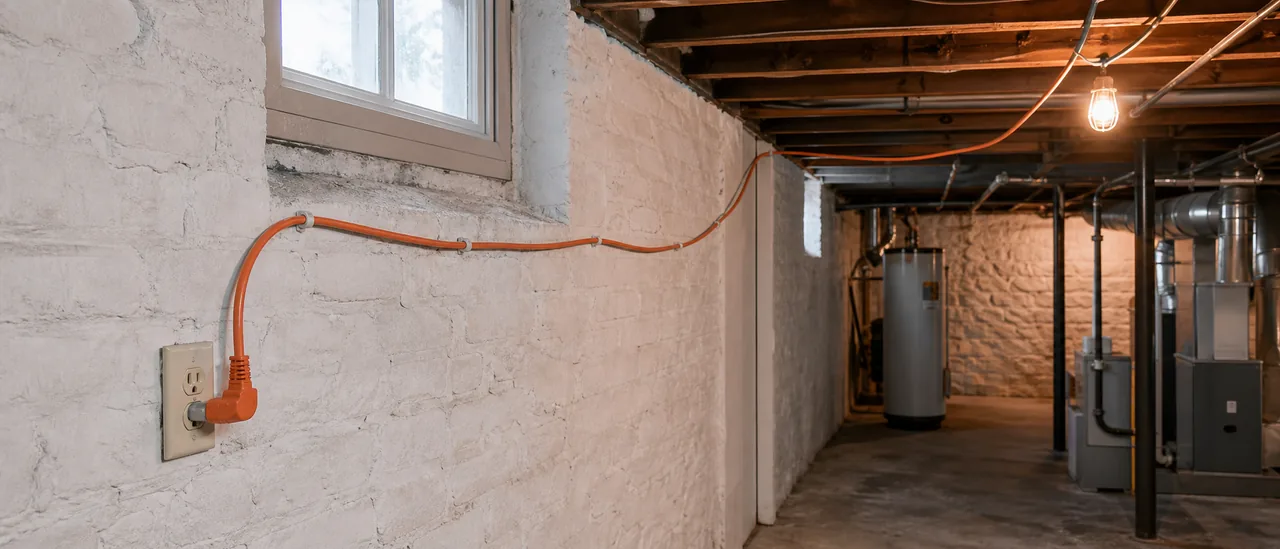
An extension cord is a factory-assembled flexible cord with a plug on one end and a connector on the other. Plugging in a portable lamp for a short period is different from routing a cord through a wall, fastening it to the building, concealing it, or relying on it indefinitely because permanent receptacles are missing.
The U.S. Consumer Product Safety Commission advises using extension cords only when necessary and temporarily. It also warns that overloaded cords and power strips can present a serious fire hazard. OSHA’s rule for workplaces is not a residential building code, but it reflects the same important distinction: with limited exceptions, flexible cords may not substitute for a structure’s fixed wiring or run through walls, ceilings, or floors.
Treat damaged or concealed cords as an immediate safety concern
Do not energize, handle, or cover a cord that is cracked, warm, scorched, spliced, pinched, or disappearing into a building cavity. Ask the seller to keep the affected equipment off until a qualified electrician evaluates it.
Decide from the scope, not the label
One visible cord does not reveal the repair cost or the condition of the rest of the electrical system. It may indicate a simple shortage of receptacles, an improvised supply to a garage or appliance, or broader unpermitted work. The decision should turn on what the cord serves, where it runs, whether similar work exists elsewhere, and what permanent correction is required.
Use these findings to set your threshold:
- More support for proceeding: the condition is limited and accessible; an electrician provides a written scope; permits and final inspection can be obtained where required; and the price or repair terms account for the work.
- Reasons to pause or renegotiate: multiple rooms rely on cords, cords enter walls or panels, evidence suggests overheating, the seller will not allow further evaluation, or the proposed repair is only to unplug and hide the condition.
- Reasons to walk away: the electrical scope remains unknown before your contingency expires, the required correction exceeds your budget or risk tolerance, or your lender, insurer, or local authority will not accept the unresolved condition.
Do not expect a general home inspection to settle everything
A standard inspection is valuable for documenting visible conditions. Under the current ASHI Standard of Practice, inspectors examine readily accessible, visually observable installed systems and components listed in the standard.
That standard is not technically exhaustive. It does not require identifying concealed conditions, determining code compliance, specifying repair methods or costs, or advising whether to purchase. A clean-looking inspection report therefore cannot establish that hidden wiring is acceptable. Ask the inspector to identify inaccessible areas and recommend further evaluation where appropriate.
Make the transaction terms specific
Before accepting a seller repair, define who will perform it, whether permits are required, which circuits and locations are included, what completion records must be delivered, and whether you retain a reinspection right. A vague promise to “fix extension cords” may not cover concealed wiring, damaged receptacles, or the reason permanent power was never installed.
If you are considering a credit instead, compare the electrician’s written scope with your available funds and closing timeline. Confirm separately whether an unresolved electrical condition affects appraisal, lending, insurance, or occupancy; those answers depend on the property, policy, loan, contract, and jurisdiction.
Before your inspection or attorney-review deadline, obtain a written evaluation and repair scope from a licensed electrician, then have your home inspector, lender, insurer, and real-estate attorney or contract professional review the relevant findings and transaction terms.