On this page
You can buy—but only with the uncertainty addressed
Buying a house with vermiculite insulation can be reasonable when the material is contained, will remain undisturbed, and the price and transaction terms reflect the finding. Pause the purchase when renovation, damage, routine attic access, or an unresolved financing condition makes disturbance likely.
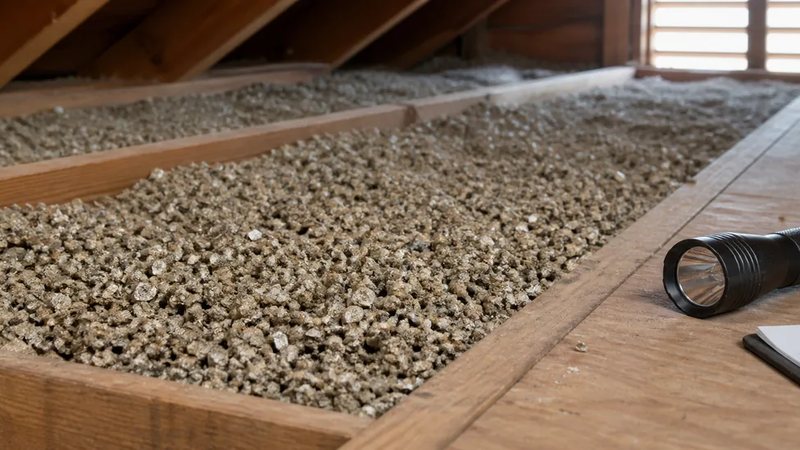
Vermiculite attic insulation is a loose, pebble-like material. Its presence does not prove asbestos contamination. However, the U.S. Environmental Protection Agency advises homeowners to assume vermiculite insulation may be contaminated and leave it undisturbed.
Do not collect your own sample
Do not rake, sweep, vacuum, move, or bag the insulation during the buying process. EPA says improper sampling can release fibers and recommends that a trained, accredited asbestos professional take any needed samples.
Factors that support proceeding
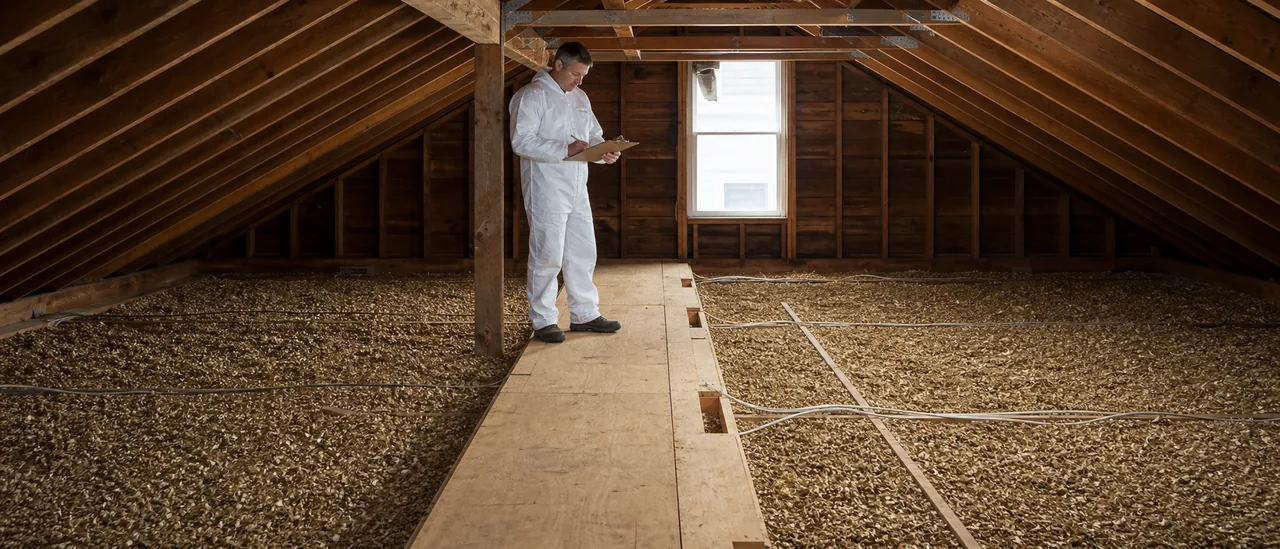
The strongest case for buying is a documented, accessible condition with no expected disturbance. That may mean the insulation is confined to an attic that does not serve as storage or living space, no debris is entering occupied rooms, and no near-term electrical, ventilation, air-sealing, or remodeling work must cross it.
EPA says removal may not be necessary when vermiculite insulation is confined and can remain undisturbed. More generally, asbestos-containing material in good condition that will not be disturbed is usually best left alone.
The purchase price and available funds also matter. A buyer should understand the scope and likely cost of any recommended management or removal before becoming obligated. A seller’s prior report, work proposal, clearance record, or disposal documentation can help, but each document should be checked for its address, date, scope, firm credentials, laboratory, and stated limitations.
Factors that change the answer
The finding becomes more consequential when insulation is damaged, spilling through openings, regularly accessed, or in the path of planned work. Removal may also be warranted when major changes will disturb asbestos-containing material or when it is extensively damaged and cannot otherwise be repaired.
Use this decision check:
- Proceed conditionally: the area can remain undisturbed, specialist findings are understandable, and the contract preserves enough time to resolve questions.
- Renegotiate: credible evaluation identifies work or ongoing controls whose cost was not reflected in the offer.
- Pause or walk away: the extent remains unknown, required access would disturb the material, the deadline prevents proper review, or financing cannot proceed on acceptable terms.
A standard home inspection and an asbestos evaluation answer different questions. The home inspector can document visible material and related building conditions within the inspection’s scope. An asbestos professional can assess suspect material, determine whether sampling is appropriate, and provide a written evaluation of its location, damage, and recommended response.
Resolve the transaction before the deadline
Do not assume the seller must remove the insulation or that an inspection automatically permits cancellation. The Consumer Financial Protection Bureau notes that negotiations and cancellation rights depend on the purchase contract, while some loan programs may impose property standards or repair conditions.
Before the inspection-contingency or other decision deadline, obtain an independent asbestos-professional evaluation, review all reports and proposals, ask the lender in writing whether the finding affects approval, and have the purchase contract and required notices reviewed by the appropriate local real-estate professional or attorney.