On this page
The direct answer
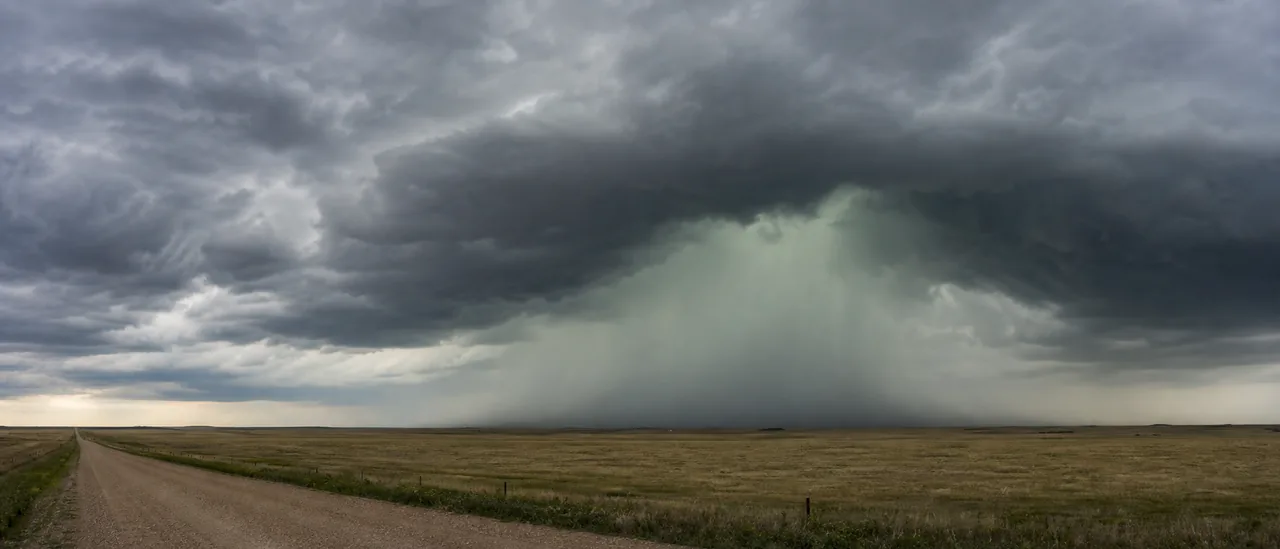
The sky sometimes looks green, blue-green, or green-gray near a hail-producing thunderstorm. It may also remain dark gray, blue-gray, or nearly black. No single sky color reliably announces that hail is about to fall.
That distinction matters because a dramatic tint is only a visual clue. It cannot tell you whether hail will reach your location, how large it will be, or whether anything has been damaged.
Why some hailstorms look green
Green thunderstorms are real, but the optical explanation is not fully settled. NOAA’s National Severe Storms Laboratory says scientists do not agree on the cause. One theory involves large amounts of water and ice in a severe storm’s updraft scattering green light.
The storm’s depth, the amount and form of water inside it, the viewing angle, and the available sunlight can all affect what an observer sees. Green is often most noticeable when low, warm-colored sunlight illuminates a very dark, water-rich storm. Cameras, tinted windows, and automatic phone-image processing can alter the apparent shade further.
Most importantly, green light is associated with some intense thunderstorms—not uniquely with hail. NSSL describes the hail connection as anecdotal rather than a dependable forecast rule. A hailstorm can look green, but a green storm does not guarantee hail at the surface.
Why color cannot confirm hail
Hail develops aloft and may melt before reaching the ground. NSSL notes that nearly all severe thunderstorms probably produce hail above the surface, even though some of that ice melts on the way down. That helps explain why an ominous-looking storm may produce heavy rain at one location and hail elsewhere.
Three different kinds of evidence
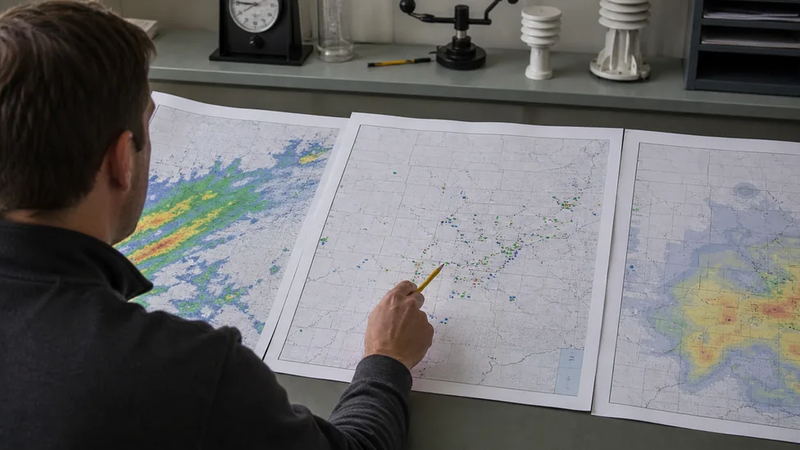
Radar-indicated hail is an estimate or detection within a storm. Observed hail means reliable evidence confirms hail is occurring. Property damage is a separate finding; neither a green sky nor a radar estimate proves damage at a particular address.
The National Weather Service makes a similar distinction in warning tags: “radar indicated” means a hazard is suggested but unconfirmed, while “observed” reflects confirming evidence from radar or reliable reports. Those labels describe the weather hazard, not the condition of any specific property.
The practical bottom line
Do not wait for the sky to turn green before taking a thunderstorm seriously, and do not assume green guarantees hail. Use current National Weather Service warnings and shelter guidance rather than color alone. A green or unusually dark sky beneath a strong thunderstorm is a reason to pay attention—not a diagnosis of what will fall or what it may affect.
Related reading: Where Does Hail Freeze?