On this page
The direct answer
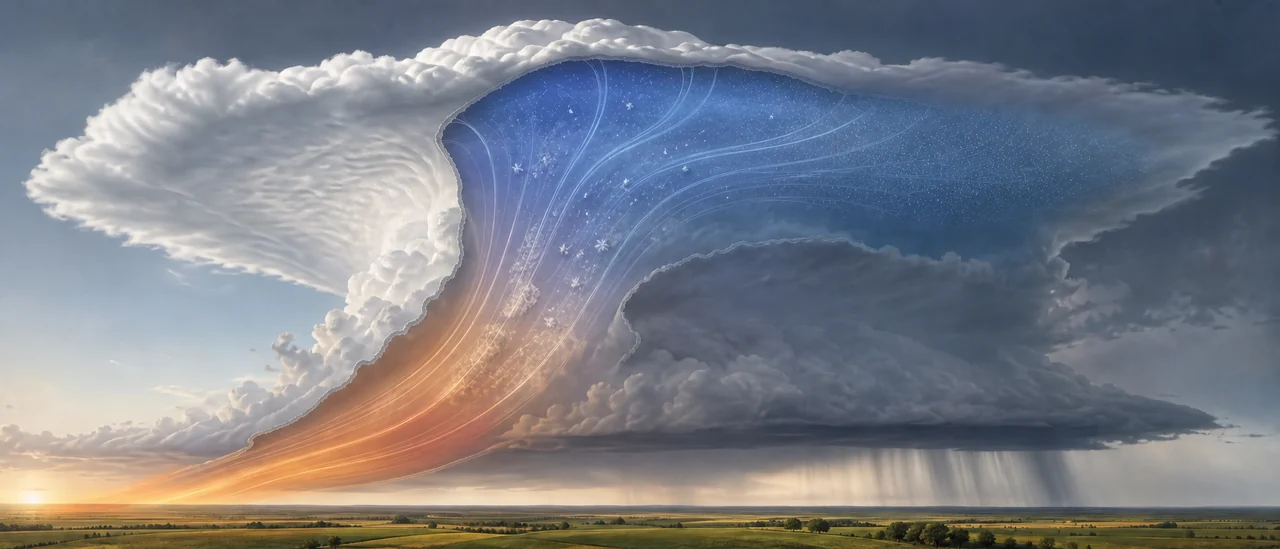
Hail needs deep moist convection inside a thunderstorm, an updraft that can hold ice aloft, supercooled liquid water, and a small ice or snow particle on which more water can freeze. These conditions must overlap in a subfreezing part of the cloud long enough for the hailstone to grow.
Cold air alone is not enough. The key is a working combination of rising motion, liquid water below freezing, and a solid starting point. That distinction helps explain why a chilly cloud may produce no hail while a vigorous warm-season thunderstorm can.
Four conditions working together
- Deep moist convection builds the storm. Warm, moist air rises, cools, and creates the tall cloud and strong vertical motion needed for hail growth.
- An adequate updraft keeps particles aloft. Rising air must counter gravity long enough for an embryo to encounter more liquid water. A stronger or longer-lived updraft can allow more growth, but it does not guarantee a particular surface hail size.
- Supercooled liquid water supplies the ice. These droplets remain liquid even though the surrounding air is below 32°F (0°C). When they collide with the embryo, they freeze onto it—a process called accretion or riming.
- An embryo starts the hailstone. A small piece of ice, snow, or another suitable particle gives the droplets a surface on which to freeze.
The most productive part of a storm is therefore not simply its coldest point. At extremely cold heights, little liquid water may remain. Hail grows where subfreezing air and supercooled droplets coexist within or near the updraft.
Why formation aloft does not guarantee hail at the ground
Once a hailstone becomes too heavy for the updraft, or moves out of the rising air, it falls. Its final size depends on how much water it collected, how long it remained in the growth region, and how much it melted while descending through warmer air. Some storms can contain hail aloft without delivering intact hail to the surface.
Keep three kinds of evidence separate
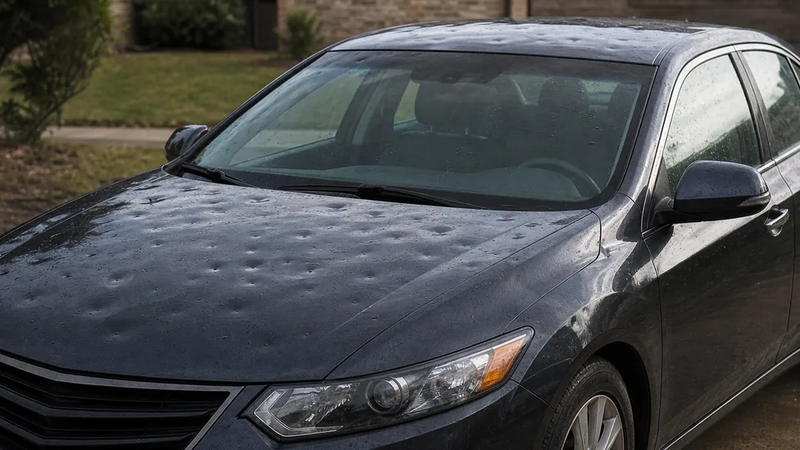
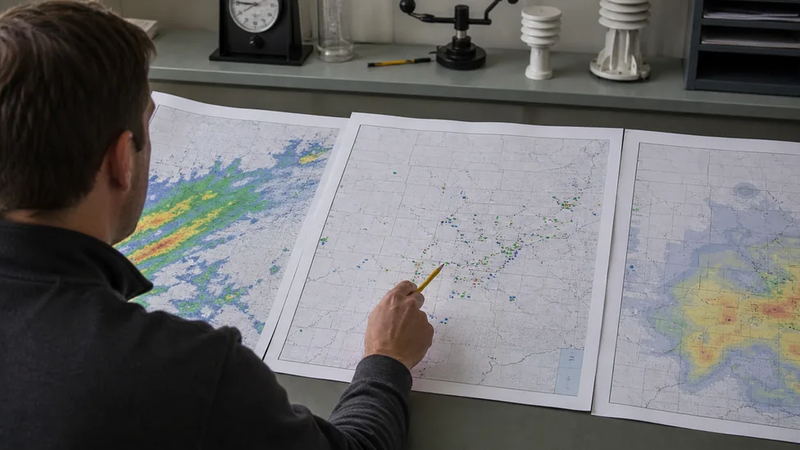
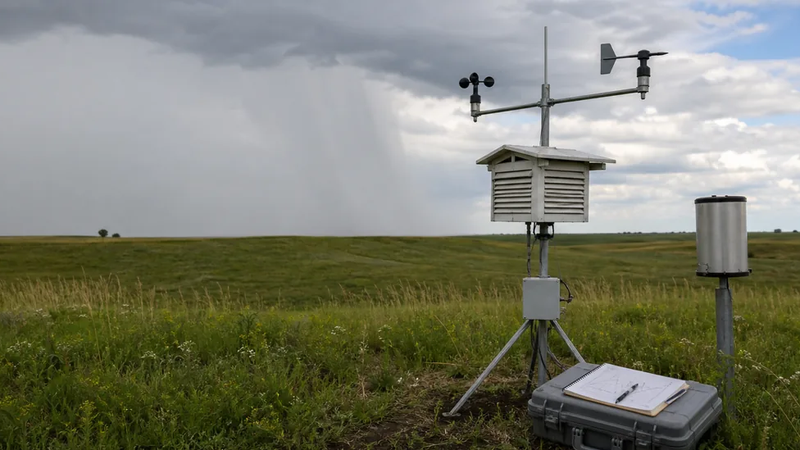
A radar estimate indicates probable hail conditions in a storm. Observed hail records ice that reached the ground at a reported time and place. Confirmed property damage requires separate physical evidence; neither radar nor a hail report proves damage at a specific property.
Practical bottom line
Hail forms only when a thunderstorm supplies all four ingredients in the same growth region. Updraft strength, supercooled-water supply, and time aloft influence growth; the warm air below the cloud influences what survives to the ground. No single temperature, radar color, or storm label answers the whole question.
Related reading: Where Does Hail Freeze?