On this page
What the finding usually means
A baseboard heater problem usually means the inspector found poor operation, visible damage, blocked airflow, or an inaccessible unit. It does not automatically mean every heater has failed or the entire heating system needs replacement.
First identify the type. Electric baseboard heaters use electrical resistance and natural convection. Hydronic baseboards receive hot water from a boiler through piping. The same symptom—one cold room—therefore points to different possible systems and causes.
Observation is not diagnosis
A home-inspection comment records an observed condition and its practical significance. It generally does not identify a hidden failed part, establish thermostat calibration, or prove the heating system's capacity.
Minor conditions and more serious clues
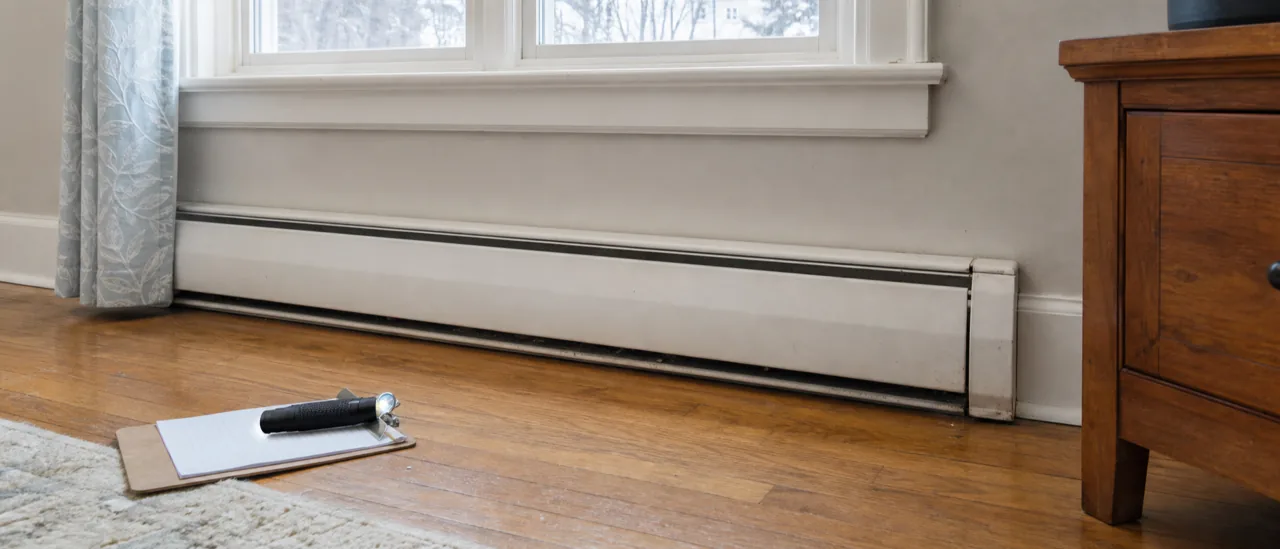
Bent covers, dust, or furniture and curtains restricting the openings can reduce airflow without proving an internal failure. Light ticking as metal warms and cools can also be ordinary expansion.
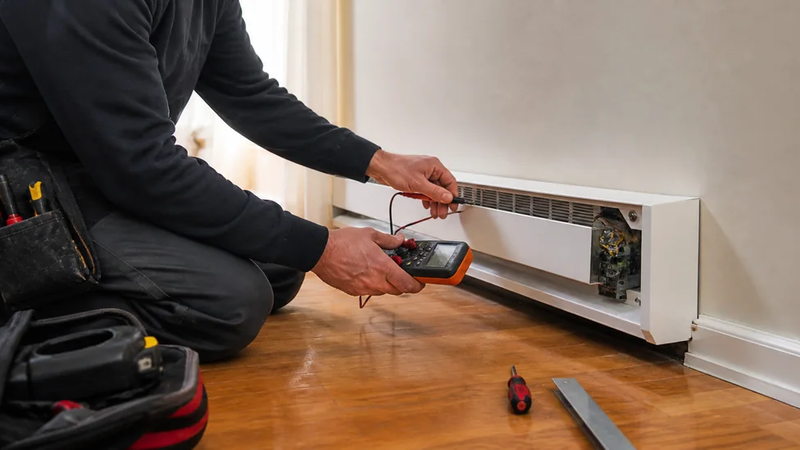
A heater that does not respond to its normal control deserves more attention. For an electric unit, possible causes include a control problem, loss of circuit power, a loose connection, or a failed element. For a hydronic unit, the issue may involve the thermostat, zone control, circulation, trapped air, or the boiler rather than the baseboard enclosure itself.
Visible scorching, melted material, sparking, damaged wiring, or a persistent burning odor is different. CPSC investigations of fixed electric heaters documented failures involving electrical connectors, temperature-limiting controls, and degraded wire insulation. Active leakage or significant corrosion around hydronic piping also warrants prompt follow-up.
Treat heat damage as a safety concern
Do not keep operating a unit that sparks, smokes, shows melting or scorching, or produces a persistent burning odor. Leave internal electrical checks and concealed heater components to a qualified professional.
What an inspector can confirm
A standard inspection covers installed heating equipment and distribution that are readily accessible. The inspector typically identifies the energy source and heating method, observes accessible covers and nearby conditions, and uses normal operating controls when operation is safe.
That process can confirm whether the tested system responded and whether visible damage, obstruction, or leakage was present. It cannot confirm concealed wiring, internal components, thermostat calibration, system sizing, heat balance, or the exact reason a room stayed cold. Furniture or other belongings may also limit access.
Urgency and the practical next step
Read the report's exact observation before judging severity. A blocked opening or loose cover is usually a localized correction. A nonresponsive unit needs targeted diagnosis, especially when it is a primary heat source or several rooms are affected.
Safety signs merit prompt qualified evaluation: use an electrician for suspected electric-heater wiring or control faults, and an HVAC technician for boiler-fed baseboards, circulation problems, or leaks. The goal is to confirm the cause before deciding whether adjustment, repair, or replacement is appropriate.