On this page
It usually means ventilation is not working as intended
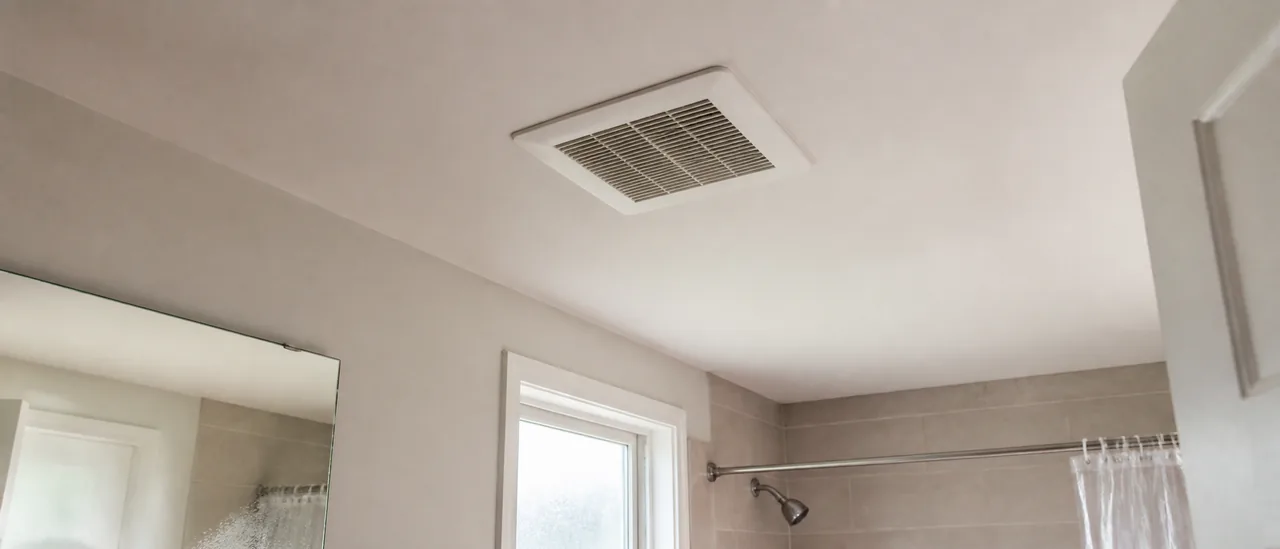
A bathroom exhaust fan finding most often means the fan did not run, moved little air, made unusual noise, or appeared to discharge somewhere other than outdoors. These conditions can leave shower moisture in the bathroom or send it into an attic instead of removing it from the house.
The finding is not automatically evidence of major damage. A dusty grille, stuck exterior damper, loose cover, or failed wall switch can produce a relatively simple problem. A failed motor, disconnected or restricted duct, or duct ending in an attic requires more involved correction.
Sound does not prove airflow
A humming fan confirms only that something is operating. The U.S. Environmental Protection Agency notes that proper function also requires sufficient airflow and discharge directly outdoors, not into an attic or another interior space.
What the inspector may observe
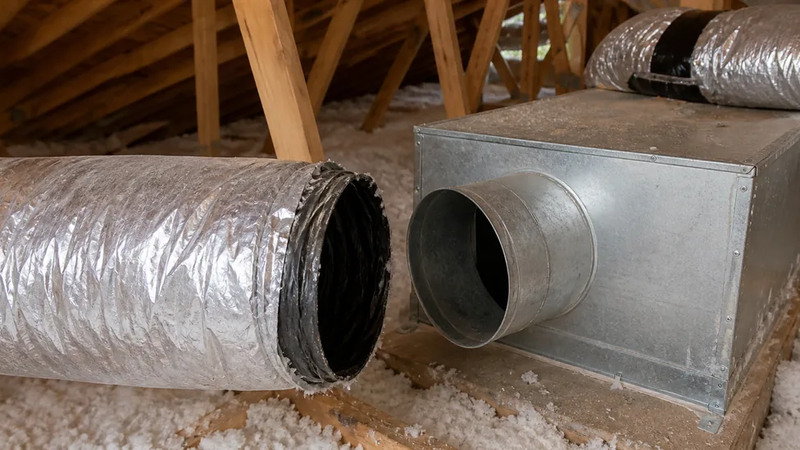
An inspector can operate the fan with its normal control and note whether it starts, rattles, vibrates, or appears weak. Accessible areas may reveal a loose housing, heavy dust, moisture staining, a disconnected duct, a crushed flexible duct, or an exterior cap whose damper does not open.
Visible clues do not always identify the cause. Tissue held near the grille may demonstrate suction, but it does not measure airflow. Likewise, an exterior cap proves that a termination exists; it does not prove the concealed duct remains connected throughout its route.
Inspection scope depends on the governing standard and agreement. Under InterNACHI's standard, inspectors examine bathroom mechanical exhaust systems, but a home inspection remains visual and non-invasive. The same standard does not require moving insulation, entering unsafe or inaccessible attic areas, activating thermostatically operated fans, or determining ventilation adequacy.
How the problem is confirmed
Confirmation should match the reported symptom. Cleaning an accessible grille and checking the switch may resolve a minor operating issue. Airflow testing can quantify performance, while attic access or duct tracing may locate a disconnection, obstruction, poor routing, or an interior termination. Electrical diagnosis may be needed when the fan is silent, intermittent, hot, or tripping a circuit.
How urgent is it?
A noisy but functioning fan usually allows time to plan maintenance. A fan that does not operate, moves very little air, or vents indoors should be corrected sooner because it is not reliably removing bathroom moisture to the exterior. EPA guidance specifically recommends bathroom exhaust to the outside rather than the attic.
Prompt evaluation is appropriate when the report also notes wet insulation, recurring condensation, staining, visible fungal growth, a loose energized unit, burning odor, or repeated breaker trips. Avoid operating a fan with an electrical warning sign. For unclear airflow or duct problems, a qualified ventilation contractor can test the installed system; electrical symptoms belong with a qualified electrician.