On this page
The drain may not be carrying moisture away reliably
A condensate drain problem usually means moisture produced by cooling equipment is not draining reliably, or the visible setup leaves an avoidable overflow risk. It does not automatically mean the air conditioner has failed. The concern is often localized to the drain line, pan, pump, or termination.
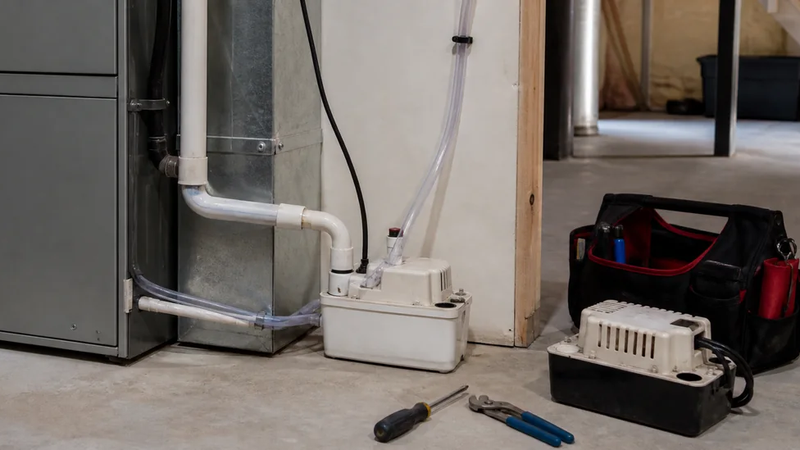
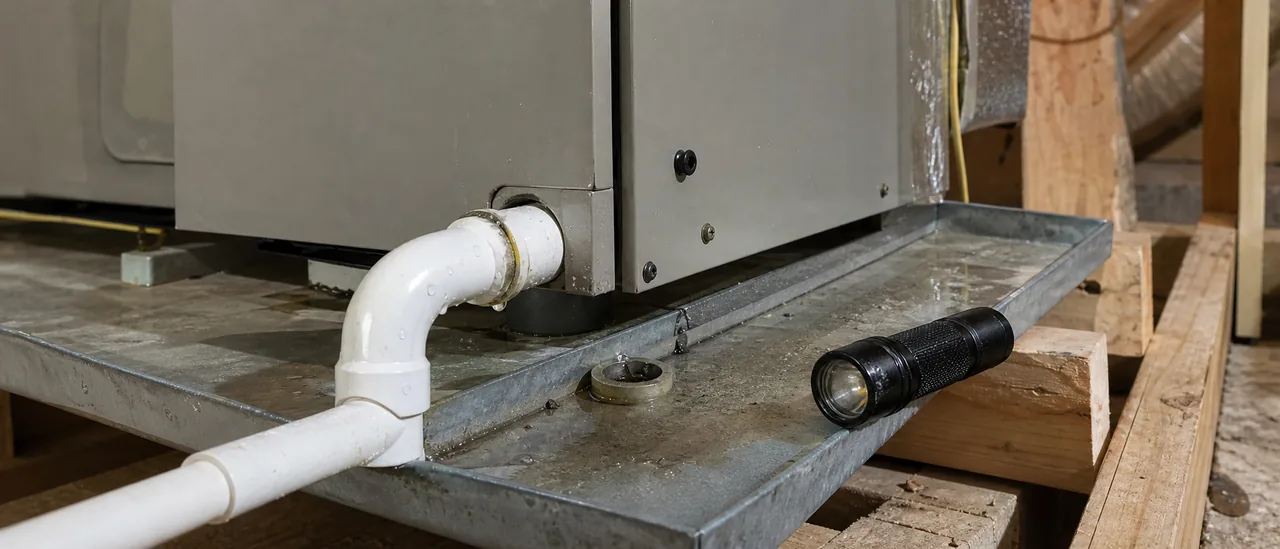
Cooling coils remove water from humid air. That water should collect in a pan and leave through a drain or condensate pump. Standing water, an active drip, or a wet auxiliary pan shows that this path needs attention.
Read the observation before assuming the cause
“Condensate drain problem” is a broad summary. The useful report detail is the observed condition: blockage, leakage, poor slope, damaged piping, water in a pan, or an improper discharge point.
Other plausible causes
Several conditions can produce a similar report comment:
- debris or buildup may restrict the drain line;
- a loose, cracked, or unsealed connection may leak;
- poor slope, an unsuitable trap or vent arrangement, or a failed pump may prevent dependable flow; or
- a damaged auxiliary pan, missing overflow protection, or problematic termination may increase the consequences of a stoppage.
Not every damp pipe is leaking. Moist air can condense on the outside of a cold, poorly insulated drain line. Tracing the moisture to its origin helps distinguish surface condensation from water escaping inside the drainage system.
What a home inspection can confirm
An inspector can document visible, accessible evidence such as standing water, active leakage, stains, corrosion, disconnected piping, damaged pans, or an obvious termination issue. Operating the cooling system under suitable conditions may reveal drainage trouble, but a short inspection cannot reproduce every humid-weather condition or prove that a concealed line is clear throughout.
Inspection scope also varies. InterNACHI’s standard describes a home inspection as visual and non-invasive, requires operating the cooling system with normal controls, and does not require determining a condition’s cause or code compliance. Texas standards are more specific: inspectors there must report deficiencies in condensate drains and auxiliary or secondary pan systems. The applicable agreement, standard, and jurisdiction control the actual scope.
An HVAC technician can confirm an uncertain cause by examining the accessible pan and line, checking flow and pump operation where present, and comparing the installation with the equipment instructions and local requirements.
How urgent is the finding?
Active overflow, substantial standing water, or wet building materials deserves prompt attention. The EPA identifies substantial standing water or debris at cooling coils and drain pans as a problem requiring immediate attention. Continued leakage can spread moisture beyond the equipment cabinet.
A dry historical stain or a configuration concern without active moisture is usually less urgent, but it should be clarified before sustained cooling operation. Until then, avoid treating the report phrase as a diagnosis. Match the next step to the evidence, especially when the equipment sits above finished space or the source remains uncertain.