On this page
Usually, the exhaust path is restricted or improperly configured
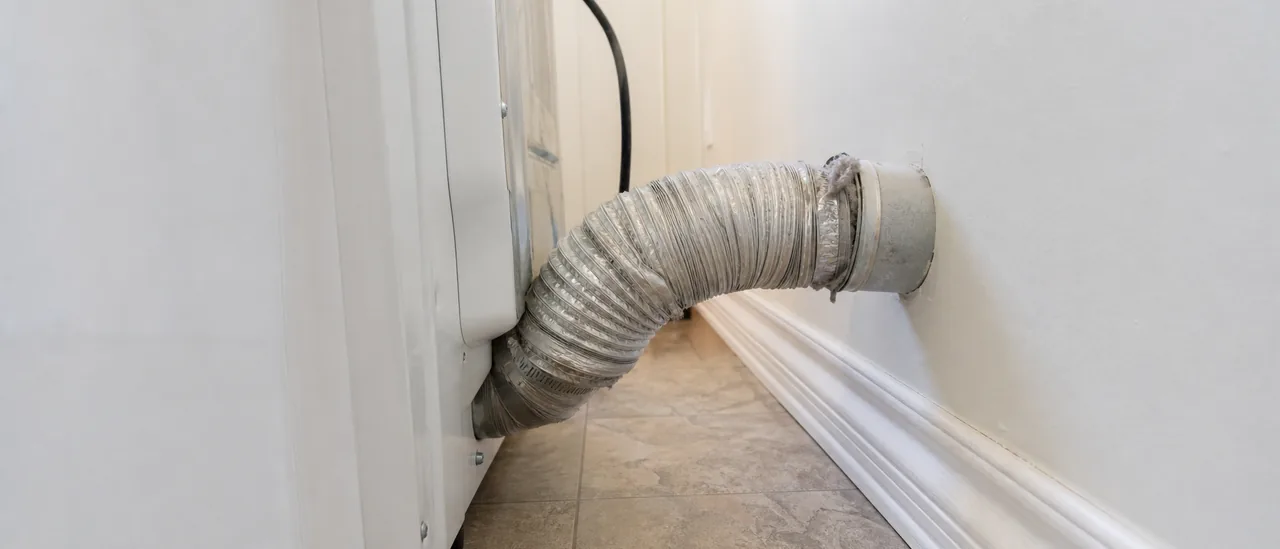
Dryer vent problems on a home inspection usually mean the exhaust system may not move warm, lint-laden air outdoors as intended. Common findings include crushed or kinked connector duct, lint accumulation, a loose connection, unsuitable flexible material, or an exterior termination that is blocked or damaged.
The report does not automatically mean the dryer is defective or that a fire has occurred. It identifies a condition that can reduce airflow, release heat and moisture into the home, or increase fire risk if lint accumulates.
Treat poor airflow as a safety issue
The U.S. Consumer Product Safety Commission warns that lint in a dryer or exhaust duct can block airflow, cause excessive heat buildup, and result in a fire in some dryers. Avoid using the dryer when the duct is disconnected, badly crushed, or apparently blocked until the exhaust path is corrected.
What the visible clues may indicate
Different observations point to different possibilities:
- Crushed or sharply bent duct: reduced airflow, often where the dryer sits too close to a wall.
- Plastic or foil accordion-style duct: material that can trap lint and is more vulnerable to kinking or crushing.
- Lint around a joint or behind the dryer: a loose or disconnected section, though the exact leak point may be hidden.
- Weak or absent flow outside: a blockage, disconnected run, closed damper, or dryer performance issue.
- A missing or damaged exterior cover: an opening vulnerable to weather, pests, or debris.
Slow drying can support a restriction concern, but it does not prove the vent is the cause. The dryer, the load, or another operating condition may also be involved.
What a home inspection can confirm
The current American Society of Home Inspectors standard includes clothes dryer exhaust systems within the inspection of insulation and ventilation. Its broader scope is a visual examination of readily accessible systems and components.
An inspector can document accessible duct material, visible damage, loose connections, lint deposits, the exterior termination, and airflow observations when the dryer can be operated safely. The inspection generally cannot confirm the condition of an entire concealed run inside walls or ceilings, measure every airflow variable, or determine exactly where a hidden obstruction lies.
Accordingly, words such as “restricted,” “improper,” or “repair recommended” should be read with the report’s photographs and limitations. They describe the observed concern, not necessarily a complete diagnosis or a jurisdiction-specific code ruling.
Urgency and the practical next step
A disconnected duct, obvious blockage, heavy lint accumulation, or severely crushed connector deserves prompt correction before routine use. These conditions combine impaired exhaust with a recognized lint and overheating hazard.
For a minor loose joint or damaged exterior cover, the repair may be straightforward, but the rest of the run should still be checked. When the route is concealed, airflow remains weak, or the cause is uncertain, a qualified dryer-vent or appliance professional can inspect and clean the complete exhaust path and verify proper operation afterward.