On this page
It usually means capacity has not been demonstrated
An EV charger panel-capacity concern usually means the inspector cannot confirm that the electrical service and panel can safely accommodate the charging load alongside existing household loads. It is a question requiring calculation, not proof that the panel is overloaded.
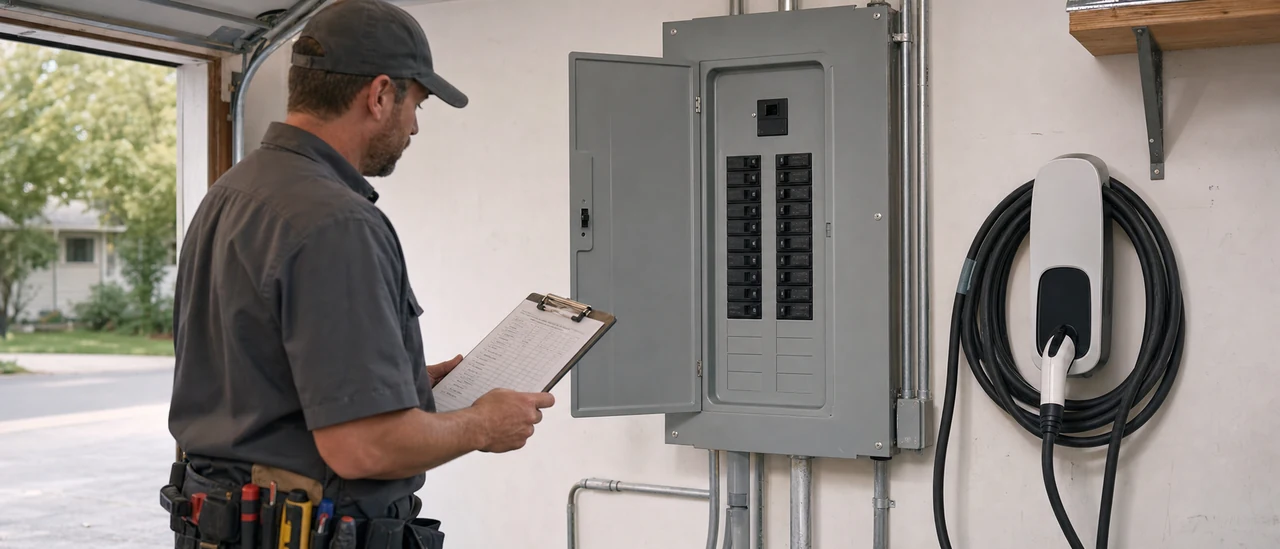
The concern may arise when a charger or charging receptacle is present, yet the panel appears heavily loaded, has a lower labeled service rating, or lacks clear circuit information. It can also appear as a planning note when no charger exists but a buyer expects to add one.
An empty breaker space does not settle the question. Physical space for a breaker and electrical capacity are different issues.
Several conditions can lead to the same note
A home may have adequate capacity, but the inspector lacks the documentation or calculations needed to confirm it. Conversely, a tidy panel with open spaces may still have little capacity after major heating, cooling, cooking, water-heating, and other loads are considered.
The charging setup also matters. Different charging loads place different demands on the service. In some homes, a lower charging load or a properly designed load-management approach may be possible without a service upgrade. Those are design decisions, not conclusions from a standard home inspection.
What a visual inspection can establish
An inspector may identify the labeled service rating, visible panel condition, installed breakers, apparent charger circuit, and obvious defects. A visual inspection cannot establish the home's full calculated demand or approve a proposed installation.
Confirmation requires more than looking at the panel
Under InterNACHI’s Standards of Practice, an inspector examines panelboards, overcurrent devices, service grounding, and bonding. The standard calls for describing the main disconnect’s amperage rating when it is labeled. It does not require removing the dead front, determining an unlabeled rating, or performing engineering or trade services.
That scope can support a recommendation, but not a final capacity determination. The U.S. Environmental Protection Agency advises having an electrician perform a load calculation to determine whether an existing panel can handle an EV charger or needs changes. The calculation considers the existing service and household loads together with the proposed charging equipment.
Urgency depends on what was actually observed
A capacity question by itself is normally a due-diligence item, especially before installing or increasing a charger load. It does not mean the home is unsafe today.
Prompt evaluation is more important when the report also notes overheating, arcing, damaged conductors, an improperly protected circuit, or other visible electrical defects. Avoid using an affected charger until a qualified electrician evaluates those safety findings.
Otherwise, obtain the load calculation and installation review before adding or changing charging equipment. Local permit requirements and the adopted electrical code can vary, so the evaluation should match the home’s location and proposed charging load.