On this page
What the finding usually means
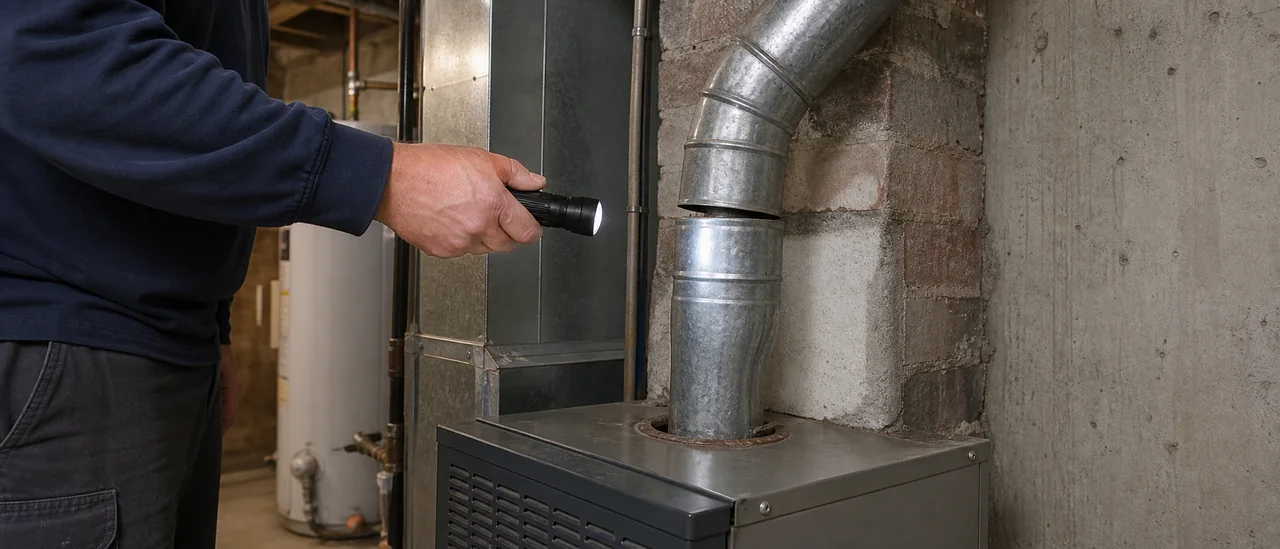
A furnace venting problem usually means the inspector saw an accessible condition that could interfere with moving combustion gases outdoors. It is a finding, not proof that carbon monoxide is entering the home or a diagnosis of the exact cause.
Some findings are limited visible concerns, such as corrosion, a questionable connection, or a vent section needing support. More serious possibilities include a disconnected or partially blocked path. The U.S. Consumer Product Safety Commission specifically recognizes those conditions as carbon-monoxide hazard scenarios for vented gas heating appliances.
The report identifies a condition, not the full failure
Similar-looking stains or corrosion can have different causes. A visual inspection can justify further evaluation without proving active leakage, hidden blockage, or code noncompliance.
Other plausible causes
The visible defect may be only one part of the story. Plausible explanations include:
- a loose, separated, damaged, or obstructed vent section;
- an unseen restriction farther along the flue or chimney;
- inadequate air or house depressurization that reverses normal draft; or
- an installation detail that needs comparison with the appliance instructions and locally adopted requirements.
Backdrafting does not always begin with a broken pipe. The Environmental Protection Agency explains that strong exhaust, wind, duct leakage, fireplaces, and stack effect can depressurize a home. Under sufficient pressure, combustion products may be pulled back down a chimney or flue.
What a home inspection can confirm
Inspection scope depends on the applicable state rule and inspection agreement. For example, Ohio’s licensing rule covers readily accessible heating equipment, vent systems, flues, and chimneys. It excludes inaccessible vent interiors, heat exchangers, and opinions about combustion-air adequacy.
That scope matters. An inspector may document a gap, hole, deterioration, staining, or unsafe-looking termination, but a normal visual moment cannot rule out an intermittent draft problem.
A qualified heating specialist—and a chimney specialist when the chimney is involved—can trace the full route, compare the installation with applicable instructions, and test draft, spillage, and combustion under relevant operating conditions. Those checks can distinguish a visible maintenance issue from an active exhaust-safety problem.
Urgency and the practical next step
A disconnected or open vent, or an active spillage indication, warrants prompt evaluation rather than routine monitoring. Avoid relying on the furnace until the condition is evaluated and the system is considered safe to operate.
Localized corrosion or an uncertain connection may prove less urgent, but photographs alone cannot clear it. Use the report wording, the inspector’s stated urgency, and qualified testing to decide what must happen before normal operation or a real-estate deadline.