On this page
What the finding usually means
A gas-appliance venting problem usually means the inspector saw a condition that may keep combustion gases from exiting safely. It does not automatically confirm carbon monoxide (CO), an appliance failure, or a code violation.
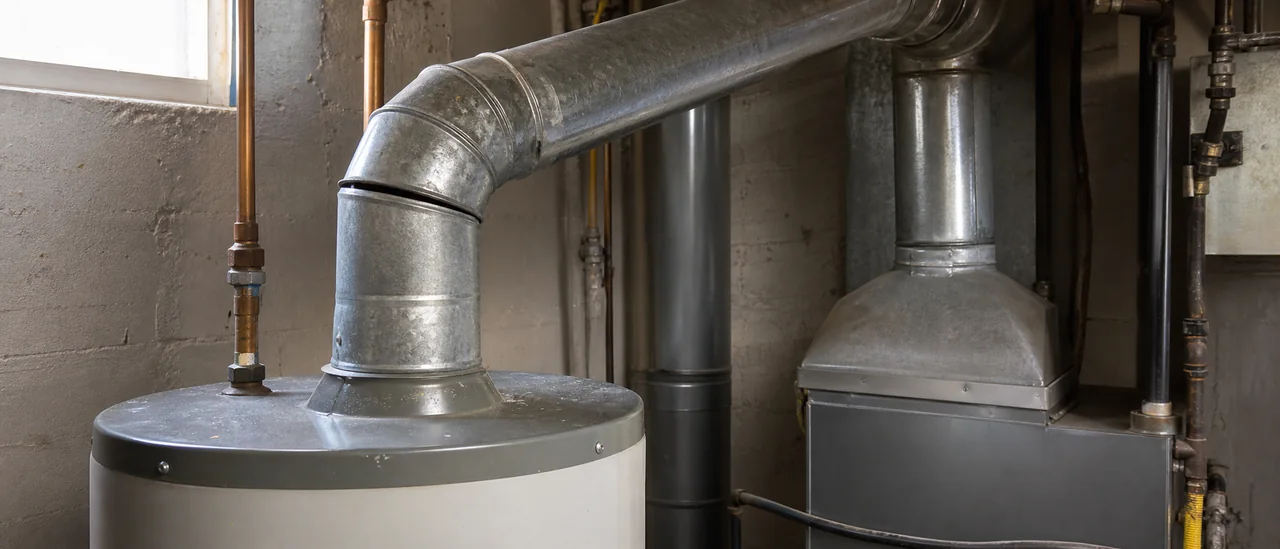
The concern may be a vent that is disconnected, blocked, leaking, or improperly sized. Rust, loose joints, missing support, damage, or staining can also prompt a report. Some observations are less conclusive: an old stain may remain after a repair, while an unusual connector may require its installation instructions to judge.
EPA identifies back-drafting and improperly sized, blocked, disconnected, or leaking flues as possible CO sources. Because CO cannot be reliably detected by sight or smell, a normal-looking room does not clear a reported vent defect.
Treat an alarm or symptoms as an emergency
If a CO alarm sounds, or anyone has headache, dizziness, weakness, nausea, vomiting, sleepiness, or confusion and CO is suspected, move everyone outside to fresh air and call 911. Do not wait for a real-estate inspection follow-up.
What the home inspection can establish
Under the ASHI Standard of Practice, inspectors examine readily accessible, visually observable systems. The standard includes heating vents, flues, and chimneys, but excludes inaccessible interiors and does not require determining draft characteristics or code compliance. State rules and the inspection agreement may set a different scope.
That distinction matters. An inspector can document an open joint, corrosion, visible damage, poor connection, or evidence of spillage. A standard visual inspection generally cannot rule out a hidden blockage, prove the entire flue is sound, or establish how the system performs under every pressure condition.
How the concern is confirmed
A qualified heating technician or other appropriate system specialist can identify the appliance and vent type, inspect the accessible route, compare the installation with current manufacturer requirements, and determine whether repair or further chimney evaluation is needed. Depending on the equipment, confirmation may include draft, spillage, combustion, or CO testing under relevant operating conditions. EPA describes worst-case depressurization testing as a way to determine whether non-sealed combustion appliances backdraft or spill into the living space.
Do not reconnect, tape, or alter a gas vent as a trial repair. The correct materials and configuration depend on the appliance, vent system, and local requirements.
How urgent is it?
Active spillage, a disconnected vent, a CO alarm, or suspected CO symptoms requires immediate action. For a visual defect without an alarm or symptoms, avoid operating the affected appliance until a qualified person evaluates it. Schedule that evaluation before relying on the appliance or finalizing repair decisions; the inspection note identifies a risk that needs resolution, not the final repair scope.