On this page
What the finding usually means
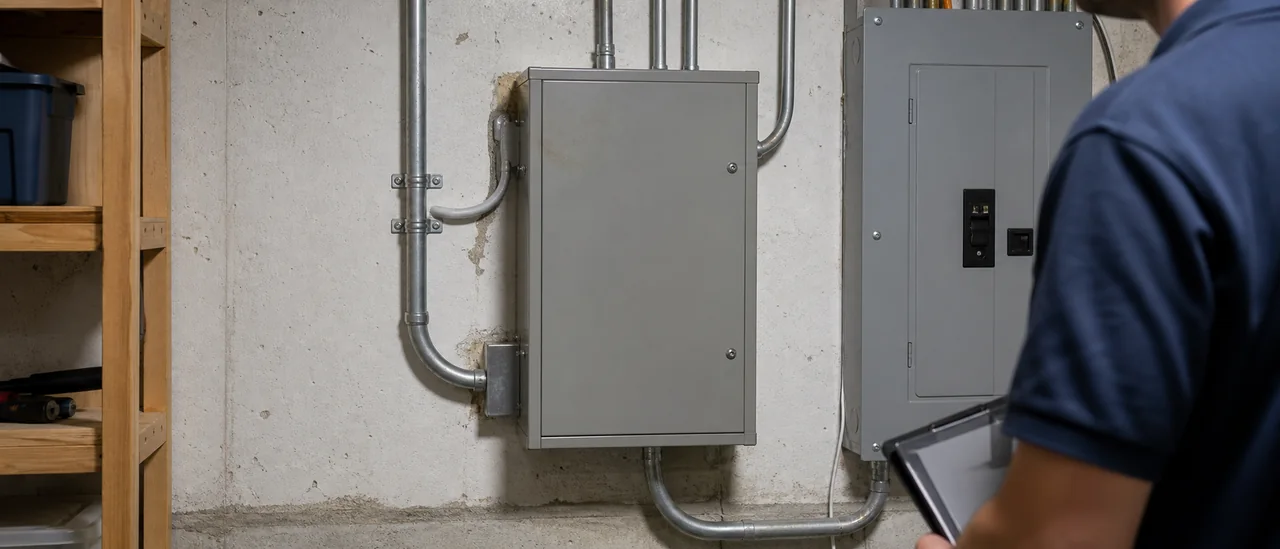
A generator transfer-switch problem usually means the inspector saw a condition that could affect safe separation between utility power and generator power. It may also mean the installation was inaccessible, unlabeled, or outside the inspection’s testing scope—not that the switch has definitely failed.
The switch selects which power source supplies designated household circuits. Serious findings include an absent or apparently bypassed transfer device, damaged equipment, signs of overheating, or wiring that appears altered. Less conclusive findings include faded labels, a blocked cabinet, no operating instructions, or a system the inspector did not activate.
Treat a missing or bypassed transfer method as a safety issue
Do not connect or operate the generator through household wiring until a qualified electrician evaluates the setup. OSHA warns that a generator connected without a properly installed transfer switch can energize wiring and expose utility workers and others to electrocution.
Why the report may stop short of a diagnosis
A standard home inspection is visual and non-invasive. InterNACHI’s current standard includes accessible service equipment, panelboards, grounding, bonding, and selected electrical devices. However, it does not require inspectors to inspect private or emergency power sources, including generators. Local standards and the inspection agreement may differ.
That limit matters. An inspector may document a visibly loose cover, corrosion, water entry, heat discoloration, missing identification, or an unsafe-looking modification. Appearance alone cannot prove that internal contacts transfer correctly, conductors are properly torqued, automatic controls respond, or utility and generator sources remain isolated under operating conditions.
Other plausible causes
The report wording may point to several different conditions:
- installation or wiring that appears incomplete or improperly modified;
- corrosion, moisture, impact damage, or heat affecting the enclosure;
- controls, indicators, or a manual handle that did not respond normally;
- inaccessible equipment or a system intentionally left shut down; or
- an inspector recommending specialist review because operation was not verified.
The exact comment matters more than the phrase “transfer-switch problem.” A note about unreadable labels is not equivalent to evidence of arcing or a missing transfer device.
How it is confirmed and how urgent it is
Confirmation generally requires a qualified electrician or generator-system specialist to identify the equipment and wiring method, inspect accessible internal components, and perform controlled operational checks. Those checks can determine whether the switch transfers as intended and prevents the two sources from being connected together.
Prompt evaluation is appropriate when the report mentions a missing or bypassed switch, exposed conductors, burning odor, arcing, overheating, water inside equipment, or failed operation. If the only concern is labeling, access, or an untested system, the issue is usually less urgent—but it still remains unconfirmed until the installation is properly evaluated.