On this page
What the finding usually means
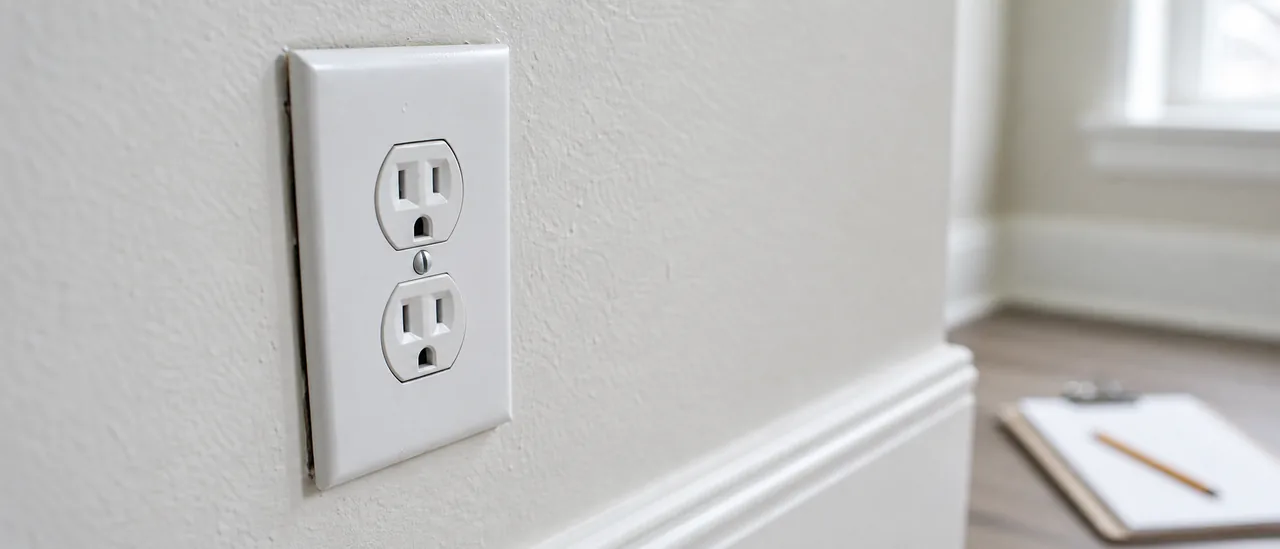
On a home inspection, a “loose outlet” most often means the receptacle moves in the wall instead of remaining firmly secured. Inspectors commonly use outlet informally, although receptacle is the component that accepts a plug.
The wording can also describe a loose cover plate or a receptacle that does not grip plug blades firmly. Those conditions are not interchangeable. A cover plate may need only simple correction, while a moving receptacle or loose electrical contact warrants closer attention.
Under the American Society of Home Inspectors’ Standard of Practice, an inspector examines a representative number of installed receptacles. That association standard applies to inspectors who subscribe to it; the applicable state rules, inspection agreement, and report language control the actual scope.
What may be behind it
A receptacle that shifts can result from loose mounting hardware, a damaged electrical box, or a poor fit between the box and finished wall. If plugs fall out or wobble, worn receptacle contacts—or a damaged plug—may be responsible. Movement alone does not prove that the wiring connections behind the device are loose.
Read the exact observation
Check whether the report describes a moving device, loose faceplate, poor plug retention, heat damage, or a tester result. “Loose outlet” by itself does not identify which condition was observed.
How the condition is confirmed
During a standard inspection, the inspector may observe movement and test accessible examples for operation, polarity, grounding, or protective-device function. ASHI’s standard calls for only a representative number of ordinary receptacles and does not require dismantling components or determining a deficiency’s cause. Therefore, a visual inspection generally cannot confirm the condition of concealed terminals, conductors, or the electrical box.
A qualified electrician can distinguish a mounting problem from worn contacts or a concealed connection defect. That evaluation may require de-energizing the circuit, removing the cover and device, and inspecting the box and terminations—work beyond a typical visual home inspection.
How urgent is it?
An outlet that merely moves, with no heat or electrical warning signs, is usually a repair item rather than an emergency. It still should not be ignored, because the report has identified an unsecured electrical component.
Treat heat, discoloration, sparking, buzzing, shocks, a burning odor, or repeated breaker trips as more urgent. The U.S. Consumer Product Safety Commission warns that a plug fitting loosely can create a loose connection likely to overheat. Stop using an affected hot, sparking, or shock-producing receptacle and arrange prompt evaluation by a qualified electrician.