On this page
What the finding usually means
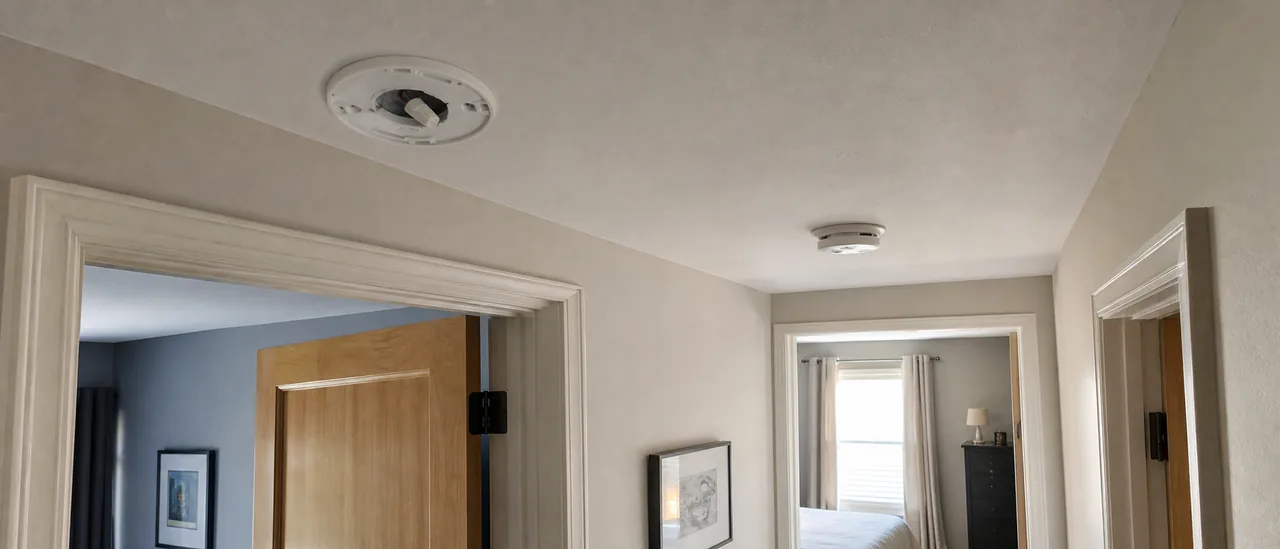
Missing smoke detectors usually mean the inspector did not see alarms where they were expected for basic fire-safety coverage. The report may identify an entire home without alarms, one uncovered sleeping area, or an empty mounting location. In each case, occupants may lack timely warning if a fire starts.
The finding is important, but it does not prove why an alarm is absent. It also does not, by itself, establish a code violation. Requirements vary by jurisdiction and building history, while a standard home inspection is not a code-compliance inspection.
Missing is not the same as failed
“Missing” describes an alarm that was not present at an expected location. An installed alarm may have a separate issue—such as no response, unknown age, or missing power—but those conditions require different evidence.
Other plausible explanations
An alarm may have been removed during painting, renovation, or ceiling work and never reinstalled. A prior occupant may have removed it after nuisance alarms or a low-battery warning. An empty mounting ring, disconnected plug, capped cable, or small ceiling holes can support those possibilities, but appearances cannot establish motive.
Older homes may also have fewer alarm locations than current safety guidance recommends. Conversely, a small ceiling device may be a heat alarm, security sensor, or other component rather than a smoke alarm. Labels and accessible manufacturer information help distinguish look-alikes.
What an inspection can confirm
Under InterNACHI’s Standards of Practice, inspectors report the absence of smoke or carbon monoxide detectors. The standard does not require operating or testing them. It defines a home inspection as a non-invasive visual examination of accessible areas.
Accordingly, an inspector can document visible alarms, apparent gaps, empty bases, or exposed accessible wiring. A visual inspection cannot confirm that concealed wiring is energized, that installed alarms are interconnected, or that every device will sound during smoke conditions.
The U.S. Fire Administration recommends alarms in every bedroom, outside each separate sleeping area, and on every home level, including the basement. It advises checking local requirements because a city, county, or state may specify an alarm type.
Urgency and practical next step
Treat a missing alarm as a prompt safety correction, especially near bedrooms or when an entire level lacks coverage. Do not wait for another inspection to address it.
First, compare the report with every room and level so the exact gaps are clear. Follow current local fire-safety requirements and the alarm manufacturer’s placement instructions. If a hardwired location has exposed conductors, a loose electrical box, or uncertain power, avoid touching it and have a qualified electrician evaluate the circuit and complete the installation.