On this page
What the finding usually means
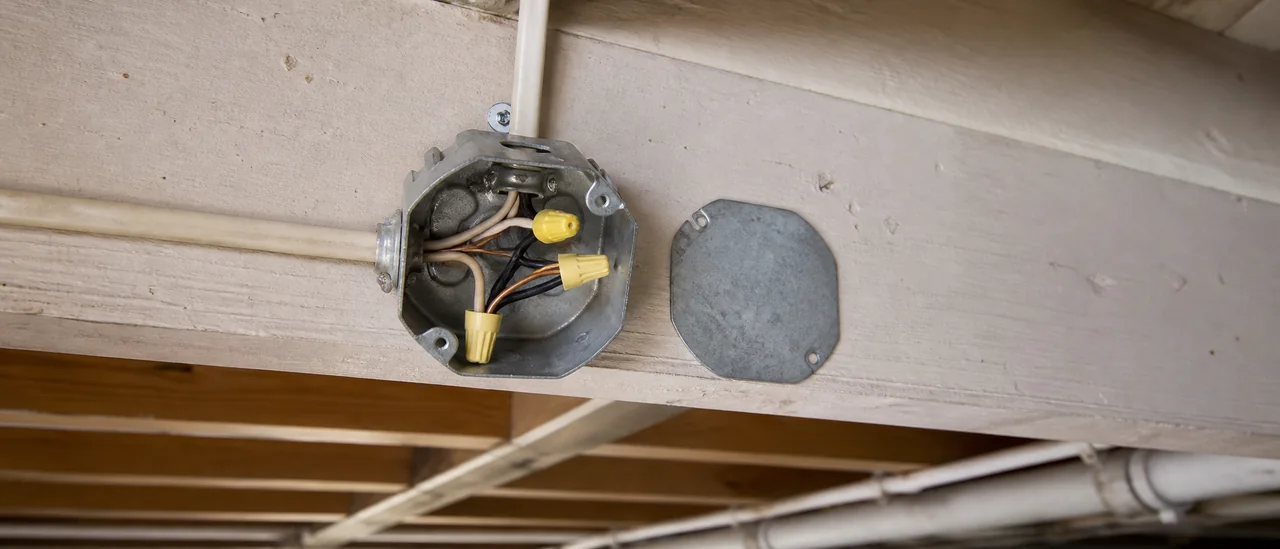
An open junction box or missing cover usually means an electrical enclosure is incomplete at the observed location. The box may contain wire connections or splices, and the cover is intended to keep those parts enclosed. Its absence leaves the contents more vulnerable to contact or physical damage.
That observation does not automatically prove the wires are energized or that a severe failure has occurred. An empty abandoned box, unfinished electrical work, a recently removed fixture, or a misplaced cover can look similar during a visual inspection. The report should identify what was actually visible rather than assume the history.
Why the details matter
Risk depends on what is inside the box and where it is located. Visible capped conductors in a dry, inaccessible attic present a different exposure than loose wiring beside stored materials or within easy reach. Damage, scorching, arcing evidence, moisture, or unsecured connections increases concern.
Federal workplace electrical-safety guidance explains the underlying hazard: when an energized junction box is uncovered, its wiring is vulnerable to damage and accidental contact. Combustible material near unprotected energized wiring can also increase fire risk.
Do not test exposed wiring by touch
Treat visible conductors as potentially energized. Keep hands, tools, children, and stored materials away from the opening until its status and repair needs are established.
What a home inspection can confirm
A standard home inspection is visual and limited to readily accessible components. ASHI's standard includes conductors and a representative number of installed fixtures, switches, and receptacles. InterNACHI likewise defines the inspection as non-invasive and visual, and it does not require inserting a probe into electrical fixtures.
The inspector can document a missing or loose cover, visible conductors or splices, box damage, open knockouts, and apparent heat damage. Depending on accessibility and the inspection agreement, normal controls or representative receptacle tests may provide additional information.
The inspection cannot establish every conductor's status by sight. It also does not reveal concealed wiring, determine the cause of the condition, or certify compliance with electrical codes. Those limits matter when a box appears empty or the wiring continues into hidden areas.
Urgency and practical next step
A missing cover is generally a correction item, not a reason to assume the entire electrical system is unsafe. Prompt attention is more important when conductors or splices are exposed, the box is readily reachable, or moisture, heat damage, buzzing, odor, or arcing is present.
Avoid handling the box or pushing wires back inside. A qualified electrician can determine whether the circuit is energized, evaluate the enclosure and connections, and complete the repair safely. Follow any more urgent safety direction stated in the inspection report.