On this page
What an overfused circuit usually means
An overfused circuit usually means its fuse or circuit breaker permits more current than the protected wiring can safely carry. The protective device may not open soon enough during an overload, allowing the conductors to overheat and increasing fire risk.
Despite the familiar name, the finding can involve either a fuse or a circuit breaker. Inspectors compare the protective device's rating with the circuit it serves; a higher number alone is not the complete test.
Do not solve this by swapping parts
Do not replace a breaker or fuse, open electrical equipment, or increase a device rating to stop nuisance trips. The circuit's conductors, terminals, connected equipment, and required protection must be evaluated together.
Why the finding may appear
The report may reflect a higher-amp fuse or breaker serving lower-capacity branch wiring. An alteration may also have left the protective device mismatched with older wiring.
Not every apparent size mismatch is overfusing. Air-conditioning, heat-pump, and some motor circuits follow equipment-specific protection rules. Their permitted breaker or fuse rating can exceed the conductor ampacity, so the equipment nameplate matters. Visible conductor material, size, and labeling also affect the conclusion.
What a home inspection can confirm
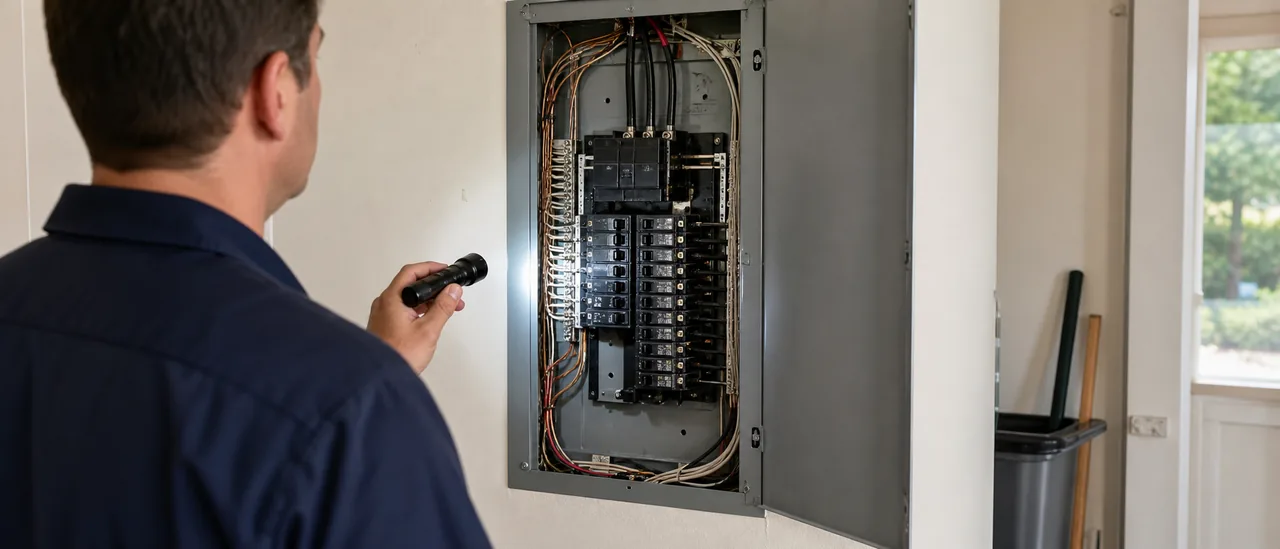
ASHI's current standard includes conductors, overcurrent devices, and accessible panel interiors within the electrical inspection. It describes a visual inspection of readily accessible components and does not require amperage measurements, code-compliance determinations, or diagnosis of a deficiency's cause.
An inspector may compare visible breaker or fuse ratings with observable conductor size and type, note equipment labels, and report signs of overheating. However, a visual inspection cannot establish the size and condition of concealed wiring throughout the circuit. Scope also varies: InterNACHI's standard includes panelboards and overcurrent devices but does not require removing a panel's dead front.
Urgency and practical next step
Treat a credible overfusing report as a safety concern, not merely a paperwork issue. It does not predict that a fire is imminent. Avoid adding heavy loads or repeatedly resetting a tripping device on the affected circuit.
A qualified electrician should confirm the full circuit, applicable equipment ratings, and proper corrective work. Urgency rises if the report also notes heat damage, burning odor, arcing, damaged insulation, or recurring trips. Without those signs, evaluation is still appropriate, but the report alone does not prove concealed damage or identify the exact repair.