On this page
Usually, the radiator or steam distribution needs attention
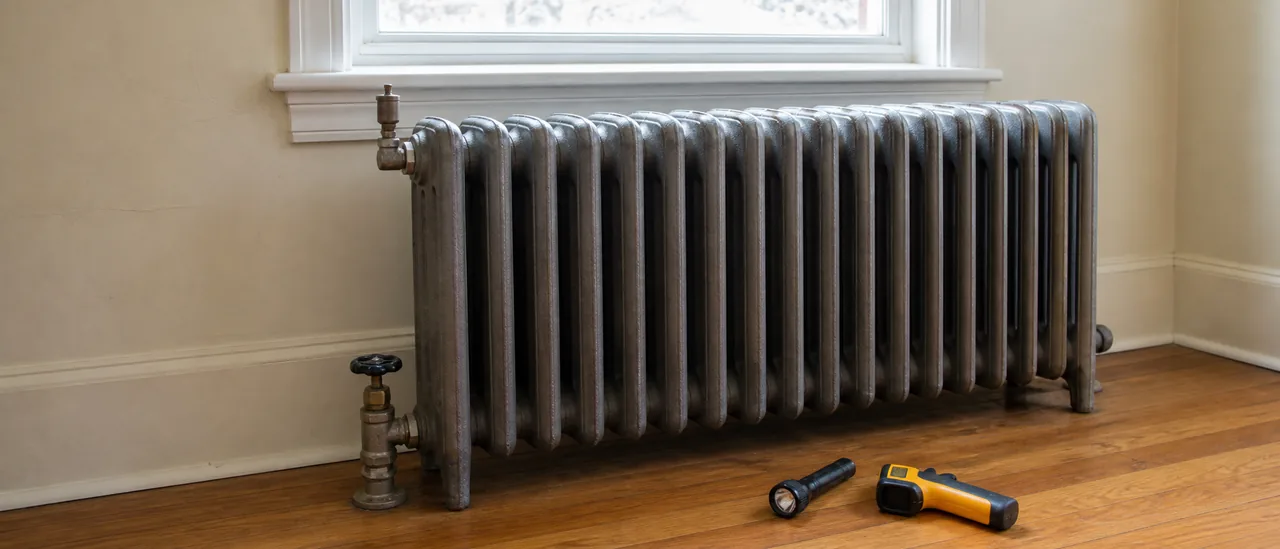
A steam radiator problem usually means the inspector observed uneven heating, no heat, unusual noise, leakage, corrosion, or a questionable valve or air vent. It does not automatically mean the boiler has failed. Many findings are local, but the same symptom can also reflect a broader distribution or control problem.
A cold radiator may not be receiving steam because its valve is closed, partly open, or malfunctioning. A blocked or painted-over air vent can also trap air and prevent the radiator from heating fully.
Whistling at an air vent can point to a restricted or undersized vent, debris, or excessive boiler pressure. Rooms that heat at very different rates may indicate uneven venting, short boiler cycles, or a control location that does not represent the whole home.
The inspection finding is a symptom, not a final diagnosis
Inspection scope depends on the jurisdiction and inspection contract. Illinois, for example, defines inspection as visual examination of readily accessible components using normal controls. Its heating-system requirements specifically include piping, controls, radiators, and visible vent systems. Visible conditions may include staining, corrosion, damaged fittings, an inoperative radiator, or an air vent coated with paint.
That scope is not a final diagnosis. The same Illinois standard permits contracts to exclude inaccessible conditions, the cause for needed replacement, systems that do not respond to normal controls, and engineering services.
What cannot be confirmed visually
A visual inspection cannot prove whether the root cause is the radiator, main venting, piping configuration, boiler pressure, controls, or a combination. Testing over a complete heating cycle may be needed, and some faults appear only under particular operating conditions.
Confirmation follows the reported symptom
For a cold or partly warm radiator, confirmation may include checking whether steam arrives, whether the radiator valve operates correctly, and whether the air vent passes air. The U.S. Department of Energy’s steam-balancing research notes that a partly open one-pipe radiator valve can interfere with condensate drainage and obstruct steam entry. It also describes removing and testing a suspect air vent rather than judging it by appearance alone.
Uneven heat across several rooms calls for a system-level review. A qualified heating specialist may need to observe a full cycle and evaluate main and radiator venting, controls, boiler pressure, and accessible piping.
Urgency depends on the condition reported
Uneven comfort or a single cold radiator is usually a repair-planning issue, not proof of an immediate hazard. Arrange evaluation before relying on the system in cold weather or making purchase decisions based on assumed repair scope.
Active leakage, escaping steam, significant corrosion at a fitting, or a heating system that will not operate deserves prompt attention. Do not handle a hot radiator or attempt to disassemble a pressurized component. The inspection report’s exact observation—not the word “radiator” alone—should determine the next step.