On this page
It usually means the grounding path is missing or interrupted
An “open ground” result means a receptacle tester did not detect a connected equipment-grounding path at that outlet. The receptacle may still supply power, but its grounding contact cannot be assumed to carry fault current safely if plugged-in equipment develops a fault.
That finding is important, but it does not reveal the exact cause. It also does not mean the outlet is currently arcing or that a fire is underway.
Several conditions can produce the same result
Older two-wire branch circuits may never have included an equipment-grounding conductor. In other cases, a three-slot receptacle may have replaced an older two-slot receptacle without a grounding means being available.
The grounding conductor or connection may instead be loose, disconnected, damaged, or improperly terminated at the receptacle, another box, or elsewhere along the circuit. A worn receptacle ground contact is another possibility. The report wording alone cannot distinguish among these conditions.
GFCI protection is not an equipment ground
A ground-fault circuit interrupter can reduce shock risk by quickly interrupting leakage current, but it does not create a missing equipment-grounding path. An open-ground reading and GFCI protection describe different conditions.
What the inspection can confirm
InterNACHI’s Standards of Practice call for inspecting a representative number of receptacles and reporting a tested receptacle that is not grounded. The standard does not require opening electrical fixtures, removing panel dead fronts, or verifying the service ground.
A common three-light tester is useful for screening, not a complete diagnosis. Tester guidance notes that these devices can indicate an open ground but cannot assess ground quality, combinations of defects, or certain conductor reversals. An inspector can therefore report the observed indication and its location without confirming where the grounding path fails.
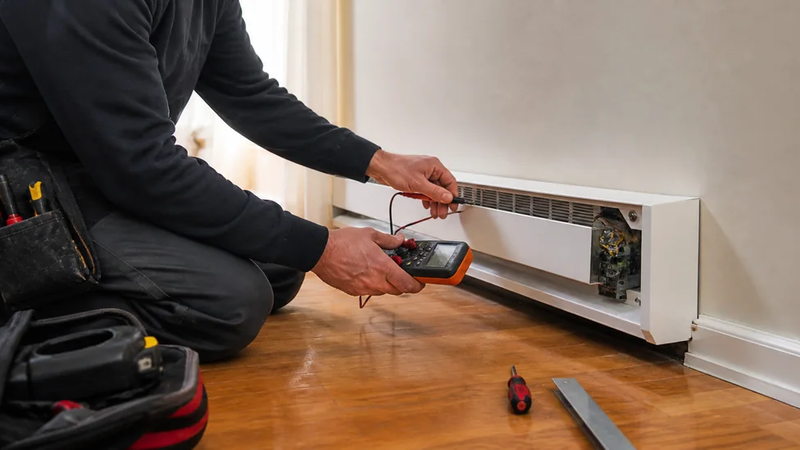
Further confirmation may require an electrician to examine the receptacle and box, identify the wiring method, and trace or test the circuit with appropriate instruments. A visual check alone cannot prove that a grounding path is continuous and effective.
Urgency depends on where it is and what else was found
An isolated open-ground indication is generally a correction and evaluation item, not proof of an immediate emergency. It deserves more prompt attention where grounded equipment is used or where the report also identifies heat damage, arcing, loose components, or other electrical defects.
Do not remove covers or improvise a connection between the neutral and ground terminals. Until the condition is evaluated, avoid relying on the affected receptacle to ground three-prong equipment. A qualified electrician can determine the cause and the appropriate correction for the home’s wiring and local requirements.