On this page
What the stains most likely mean
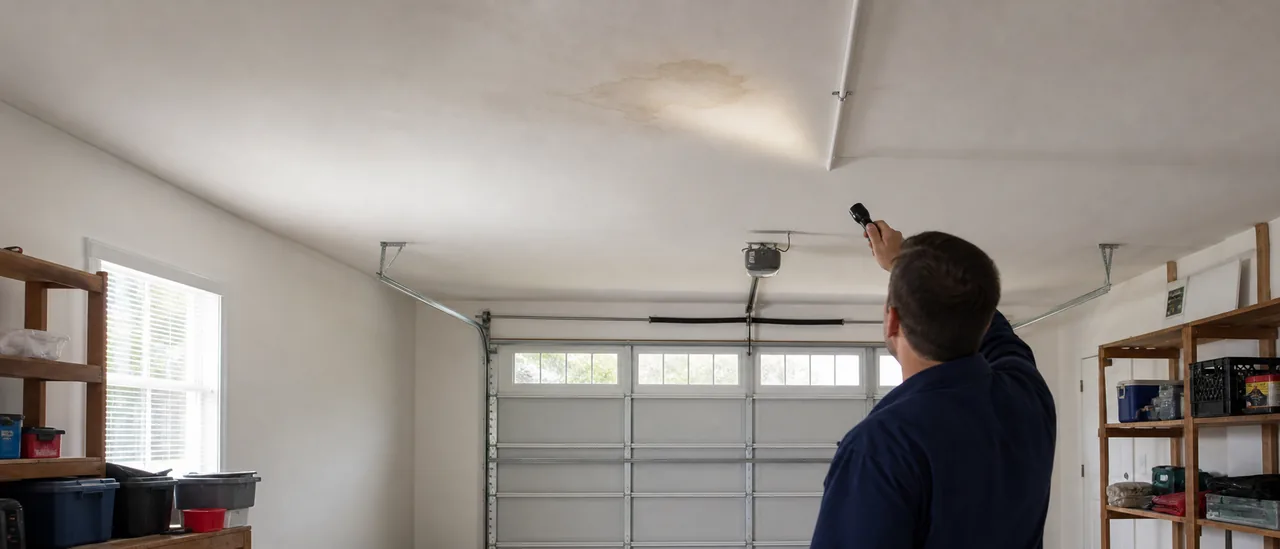
Water stains usually mean the garage ceiling, wall, or floor was wet at some point. They do not prove that water is entering now, identify its source, or confirm hidden damage.
Location supplies the first useful clue:
| Stain location | Plausible sources |
|---|---|
| Ceiling below the roof | Rain entry at roofing, flashing, or a penetration |
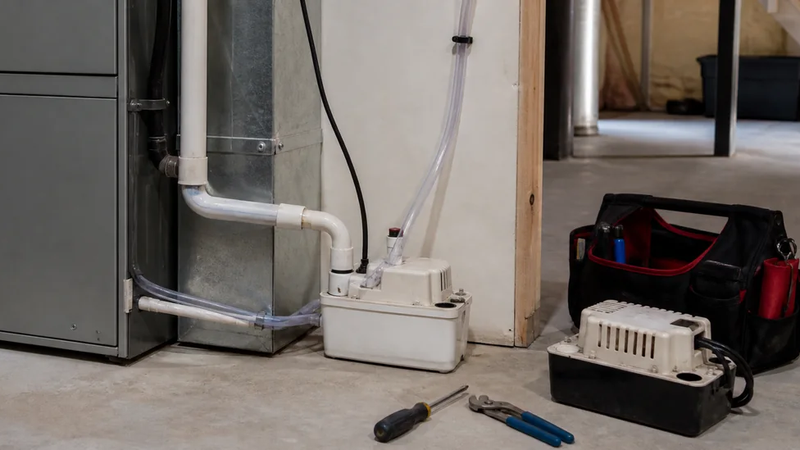
| Ceiling below living space | Plumbing, a bathroom fixture, an appliance connection, or HVAC condensate |
| Around cold pipes or metal | Condensation |
| Low wall or floor | A past spill, tracked rain or snow, or entry near the garage door |
These are starting points, not diagnoses. Repeated staining, peeling finishes, corrosion, musty odor, or softened material makes an ongoing moisture problem more plausible.
A dry stain is historical evidence, not an all-clear
Dryness during one visit only describes that moment. Intermittent rain leaks, drain leaks, and condensate problems may appear only under particular weather or operating conditions.
How an inspector narrows the cause
An inspector compares the stain's shape and position with accessible components above and outside it. Relevant checks may include roof surfaces and penetrations, exterior flashing, visible supply and drain piping, fixtures or appliances above, condensate lines, and nearby drainage conditions.
The inspector may look for dampness, a fresh stain edge, swollen drywall, damaged paint, corrosion, or an active drip. A moisture meter can add context when used, but InterNACHI's standard does not require one.
A general home inspection remains a visual, non-invasive examination of accessible areas. Under InterNACHI's standard, the observations describe conditions on the inspection date; inspectors need not move stored belongings, open finishes, or dismantle components. That standard covers attached garages and carports, while state rules and the signed inspection agreement may set different boundaries.
Therefore, an inspection can document a stain, identify visible contributing conditions, and sometimes observe an active source. It cannot determine what is behind finished surfaces, prove how often an intermittent leak occurs, or date a stain from color alone.
How urgent is it?
An old, dry mark with a documented repaired cause is less urgent than wet or enlarging discoloration. Prompt follow-up is appropriate when water is actively entering, drywall is sagging or soft, materials show deterioration, or moisture is near electrical equipment.
A stain itself is not a fire hazard. Fire safety becomes relevant if moisture also reaches energized equipment. CPSC flood guidance warns about electrocution and fire and says not to touch a wet appliance that is still plugged in.
Start with the report's photographs, location notes, access limits, and weather conditions. Ask for repair records and compare the mark after rain or normal operation of nearby plumbing and equipment. When the source remains uncertain, evaluation by the qualified specialist matching the likely system—such as a plumber, HVAC technician, electrician, or building-envelope professional—is a reasonable next step.