On this page
What the finding usually means
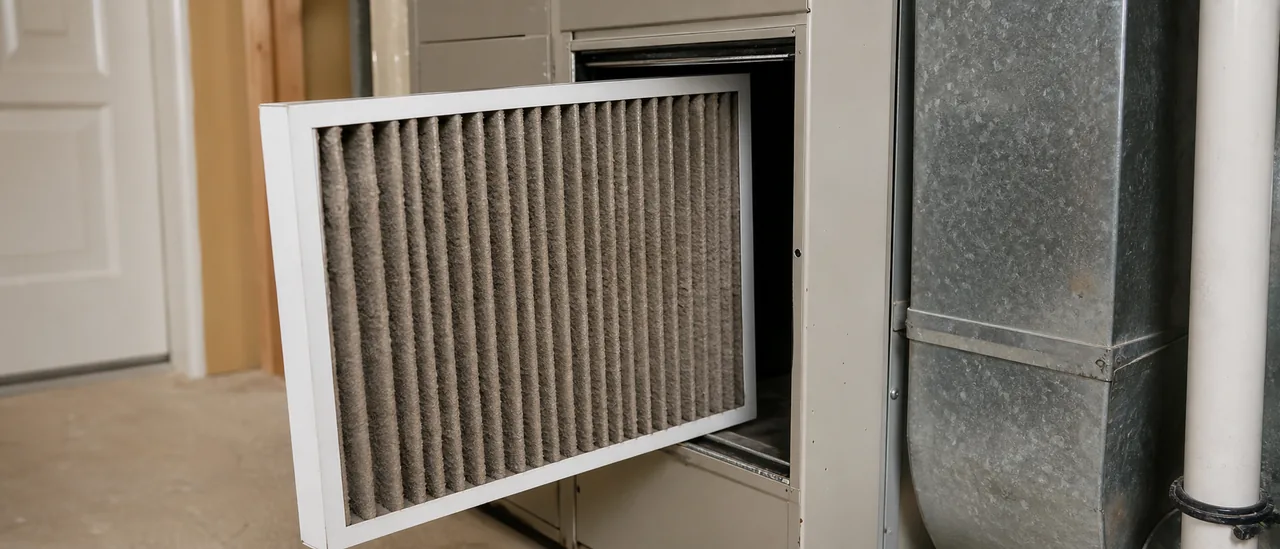
A dirty HVAC filter usually means the filter has collected enough airborne particles to need cleaning or replacement. In most reports, it is a maintenance finding—not proof that the heating or cooling equipment has failed.
The concern is airflow. EPA technical guidance says a dirty, clogged filter can sharply reduce airflow, increasing furnace run time, motor wear, and energy use. A dirty appearance alone does not establish those results in a particular home.
A dirty filter is a clue, not a diagnosis
The observation does not prove poor indoor air quality, hidden duct contamination, a dirty evaporator coil, or permanent HVAC damage. Those are separate conditions requiring their own evidence.
Why one filter may get dirty faster
Normal particle capture is the common explanation. How quickly loading becomes visible varies with system run time and the particles present in the home. A long service interval can therefore produce the same appearance as a shorter interval during heavier use.
Fit also matters, but in a different way. EPA guidance says a filter should sit snugly so air does not leak around it. An undersized, bent, or poorly seated filter may allow bypass; it should not be treated as equivalent to a correctly fitted filter that is simply loaded.
What an inspector can confirm
A home inspection is visual and limited to readily accessible components. Under the American Society of Home Inspectors standard, inspectors examine listed installed systems, operate normal controls, and open readily openable access panels. That may allow an inspector to document visible loading, obvious damage, or poor seating at an accessible filter location.
The same standard does not require determining system efficiency or the cause of a deficiency. Consequently, the report phrase “dirty filter” should not be read as a measured airflow result or a diagnosis of the blower, coil, ductwork, or overall HVAC performance. A concealed filter or one requiring dismantling may also fall outside the inspection.
Urgency and the practical next step
A dirty but intact filter is generally a prompt maintenance item. Clean a reusable filter or replace a disposable one according to the equipment instructions, using a size and efficiency rating the system can accommodate. Installing an arbitrarily higher-rated filter is not automatically better; EPA advises matching filter efficiency to the system fan and slot.
Read the full HVAC section before judging urgency. If the system operated normally and no related defect was reported, filter service and monitoring may be enough. If the system did not respond, airflow remained weak, the filter was damaged or poorly fitted, or other HVAC defects were noted, a qualified HVAC technician can evaluate the system beyond the visual inspection’s scope.