On this page
What the finding usually means
A dishwasher that will not drain usually means water cannot move through part of its drain path. A clogged filter, blocked or kinked hose, obstructed sink connection, or jammed drain pump are common possibilities. Less often, the problem involves wiring or electronic controls.
On a home inspection, the finding means the dishwasher did not complete its primary function normally under the conditions present. It does not identify a failed part or prove that the entire appliance needs replacement.
A little water may be normal
Some dishwasher designs retain a small amount of water in the filter or sump area. The meaningful sign is abnormal standing water after the cycle, especially water extending across the tub floor or accompanied by backup or leakage.
Other plausible explanations
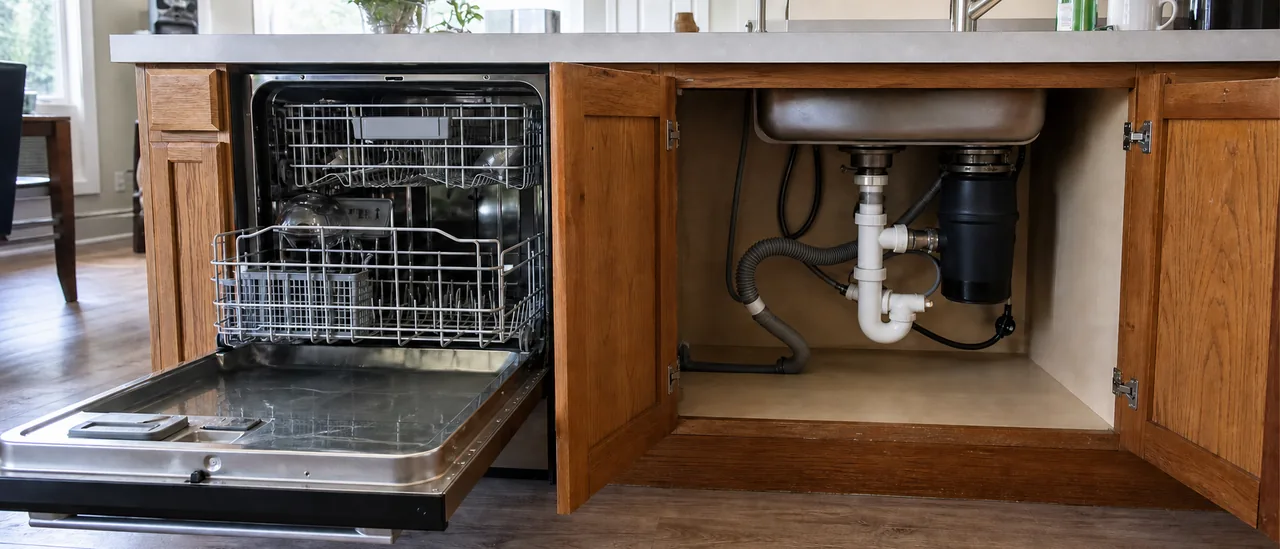
The cause may be inside the dishwasher or beyond it. An inspector may see a pinched hose beneath the sink, debris at an air gap, or a connection to a recently installed food-waste disposer whose inlet plug was not removed. Slow or blocked sink plumbing can also interfere with discharge.
Internal causes are harder to separate during a general inspection. Food debris can restrict the filter or sump. The pump can be obstructed or defective, and a door switch, timer, wiring fault, or control problem can prevent the drain cycle from starting.
What an inspector can confirm
Inspection scope depends on the applicable agreement and standard. Under the current ASHI Standard of Practice, an inspector operates an installed dishwasher’s normal controls to activate its primary function. The standard does not require every control or feature to be tested, and the inspection is not technically exhaustive.
That normally allows the inspector to report observable evidence such as:
- water remaining after the operated cycle;
- leakage that appears during operation;
- unusual pump noise or no apparent drain activity; and
- visible hose, air-gap, or sink-connection concerns in accessible areas.
An inspector generally does not dismantle the pump, pull out the appliance, test concealed wiring, or prove which internal component failed. The report should therefore describe the observed performance issue and any visible related condition, not present a speculative repair diagnosis.
Urgency and next step
This is usually a repair and usability concern, not an emergency. Avoid repeatedly operating the dishwasher while it holds abnormal water, backs up, or leaks; another cycle can spread water into cabinets or flooring.
First, read the inspection report for the exact observation and any stated test limitations. A qualified appliance technician can evaluate the filter, pump, and controls when the cause is not accessible. If the evidence points to a blocked sink drain or waste connection, a qualified plumber may be the appropriate specialist. Active leakage, damaged wiring, or repeated breaker trips warrants prompt evaluation before further use.