On this page
What the finding usually means
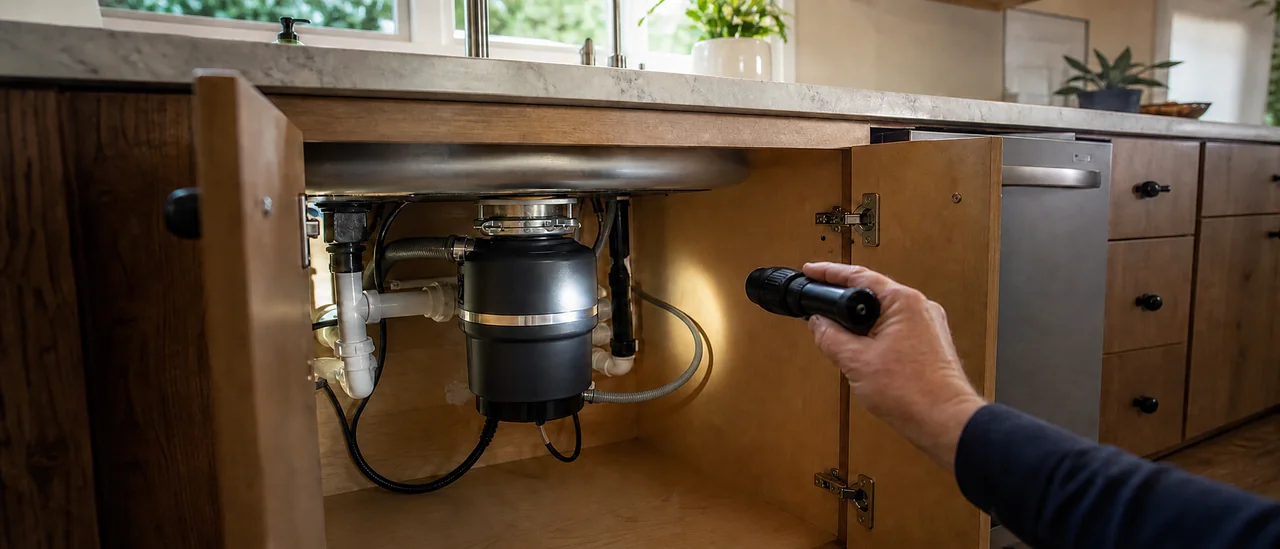
A garbage disposal that does not work usually means it failed a basic operational check during the inspection. It confirms a functional defect under the conditions present, but it does not prove that the motor is ruined or that the home has a major electrical problem.
The explanation may be minor, such as unavailable power or a tripped protective device. A jam, a defective switch or electrical connection, or an internal appliance fault is also possible. The inspection result alone does not separate those causes.
Nonworking is an observation, not a repair diagnosis
The report should state what happened when the normal control was used. Silence, humming, repeated protective-device trips, or an inaccessible power connection provide useful context, but each points to possibilities rather than a confirmed failed part.
What an inspector can confirm
Inspection scope depends on the agreement, applicable state rules, and the standard being followed. The current American Society of Home Inspectors standard includes installed food-waste grinders and calls for using normal controls to activate the primary function. InterNACHI’s residential standard does not specifically include the appliance, although its inspection guidance allows inspectors to choose to evaluate it.
When the appliance is within scope, the inspector can typically document:
- whether it responds to its normal wall or air switch;
- whether it hums, vibrates unusually, or makes abnormal sounds;
- visible leakage, corrosion, damage, or a loose mounting; and
- an accessible power connection or visibly tripped protective device.
This remains a visual, noninvasive inspection. Under the ASHI standard, inspectors are not required to determine the cause of a deficiency, dismantle equipment, or reset devices. They may also decline operation when the appliance is shut down, inaccessible, or unsafe to test.
What cannot be concluded visually
An inspector generally cannot confirm a jammed mechanism, failed motor, faulty switch, damaged concealed wiring, or another internal defect without testing beyond a standard inspection. A silent unit may lack power, while a humming unit may be mechanically stuck; neither observation identifies the exact repair by itself.
The report also should not be read as a cost estimate or a recommendation to replace the disposal. Those decisions follow diagnosis, access, and the condition of the related wiring and plumbing.
Urgency and practical next step
Ordinary nonoperation is usually a repair item rather than an emergency. Avoid repeated attempts to run a humming unit or repeatedly reset a breaker or ground-fault device. InterNACHI guidance treats an immediately recurring trip as a potential electrical problem.
Stop using the disposal and seek prompt qualified evaluation if there are sparks, a burning odor, damaged wiring, or water affecting electrical equipment. Otherwise, an appliance technician can distinguish a jam or internal failure from a power problem; an electrician is appropriate when the circuit, switch, wiring, or repeated tripping is involved.