On this page
Most likely meaning
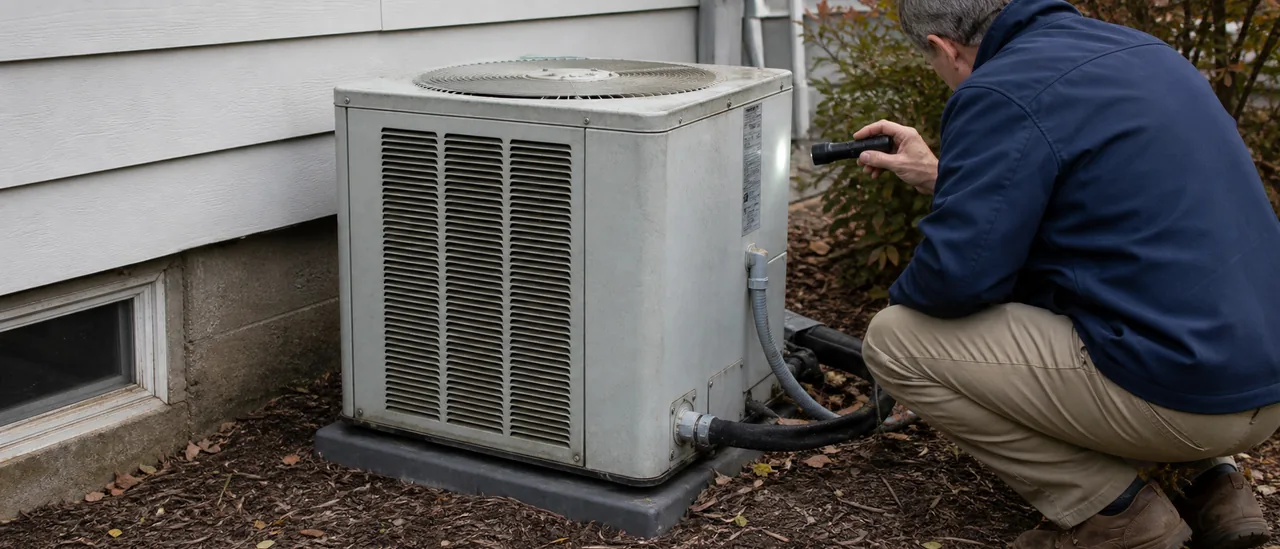
An “old heat pump” usually means the equipment is near or beyond a typical service-life range. It does not mean the system has failed or must be replaced immediately.
Air-source heat pumps commonly serve both heating and cooling, so their condition matters year-round. A federal building-science guide gives 15 years as a typical lifespan, while noting that equipment type and maintenance affect longevity. Actual remaining life can still vary widely.
Age is a planning signal, not a diagnosis
Treat the age notation as a reason to investigate maintenance, performance, and replacement budgeting. Give more weight to documented defects than to the calendar alone.
What else the comment may reflect
The report may pair age with visible deterioration or an operational concern. Examples include corrosion, damaged fins, deteriorated refrigerant-line insulation, poor condensate drainage, unusual noise, short cycling, heavy ice, or failure to reach the thermostat setting.
Some apparent warning signs have ordinary explanations. Light frost can occur in cold weather and should clear during a normal defrost cycle. A weathered cabinet may also look worse than the concealed mechanical components actually are. Conversely, a tidy exterior cannot establish refrigerant charge, electrical condition, airflow, or internal wear.
How an inspector confirms the concern
A home inspector may identify equipment information from an accessible data plate, inspect visible and readily accessible components, and operate normal controls when conditions permit. The written report should distinguish observed defects from an age-based planning comment.
Under the American Society of Home Inspectors’ current Standard of Practice, inspectors examine installed heating and central cooling equipment. The same standard says an inspection is not technically exhaustive and does not require predicting remaining life, future failure, or hidden conditions. State rules and the inspection agreement may change the exact scope.
A general inspection therefore cannot confirm every cause. Refrigerant-charge checks, leak testing, electrical measurements, detailed airflow testing, and internal diagnostics belong to qualified HVAC service when needed.
Urgency and practical next step
Read the entire finding, not just the age label.
- Planning issue: The system operated and no significant defect was observed. Review maintenance records, warranty information, and replacement reserves.
- Prompt evaluation: The system did not respond normally, repeatedly cycled, made excessive noise, had persistent ice, or failed to maintain the setting.
- Limited inspection: Weather, shutdown, access, or unsafe conditions prevented operation. The report should state that limitation.
Qualified HVAC evaluation is most useful when operation was abnormal, the inspection was limited, or the purchase decision depends on a clearer condition assessment. It can refine the present diagnosis, but no brief service visit can guarantee an exact failure date.