On this page
The most likely signs
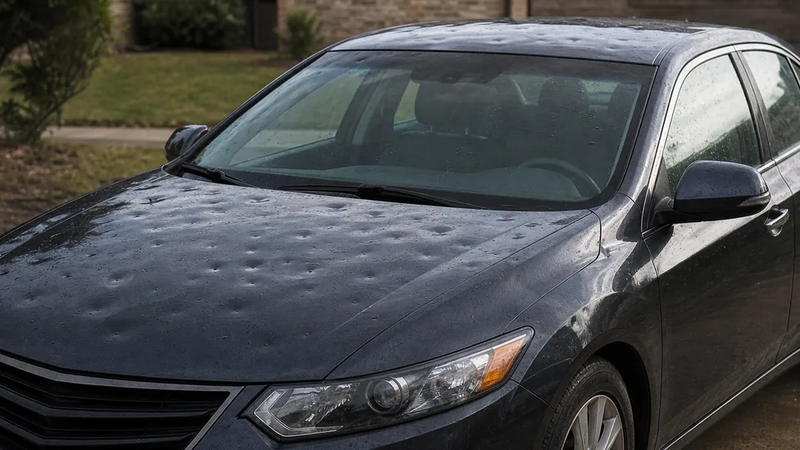
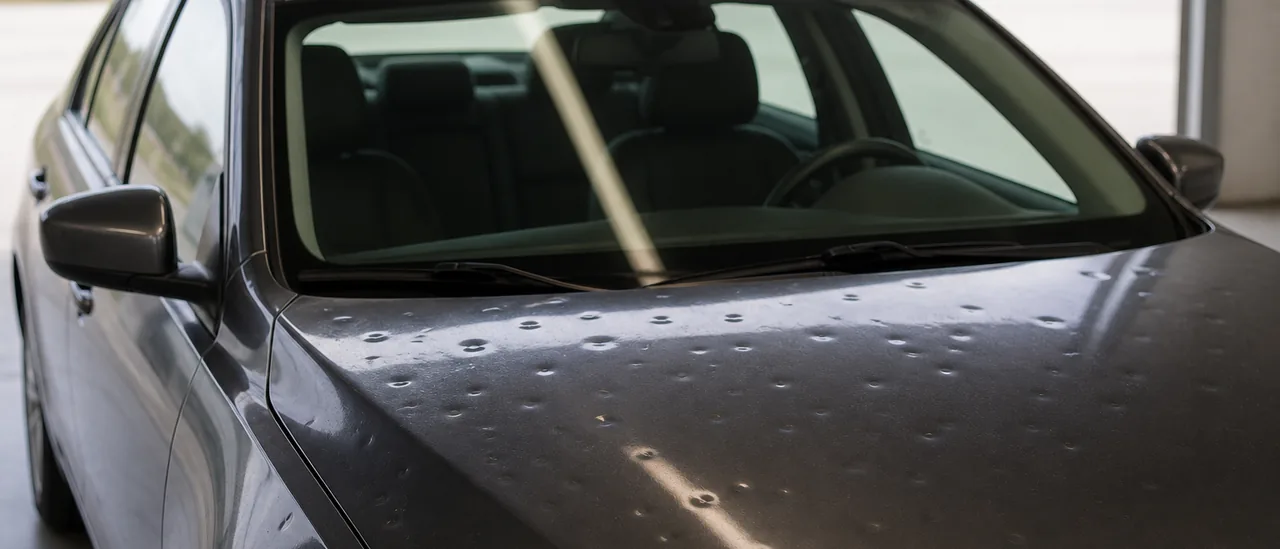
Hail damage usually looks like a scattered field of shallow, round or oval dents, often across the hood, roof, or trunk lid. Reflected lines tend to bend smoothly through a hail dent rather than break at a sharp crease. The paint may remain intact, although an impact near a panel fold or edge can chip it.
Damage can be surprisingly subtle. A clean panel may look normal from straight above, then show several dimples when viewed from a low angle. Glossy reflections make the depressions visible as soft waves or rings.
The dents do not need to match perfectly. Their apparent size and depth can vary with the panel shape, material, and impact. What matters more is a repeated, scattered pattern across exposed surfaces rather than one isolated mark.
Hail damage versus look-alikes
One feature alone cannot prove the cause. Instead, compare the shape, finish, and distribution of the marks.
| What you see | What it may suggest |
|---|---|
| Many shallow depressions with smooth reflection changes | A pattern consistent with hail impacts |
| One deeper dent with a sharp crease | An isolated impact, such as a door or object strike |
| Scratches or transferred material centered in a dent | Contact with a tool, debris, or another object |
| Spots that disappear after washing and do not distort reflections | Surface residue rather than a dent |
Controlled vehicle-panel testing found that hail dents moved reflected light smoothly across the depression. Tool-made dents produced distinct breaks or creases and commonly carried scratches or markings. These are useful clues, not a substitute for examining the whole vehicle.
How to confirm what happened
Wash and dry the vehicle, then inspect it in even daylight or beneath a long reflected light. Look from several low angles and follow one reflection across each panel. Small dents, especially on the roof, are easy to miss; recent vehicle-inspection research found that dent visibility changes with size, location, and lighting.
Check the hood, roof, trunk lid, pillars, glass, lamps, and trim. Note whether similar marks repeat across neighboring panels. A qualified auto-body or paintless-dent-repair specialist can help distinguish subtle impact patterns when the cause remains uncertain.
Weather evidence is context, not confirmation
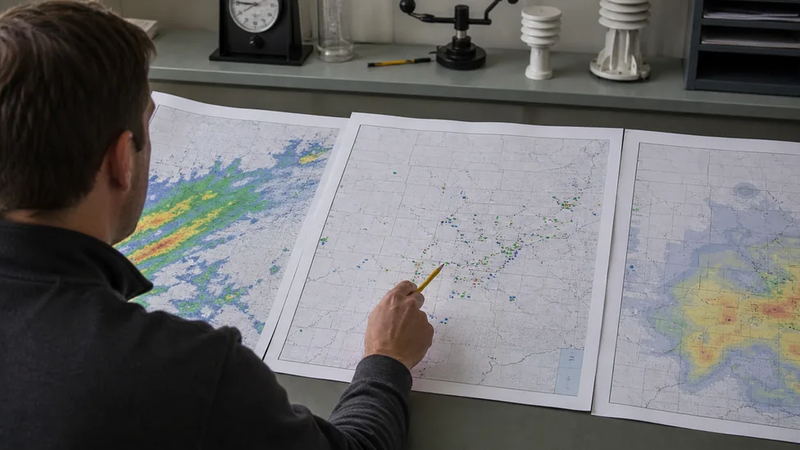
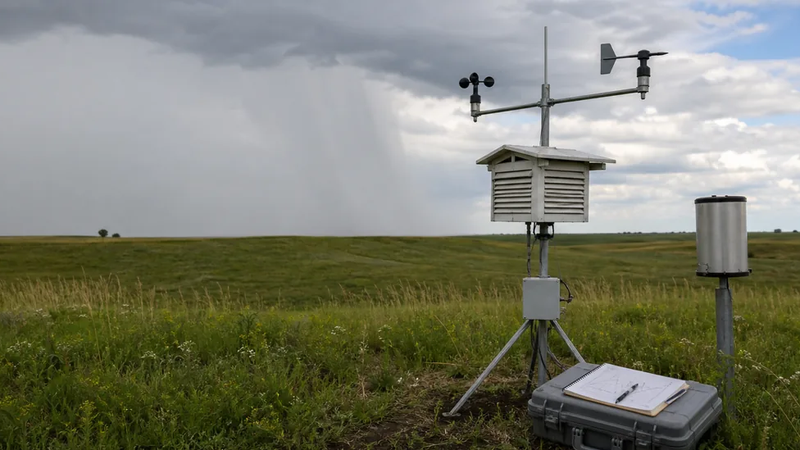
A radar hail estimate indicates what may have been present in a storm. A ground report documents observed hail at a stated place and time. Neither confirms damage to one particular car. NOAA-hosted research notes that radar hail swaths and surface reports can be spatially mismatched because hail moves and melts below the radar sampling level. Confirmed vehicle damage requires physical evidence on the vehicle.
How urgent is it?
Shallow dents with unbroken paint are generally less urgent than cracked glass, sharp damage, or exposed metal. Address visibility problems or unstable glass promptly. Otherwise, document what you see and arrange qualified evaluation when the damage is widespread, difficult to distinguish, or includes paint failure.