On this page
The appliance may not have enough air to burn fuel safely
“Insufficient combustion air” usually means a fuel-burning furnace, boiler, water heater, or fireplace may not receive enough air for proper combustion. It is a safety-related finding, but it does not automatically prove that the appliance is producing carbon monoxide or failing now.
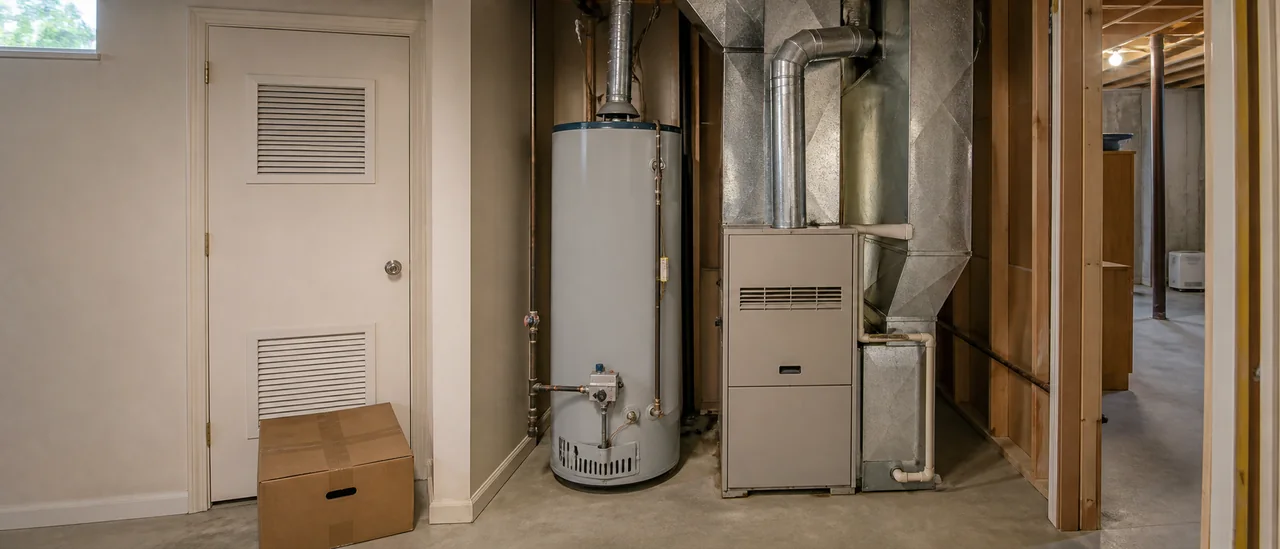
Atmospheric appliances take combustion air from the surrounding space. Sealed-combustion appliances instead draw it from outdoors. The equipment type therefore changes whether an enclosed room or closet is a concern.
Common reasons for the finding
The inspector may have seen a fuel-burning appliance in a small enclosure without obvious, unobstructed air openings. A grille or duct may be blocked, covered, disconnected, or too small to appear suitable. Remodels can also enclose equipment or remove an opening that previously supplied air.
House pressures matter too. Exhaust fans, a clothes dryer, closed interior doors, or another fuel-burning appliance can compete for air. These conditions can contribute to poor draft or spillage, especially with natural-draft equipment.
An opening is not proof of adequate air
A louvered door or wall grille may be encouraging, but its free area, location, connection, and the appliances’ combined input still matter. A direct-vent appliance may use a separate outdoor-air path that is not obvious from the room.
What a home inspection can confirm
A visual inspection can document the appliance type, enclosure, visible openings, blocked grilles, disconnected ducts, or other observable conditions. It may also identify related warning signs, such as soot, scorching, vent damage, or apparent spillage.
That visual evidence does not establish the required air quantity or the condition inside concealed passages. Under InterNACHI’s standard, inspectors operate the heating system with normal controls, but they are not required to inspect combustion-air systems or calculate appliance combustion air. The standard also says an inspection is not technically exhaustive.
Confirmation typically requires a qualified technician to evaluate the complete installation, including:
- the appliance type, input ratings, and manufacturer instructions;
- room volume and the size, location, and free area of openings;
- shared appliances and operating exhaust equipment; and
- draft, spillage, and combustion performance under appropriate test conditions.
The U.S. Department of Energy identifies sufficient combustion air and proper exhaust drafting as parts of safe appliance operation. Its technical guidance uses instruments such as a combustion analyzer and digital manometer during combustion-safety testing.
How urgent is it?
Treat the finding promptly because inadequate air can interfere with combustion and venting. Avoid blocking or altering existing openings, and do not assume that opening a door is a permanent correction. A qualified HVAC or combustion-appliance technician can determine whether the installation needs repair or a designed air supply.
If a carbon-monoxide alarm sounds or occupants have possible exposure symptoms, leave for fresh air and contact emergency authorities. That is an immediate safety response, not a routine inspection follow-up.