On this page
What the finding usually means
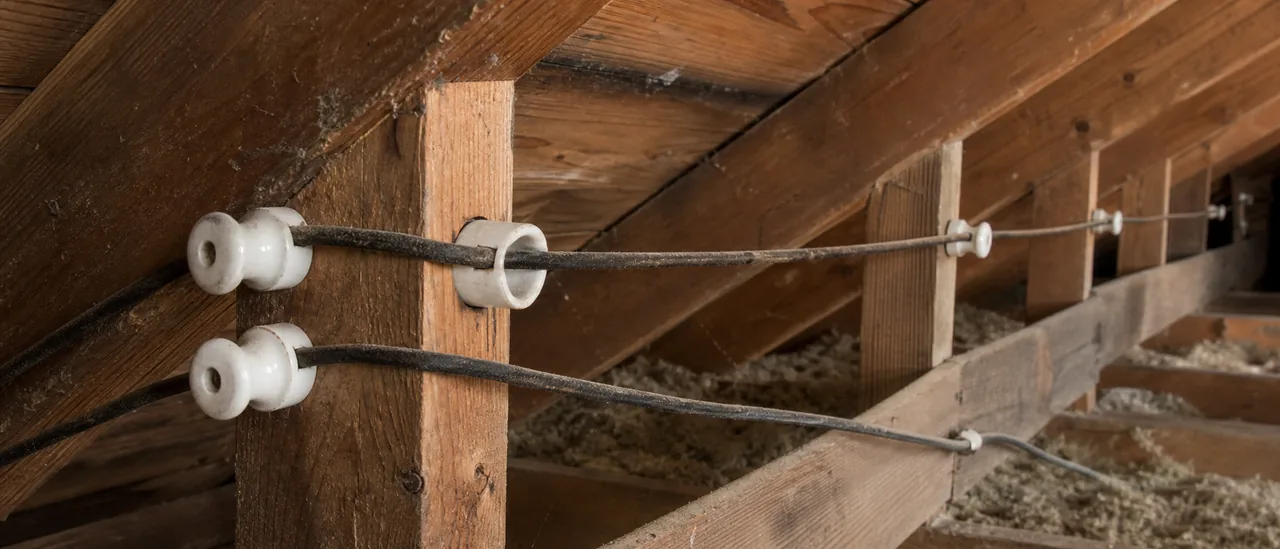
Knob-and-tube wiring on a home inspection means the inspector observed an older wiring method in at least one accessible area. Separate insulated conductors run along porcelain knobs and pass through framing inside porcelain tubes. The finding does not, by itself, prove that every visible wire is energized, that the whole house uses this system, or that it must be replaced immediately.
Its practical importance depends on condition and use. Some homes retain active knob-and-tube circuits; others contain abandoned remnants after partial rewiring. A mixture of old and newer cable may also indicate that only part of the electrical system was updated.
Findings that change the concern
The wiring method is not the complete diagnosis. Visible deterioration, broken porcelain supports, questionable splices, improper overcurrent protection, or conductors surrounded by insulation deserve more concern than intact, well-supported wiring with clear space around it.
Do not disturb questionable wiring or nearby insulation
Damaged conductor insulation can expose energized wire. Leave tracing, live-circuit testing, panel work, and movement of insulation around the wiring to a qualified electrician.
Insulation matters because concealed knob-and-tube conductors generally rely on surrounding air space. Local rules are not identical. For example, Washington permits certain loose or rolled insulation around existing wiring only after an appropriately licensed electrical contractor surveys and certifies specified conditions; foam insulation is prohibited there.
What a home inspection can confirm
A standard home inspection is visual and limited to accessible components. Under InterNACHI's standard, the inspector examines the electrical service, panelboards, overcurrent devices, a representative number of receptacles and fixtures, and the observed wiring type. The report reflects conditions visible on the inspection date.
That scope cannot reveal conductors concealed behind finished walls or buried under insulation. It also cannot map every branch circuit, prove that an apparent remnant is inactive, or establish the condition of the complete system. Inspectors are not required to dismantle components or enter unsafe or inaccessible areas.
Urgency and the practical next step
Read the report for the observation behind the label. An isolated, apparently abandoned section is different from active wiring with failed insulation, unsafe splices, overheating evidence, or incorrect protection. Burning odor, smoke, sparking, or exposed energized conductors warrants prompt safety action rather than routine follow-up.
When the report cannot establish whether the wiring is active or how far it extends, a qualified electrician can trace circuits and evaluate accessible insulation, splices, protection, grounding limitations, and local requirements. The next decision should follow that documented condition—not the age label alone.