On this page
It is an estimate of service left
Remaining useful life on a roof report is the inspector’s estimate of how many years the roof covering may remain functional before replacement is likely. It is an informed judgment, not a guaranteed expiration date.
A report might give a range, such as “three to five years,” or use broader wording like “near the end of service life.” Either describes anticipated future service under reasonably normal conditions. It does not mean the roof will fail on a particular date.
Remaining life is not the same as present condition
A roof can have estimated service remaining and still need a localized repair now. Conversely, an older roof may remain functional if its materials, installation, exposure, and maintenance have been favorable.
Why the estimate can change
Roof age is only a starting point. The covering material, installation quality, local weather, roof design, maintenance, and visible deterioration all affect service life. Severe weather can shorten a roof’s overall lifespan or cause isolated damage that needs repair.
Documentation also matters. A permit, invoice, or manufacturer record can support the installation date. Without reliable records, the inspector may infer age from appearance and available property information, which adds uncertainty.
Conditions can change after the inspection. A leak, wind event, fallen branch, drainage problem, or delayed repair may make the earlier estimate obsolete. That is why a useful report should be read with its inspection date, observations, photos, limitations, and recommendations.
How an inspector reaches the opinion
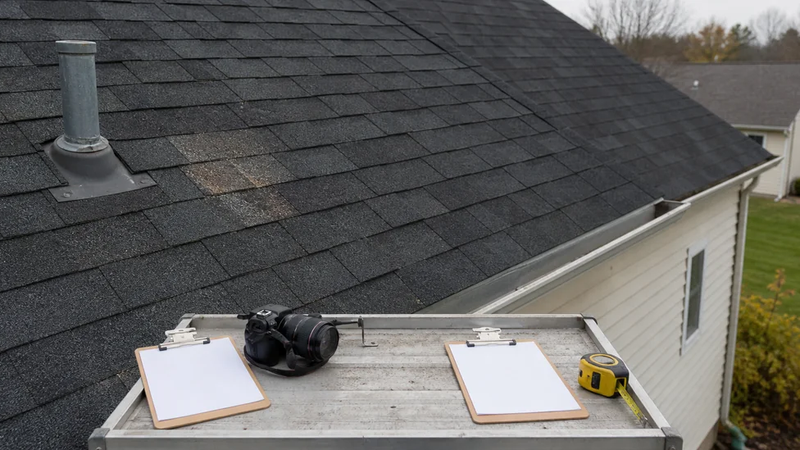
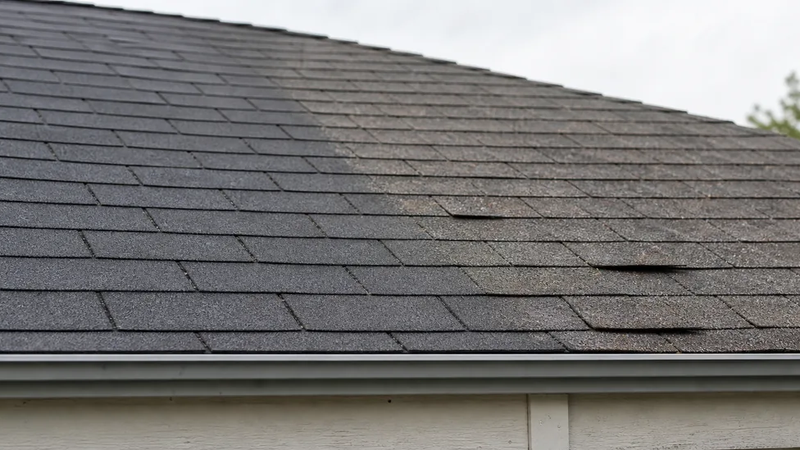
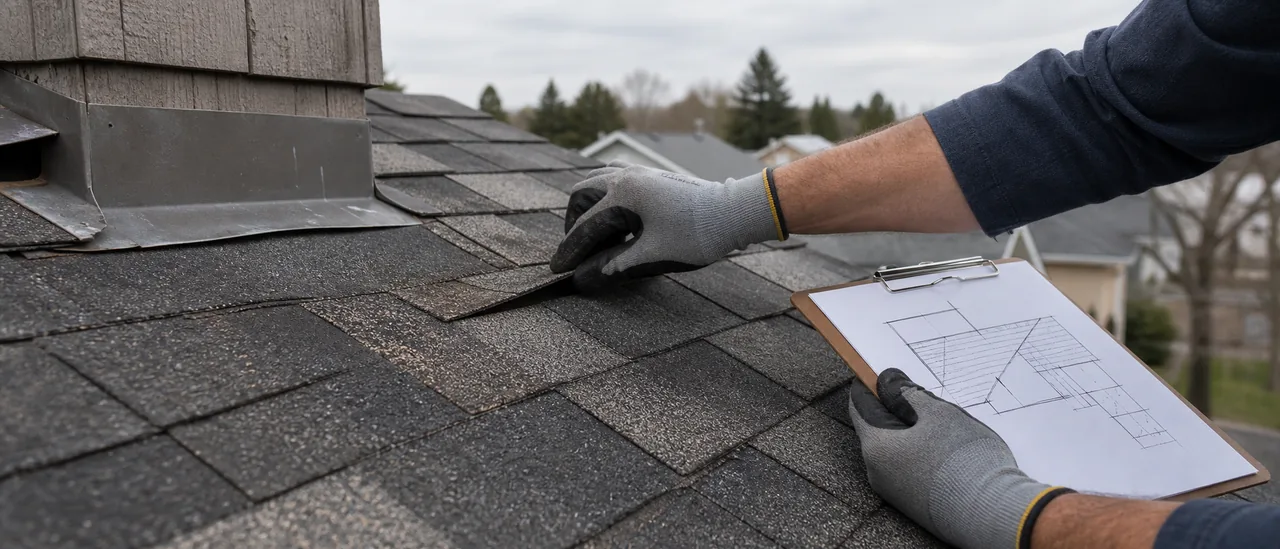
The inspector typically considers the accessible roof covering, drainage components, flashings, and penetrations. Findings such as missing or damaged material, exposed fasteners, failed flashing, surface wear, previous repairs, or signs of water entry help frame the estimate.
Access limits matter too. A steep, fragile, wet, snow-covered, or otherwise unsafe roof may be viewed from the ground, eaves, windows, or by another permitted method. Hidden layers and concealed moisture may not be determined by a visual inspection.
Not every home inspection must include a remaining-life estimate. For example, Maryland’s minimum standards require inspection of accessible roof components but expressly say a home inspector is not required to determine the roof covering’s remaining life expectancy. The report’s stated scope and local rules therefore matter.
What to do with the number
Treat the estimate as a planning range, then give priority to documented defects. Active leakage, loose materials, unsafe conditions, or recommendations for prompt repair matter more than a distant replacement estimate.
If the number affects an important maintenance decision, or the report notes limited access or significant deterioration, ask what observations support it. A qualified roof evaluation may be appropriate when the available evidence cannot confirm present condition or the likely repair scope.