On this page
Rust usually points to moisture
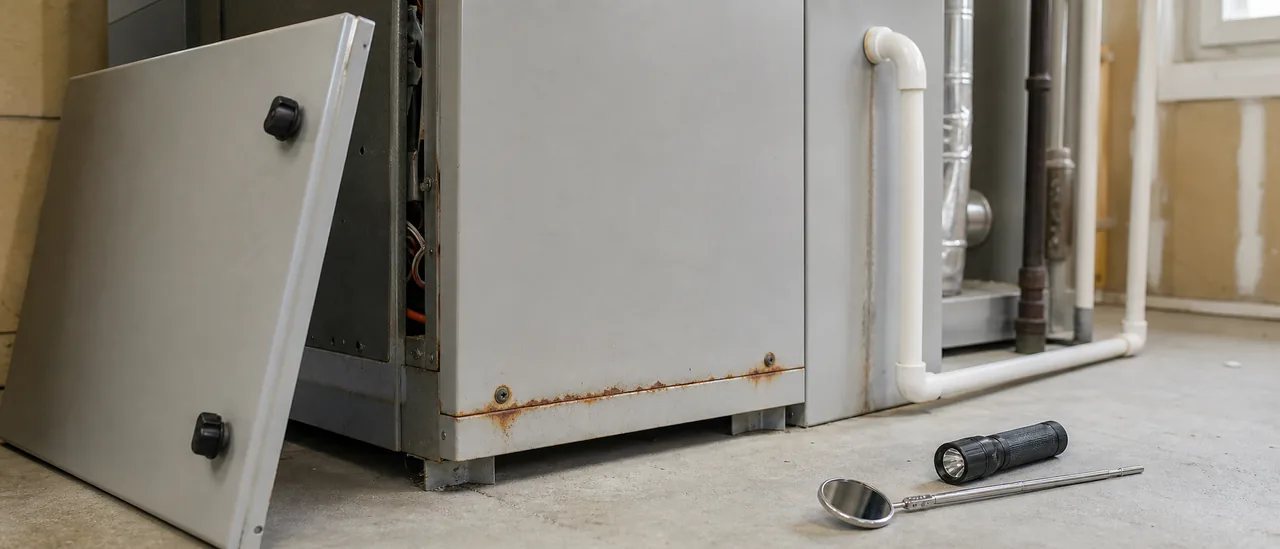
Rust in a furnace cabinet usually means moisture reached exposed steel long enough for corrosion to begin. A small, dry patch may be old surface damage. It does not, by itself, prove the furnace is unsafe or that an active leak remains.
The cabinet is the sheet-metal housing around the equipment. It is not the heat exchanger, burner assembly, vent, evaporator coil, or drain pan. Rust on the housing therefore cannot confirm damage to those concealed or separate components.
What the finding does not prove
Color alone does not reveal corrosion depth or its source. An inspector can report visible scaling, pitting, holes, staining, or dampness, but surface rust cannot confirm the condition of hidden metal.
Plausible moisture sources
The rust pattern helps focus the investigation, although it rarely identifies one cause with certainty. Common possibilities include:
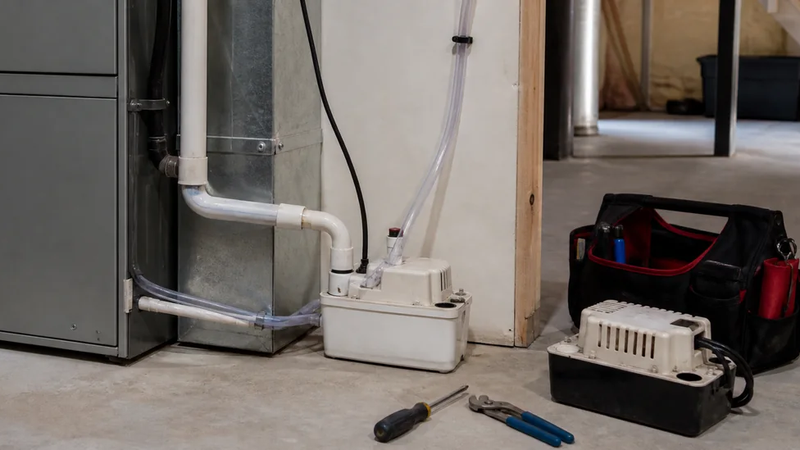
- condensate escaping from a furnace drain, trap, pump, or tubing connection;
- water from an air-conditioning coil, drain pan, drain line, or nearby humidifier;
- a plumbing leak, foundation seepage, past spill, or repeated contact with a damp floor; and
- condensation forming on cool metal in a humid equipment space.
High-efficiency furnaces intentionally produce condensate and need a suitable drainage path. However, rust beside a drain line is only a clue. Water can travel along tubing, seams, or panels before collecting at the lowest edge.
Light discoloration on one screw is different from flaking metal across a bottom panel. Fresh water tracks, mineral deposits, recurring dampness, or corrosion below another component make an unresolved moisture source more likely.
What a home inspection can confirm
A standard home inspection is visual and non-invasive. Under the American Society of Home Inspectors standard, the inspector opens readily openable access panels and examines installed heating equipment, vents, flues, chimneys, and distribution systems. The standard does not require inspection of heat exchangers or dismantling components.
Within those limits, an inspector may document the rust's location and extent, look for accessible water paths, observe nearby drains and venting, and operate the system with normal controls when conditions permit. The report may recommend correction, monitoring, or further evaluation, but a visual inspection generally cannot date the rust, measure hidden metal loss, or guarantee future performance.
How urgent is the finding?
A dry, localized surface patch without metal loss or operating concerns is usually a maintenance finding rather than an emergency. The moisture source still deserves correction before corrosion progresses.
Prompt qualified HVAC evaluation is appropriate when rust is wet, widespread, flaking, deeply pitted, or perforated; when water is near burners, wiring, or controls; or when the system operates abnormally. The evaluation should identify the water source and determine whether corrosion is limited to the cabinet or affects functional components.