On this page
Repair usually means the problem is limited
Inspection findings usually point toward roof repair when a defect is localized and the surrounding assembly appears serviceable. Common examples include a few missing or displaced shingles, isolated broken tiles, loose flashing, a gap at a penetration, or debris obstructing drainage. The repair should correct both the damaged part and the route by which water can enter.
“Repair” does not mean every marked condition can be fixed with sealant. It means the affected area may be restored without replacing the broader roof covering, subject to closer evaluation of what lies beneath.
Findings that commonly support repair
The strongest repair candidates are discrete conditions with identifiable boundaries:
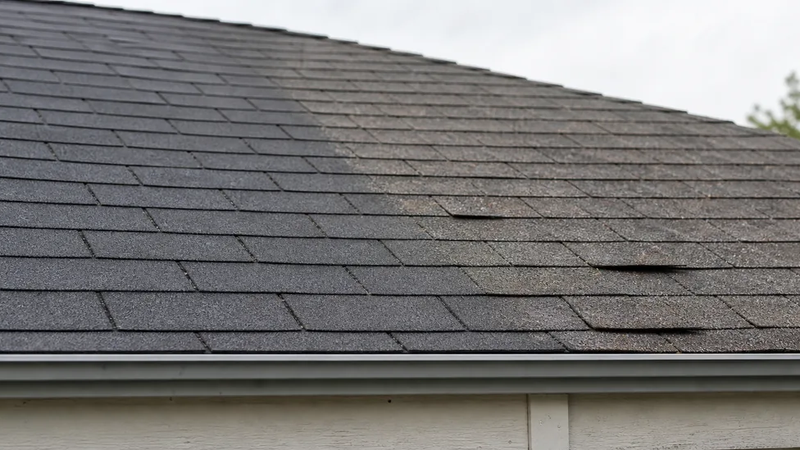
- dislodged or missing shingle tabs, or a limited number of cracked roof-covering pieces;
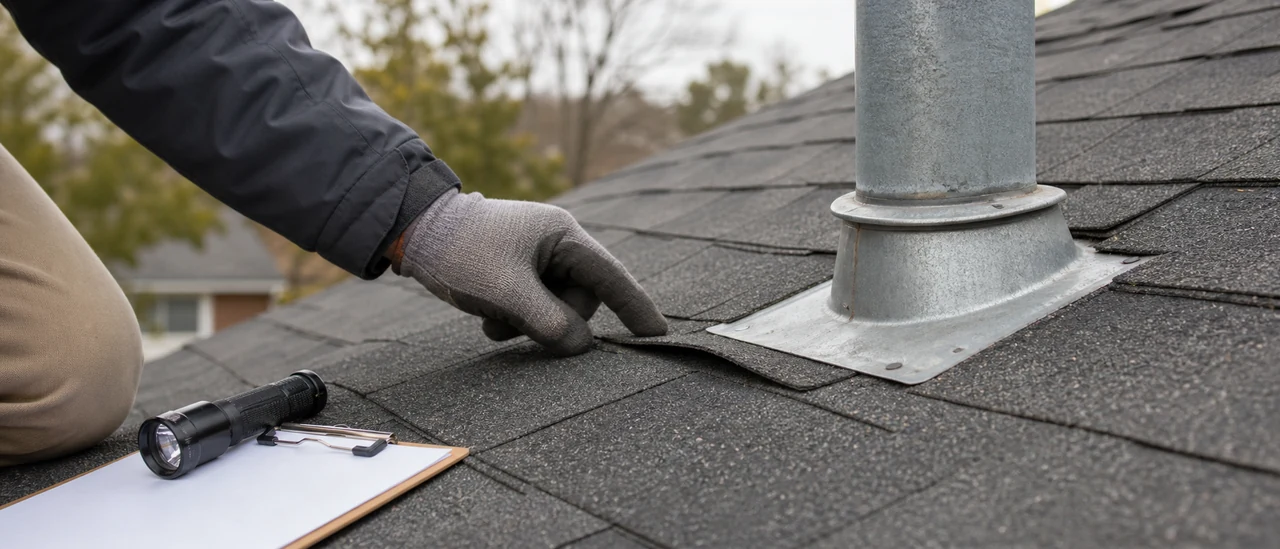
- loose, missing, or poorly fitted flashing at an edge, wall, chimney, skylight, or vent;
- gaps or missing sealant around a roof penetration;
- an isolated leak trace that can be connected to a specific roof detail.
Independent building-safety guidance treats loose, broken, cracked, or missing shingles as deterioration indicators. It also calls for addressing loose or missing flashing and repairing leaks promptly. Those instructions support correction, but the visible finding alone does not establish how far damage extends.
A repair finding is not a repair design
An inspection report can identify a deficiency and recommend correction or further evaluation. It may not establish the exact repair method, material quantity, hidden damage, or cost.
What changes the conclusion
Distribution matters as much as defect type. One missing shingle can be a repair candidate; similar deterioration across many roof planes may indicate a broader service-life or installation problem. Repeated leaks, widespread curling or splitting, soft or decayed decking, and damage spanning several components also require a wider assessment before choosing repair.
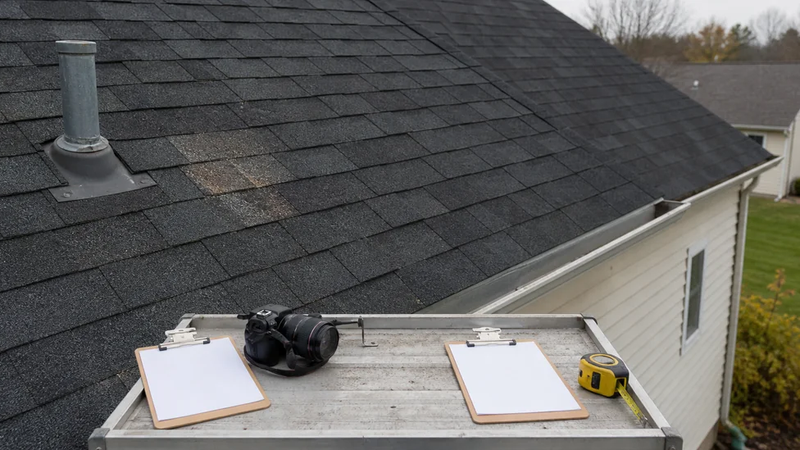
A standard home inspection is visual and limited to readily accessible areas. Under the ASHI standard, inspectors are not required to determine concealed conditions, defect causes, correction methods, remaining service life, or future performance. Stains can show that moisture was present, but they do not always reveal where water entered or whether underlying materials remain sound.
Practical bottom line
Treat a repair recommendation as a scope clue, not a guarantee. Localized, accessible defects generally favor targeted correction when adjacent materials are compatible and serviceable. Widespread deterioration, uncertain leak paths, concealed moisture, or questionable decking justify a qualified roof evaluation before the repair scope is set.