On this page
The common problems
The most common clay tile roof problems are cracked or missing tiles, loose or slipped tiles, deteriorated fasteners, and failed flashing. The visible clay is only one part of the roof. Attachment, flashing, underlayment, and the supporting deck must work together to shed water.
These problems matter because one obvious defect does not always identify the full repair. A broken tile may be isolated, while water marks or movement can point to trouble in concealed components.
Where trouble usually develops
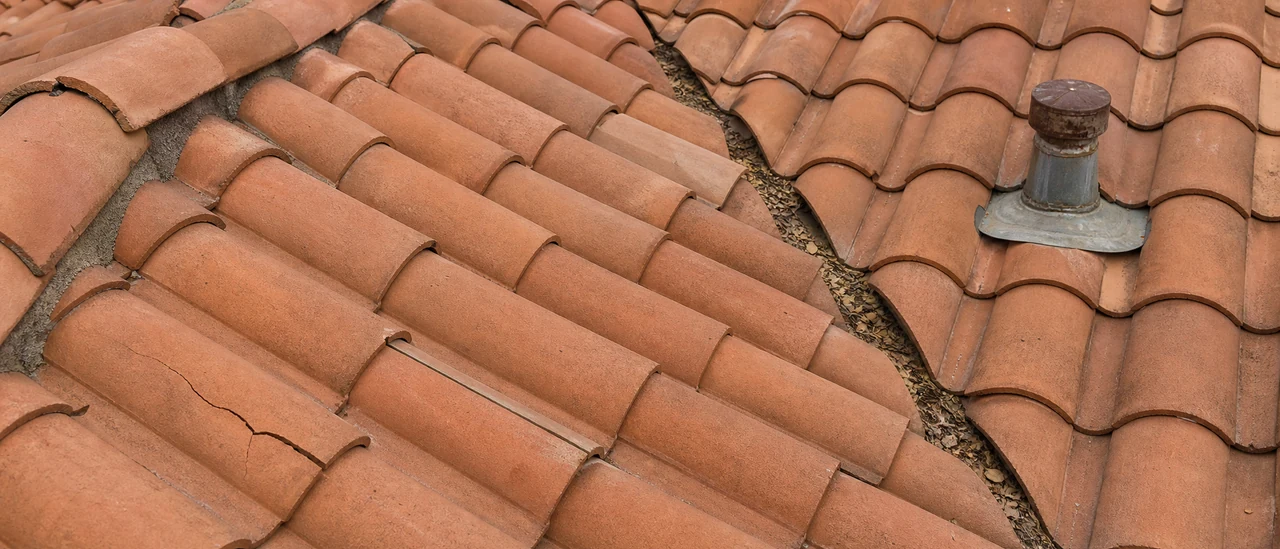
- Broken, cracked, or spalled tiles: Impact, careless foot traffic, weathering, or strain from improper fastening can damage brittle clay. A break can interrupt the tile layer’s water-shedding path.
- Loose, shifted, or missing tiles: Corroded nails, deteriorated pegs, failed wire ties, or other attachment problems can let tiles move. GSA guidance notes that unusually clean areas may reveal movement where a tile previously sat.
- Flashing and penetration failures: Valleys, walls, chimneys, vents, and other penetrations concentrate water. Deteriorated or poorly integrated flashing can admit water even when surrounding tiles look intact.
- Aging concealed layers: Underlayment and wood components can deteriorate below serviceable-looking tile. The needed repair may therefore extend beyond replacing the visibly damaged piece.
Flashing problems can stay concealed
Tile-level flashing sheds most runoff, while deck or underlayment flashing provides secondary protection at penetrations. An intact-looking field of tile does not rule out a concealed flashing or substrate problem.
Conditions that change the diagnosis
Age and construction method make a difference. Historic roofs may use nails, wire, mortar, hooks, or battens that fail differently from modern fastening systems. Local exposure also matters because weathering, wind, and impacts do not affect every roof area evenly.
Surface appearance needs context. Color variation alone is not proof of functional failure. Likewise, one cracked tile does not establish that the entire roof needs replacement. The important questions are whether defects are isolated, whether attachment remains sound, and whether water has affected concealed materials.
Practical bottom line
A useful evaluation looks for missing or out-of-place tiles, fresh cracks, spalling, movement marks, deteriorated flashing, and attic-side moisture. It also limits roof traffic because walking on fragile tiles can create new damage. The practical conclusion should identify both the visible defect and the condition of the water-shedding layers beneath it.