On this page
The common problems
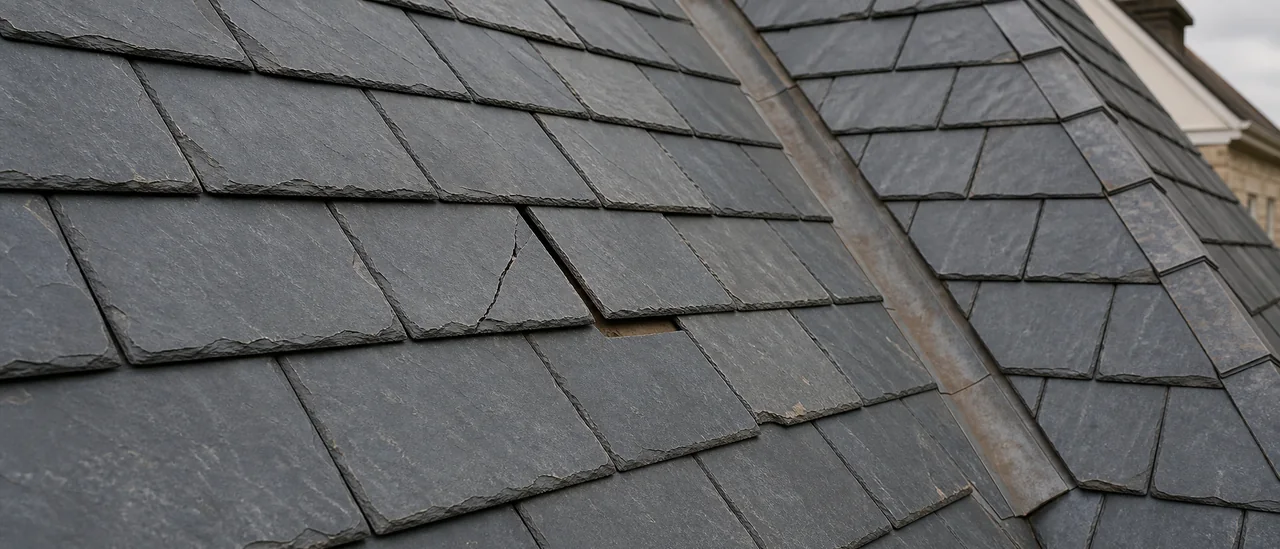
A slate roof uses overlapping shingles cut from natural slate. Its common problems are cracked, broken, missing, or slipping slates; surface delamination; corroded fasteners; failed flashing; and errors in lapping or nailing. These distinctions matter because a leak does not automatically mean the stone itself has failed.
Slate, fasteners, flashing, drainage, and the supporting wood function as a system. Trouble in one part can expose sound slate to water or allow individual units to move.
What each problem looks like
- Broken or displaced slates: Individual units may crack, lose corners, slide, or disappear. Severe weather, water, foot traffic, and failing fixings are possible causes.
- Delamination and softening: Weathered slate can flake in thin layers along its cleavage planes. As the layers separate, the stone absorbs more moisture, loses strength, and becomes easier to break.
- Fastener failure: Corroded nails can release otherwise serviceable slates. Nails driven too tightly may crack a unit; projecting heads can puncture the slate above.
- Flashing and drainage defects: Pinholes, open seams, loose flashing, clogged gutters, and failed valley details can admit or concentrate water. Metal flashing may wear out before durable slate.
- Installation or repair errors: Incorrect nail placement, unsuitable fasteners, damaging foot traffic, and inappropriate patching can create new defects. The General Services Administration warns that roof cement or sealant is not an acceptable repair on historic slate roofs.
A ceiling stain does not identify the failed component
Water may enter at flashing, a valley, a gutter edge, or a displaced slate before traveling along the structure. The visible damp patch may be far from the entry point. Diagnosis should trace the moisture path instead of assuming every slate is defective.
Why severity varies
Slate quality, weather exposure, workmanship, and maintenance all affect deterioration. Valleys and drainage details face additional risk when poor detailing or debris allows water to collect or spill into the roof. Damage may therefore be localized to one slope or detail rather than spread evenly across the roof.
Walking can break aged or already weakened slates and damage adjacent units during repair. A visual check from the ground can locate obvious gaps or misalignment, but it cannot confirm concealed fasteners, flashing laps, sheathing, or the underside of each slate.
Practical bottom line
The most useful assessment separates stone failure from accessory and installation problems. Record broken or slipping units, flaking surfaces, flashing defects, drainage trouble, and interior moisture signs. Localized defects may be repairable, while widespread delamination or recurring failures across a slope can indicate broader deterioration. The deciding evidence is the condition and distribution of each component—not roof age or a leak by itself.