On this page
The common problem types
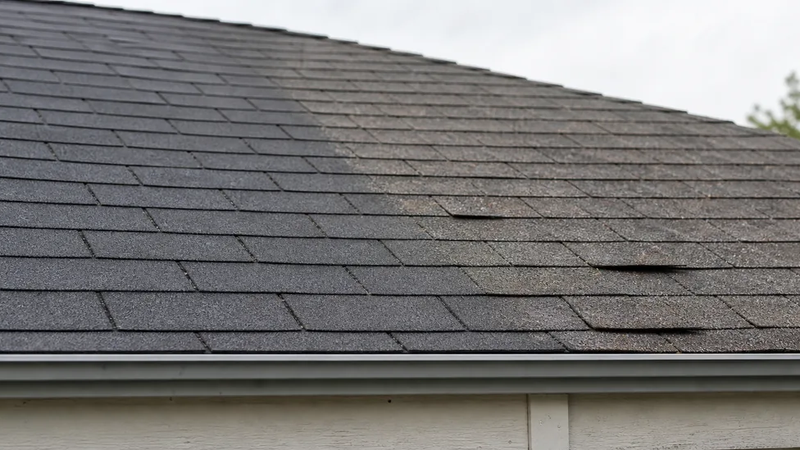
Asphalt-shingle roofs commonly develop granule loss, blisters, curling or lifted tabs, buckling, cracks, loose or missing shingles, and exposed or backed-out fasteners. Staining and growth may affect appearance, while failed flashing or damaged shingles can create water-entry paths.
These conditions matter because they do not all mean the same thing. Some reflect ordinary weathering, some point to installation or deck movement, and others follow wind, hail, debris, or foot traffic.
| Visible condition | What it may indicate |
|---|---|
| Bald areas or loose granules | Aging, abrasion, blistering, or impact |
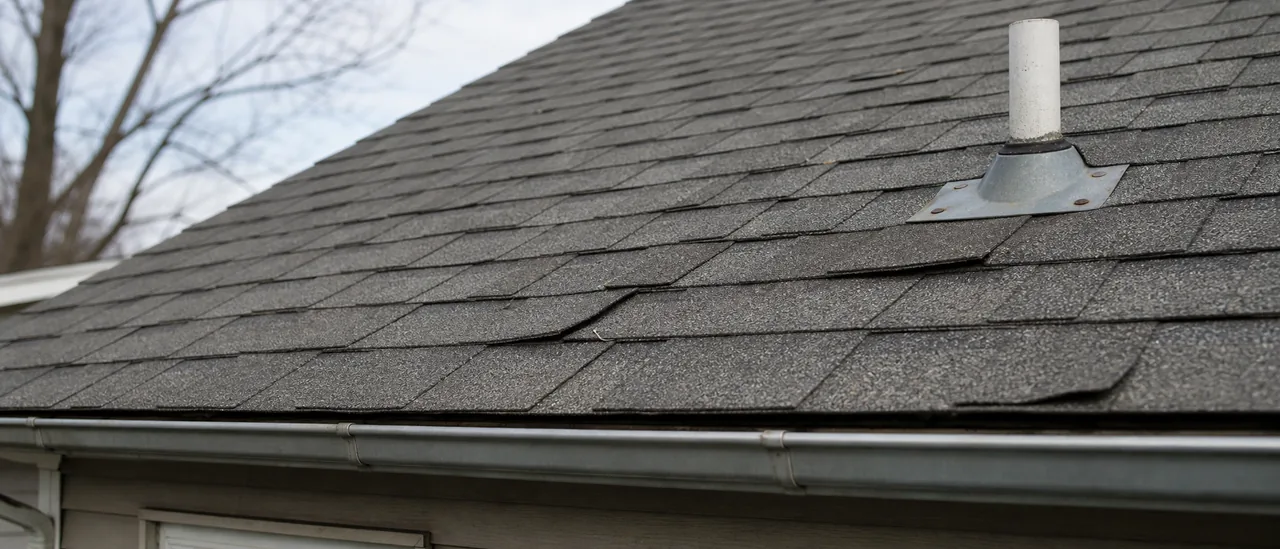
| Curled, lifted, or missing tabs | Age-related unsealing, wind, or attachment trouble |
| Ridges running through courses | Wrinkled underlayment or movement in the wood deck |
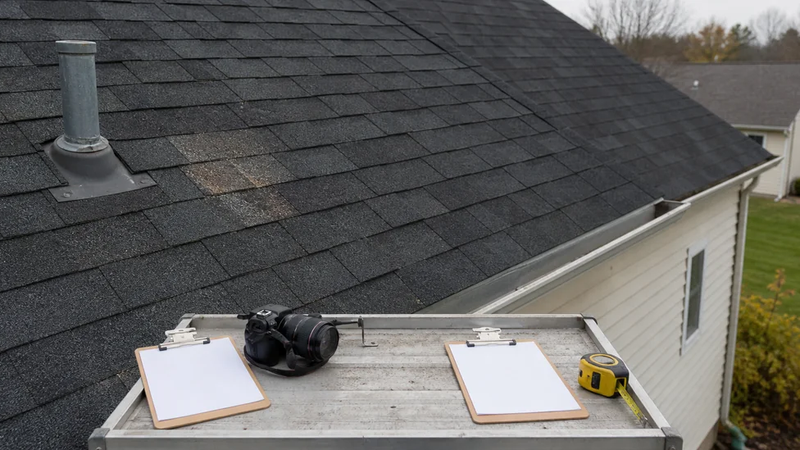
| Dark streaks or localized growth | Algae discoloration, moss, or trapped debris |
| Gaps or deterioration at penetrations | A flashing or seal detail that needs evaluation |
Aging and surface changes
Sunlight, rain, and repeated temperature changes gradually alter asphalt shingles. IBHS field research has observed granule loss and blistering, unsealing and curling, exposed fasteners, buckling, and staining as roofs experience everyday weather.
A small amount of loose “hitchhiker” granules can shed from a newer roof. Continued loss that exposes the underlying asphalt is different and deserves closer examination. Similarly, algae often creates brown-to-black streaks rather than an immediate leak, while moss or debris can retain moisture and should not be mistaken for algae.
Installation and roof-detail problems
Buckling is a useful example of why appearance alone is not a diagnosis. ARMA defines it as shingles not lying flat because the underlayment wrinkles or the wood deck moves. Moisture, deck expansion, and attic temperature or moisture conditions can contribute.
Fasteners may also be misplaced, overdriven, underdriven, or work upward. Roof edges, valleys, walls, chimneys, skylights, and plumbing vents depend on sound flashing and seals. IBHS identifies roof penetrations as vulnerabilities and recommends regular inspection of their detailing.
Weather and mechanical damage
Wind can break shingle seals, crease tabs, or remove shingles. Hail can dent or tear shingles and displace granules; severe damage can reduce their water-shedding function. Falling branches, tools, and unnecessary foot traffic can also scuff, crack, or puncture the surface.
A symptom is not proof of its cause
Granule loss, a lifted tab, or a round mark may have several explanations. Age, location, pattern, nearby components, and the condition of the shingle underside all matter in a sound evaluation.
Practical bottom line
Common problems range from cosmetic discoloration to openings that can admit water. The extent and pattern matter more than one isolated mark. Because steep or fragile roofs are hazardous and walking can add damage, observations from the ground or attic should be followed by a qualified roof evaluation when shingles are missing, surfaces are exposed, flashing is open, or moisture is present.