On this page
Start with the written report
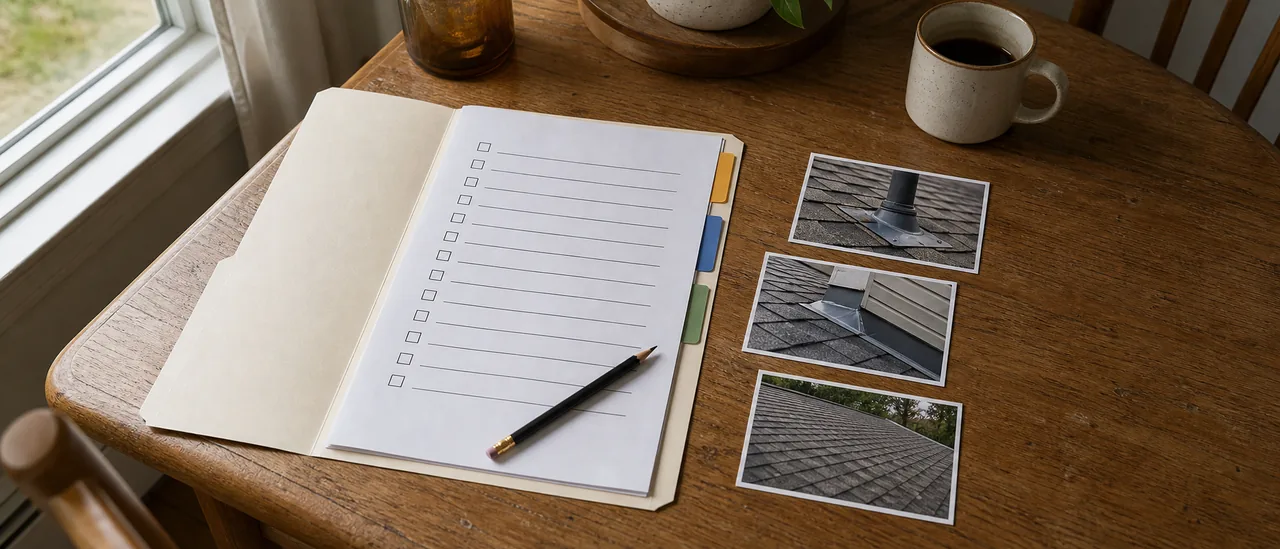
Read the complete roof inspection report before arranging work. Mark every finding, photograph, inaccessible area, and recommendation, then ask the inspector to explain anything unclear. The shortest reliable process is to separate urgent safety or water-entry concerns from repairs, maintenance, and items that only need monitoring.
Do not climb onto the roof to double-check a photograph. OSHA notes that roof surfaces may be steep, slippery, or deteriorated. Use the report images and observations you can make safely from the ground or indoors.
Turn the findings into an action list
Work through the report in this order:
- Address active hazards or water entry. If the report identifies an active leak, unsafe component, or opening that could admit water, ask the inspector what temporary precautions are appropriate and which qualified professional should evaluate it.
- Clarify the inspection limits. Note surfaces hidden by snow or debris, roof sections not walked, inaccessible attic areas, and components excluded by the agreement.
- Request focused follow-up. Arrange further evaluation when the report recommends it, the cause or extent remains uncertain, or repair decisions depend on concealed conditions.
- Plan routine work. Group maintenance and non-urgent corrections by priority. Keep the report, photographs, and completed-work records together for future comparisons.
Keep follow-up observations at ground level
Roof access introduces fall, ladder, electrical, and surface-stability hazards. Leave roof-level confirmation and repair work to people with the training and equipment for the conditions.
Understand what the inspection confirmed
Treat the report as a record of observable conditions within its stated scope—not a roof warranty. The governing agreement and local standard matter. Washington law, for example, defines a licensed home inspection as a visual, non-invasive review of readily accessible components and a written report on their condition at that time.
Washington’s roof standard includes coverings, gutters, downspouts, visible flashing, vents, skylights, penetrations, and exterior portions of chimneys and flues. It does not require walking a roof when that could be unsafe or damaging, clearing snow or debris, or predicting the covering’s remaining life. A visual, non-invasive finding can document an observable condition, but it cannot by itself confirm concealed underlayment, fasteners, or decking.
When professional help is needed
Contact the inspector first when the wording, location, photograph, priority, or limitation is unclear. Seek the relevant qualified professional when the report calls for diagnosis, intrusive testing, structural assessment, or repair beyond the inspection scope. Ask for a written description of any completed work and retain it with the original report.
The useful next step is not to repair every comment immediately. It is to understand what was observed, what was not examined, and which finding needs attention first.
Related reading: How Often Should a Roof Be Inspected?