On this page
Repair localized damage; replace a failing roof field
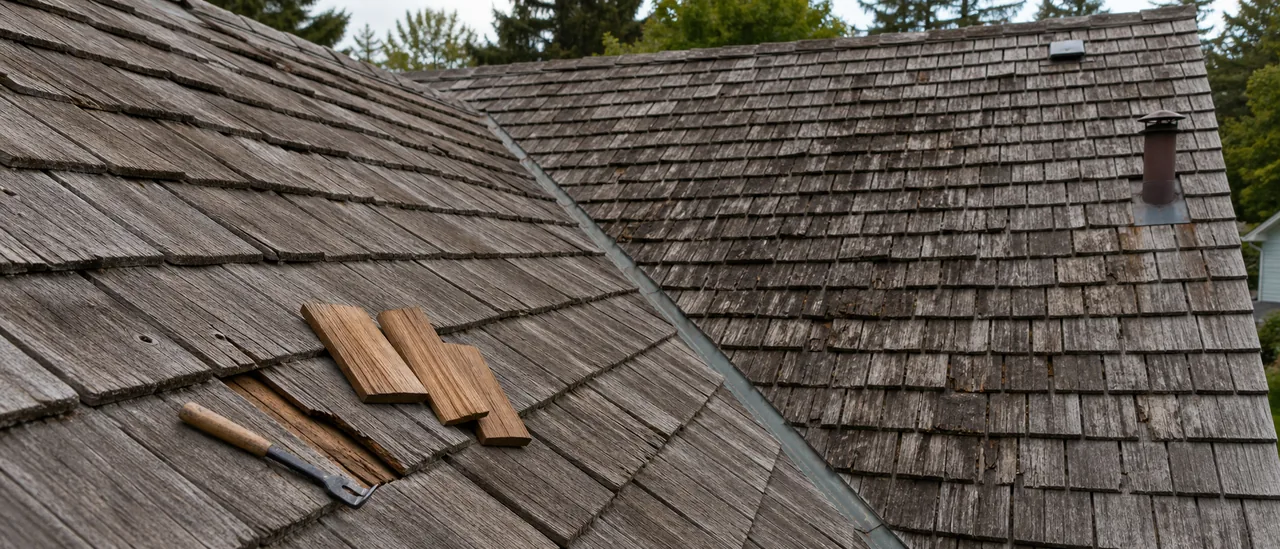
Repair a cedar shake roof when damage is confined to a few units or a small area, the surrounding shakes remain serviceable, and the water-shedding assembly is otherwise sound. Replacement becomes the better choice when deterioration is widespread, moisture damage extends below the covering, or each attempted repair breaks more of the aging roof.
Here, a repair means selective work on damaged shakes, a limited section, or an isolated flashing defect. Replacement means removing and renewing the covering across a roof plane or the full roof. The decision should be based on condition, not color or age alone.
| Inspection finding | Leans toward repair | Leans toward replacement |
|---|---|---|
| Damage pattern | A few missing, split, or impact-damaged shakes in one area | Erosion, splitting, cupping, or decay spread across a roof plane |
| Moisture path | One identifiable opening with dry surrounding materials | Recurring leaks, multiple entry points, or broad attic staining |
| Materials below | Sound sheathing or lath and intact nearby interlayment | Soft, decayed, or broadly water-damaged substrate |
| Repair behavior | Adjacent shakes can be lifted and the new work integrated | Nearby shakes crumble or split as the repair area is opened |
What supports a lasting repair
Localized impact, one failed shake, or a discrete workmanship defect can support repair. A municipal preservation guide for wood shingles recommends individual replacement when only a few units are missing or damaged, while significant visible attic water damage is a reason to consider replacement. That is a useful condition-based benchmark, not a universal code rule.
A repair also needs sound material around it. Individual shakes can be removed and replaced, and a properly placed corrosion-resistant metal shim can address certain limited defects. Large areas of caulk, surface coatings, or repeated patches do not restore deteriorated wood, failed flashing, or damaged materials beneath the shakes.
Conditions that change the answer
Start by identifying why the roof failed. Leaves, moss, and shaded debris can hold moisture against wood and encourage decay, according to the USDA Forest Products Laboratory. If the cause affects a broad area, replacing a few visible shakes may leave the underlying problem untouched.
Look beyond the exposed surface. The evaluation should include valleys, penetrations, ridge and eave details, flashings, fasteners, interlayment, attic surfaces, and accessible sheathing or lath. A dry attic on inspection day does not erase old water stains, so the pattern and condition of the wood matter more than a single moisture reading.
Roof age can provide context, but it cannot settle the decision. Some checking and weathering are normal in wood. Conversely, a younger roof may still need replacement when installation defects or trapped moisture affect the assembly broadly.
Local building requirements, fire classifications, and historic-preservation rules may also limit the acceptable material or scope. Those requirements vary by jurisdiction and should be checked before work begins.
What a useful evaluation should document
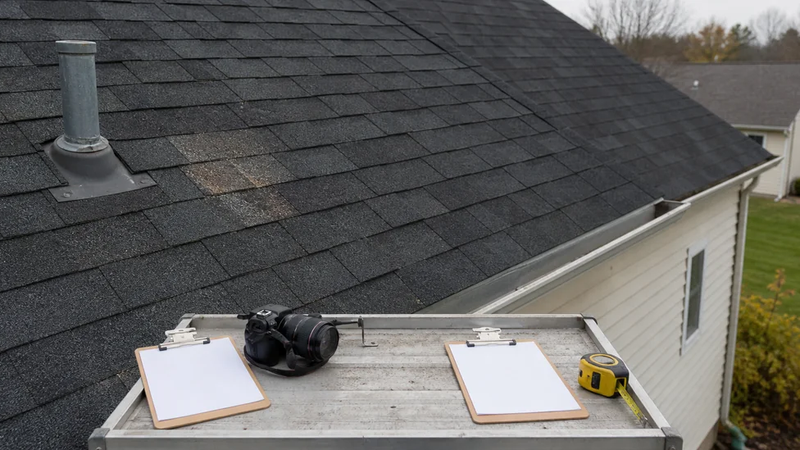
Because older shakes can be damaged by foot traffic, roof-level examination is best left to someone with suitable access and safety equipment. A useful written assessment should include:
- marked locations and counts of damaged shakes on each roof plane;
- photographs of the roof surface, flashing details, attic, and accessible substrate;
- evidence distinguishing an isolated opening from widespread moisture exposure;
- whether adjacent shakes can tolerate removal and reintegration; and
- the proposed repair detail, including replacement units, fasteners, flashing, and interlayment.
If those observations show localized damage surrounded by sound material, repair is reasonable. If they reveal a failing roof field or compromised assembly below it, replacement avoids turning a series of short-lived patches into the roof plan.