On this page
The short answer
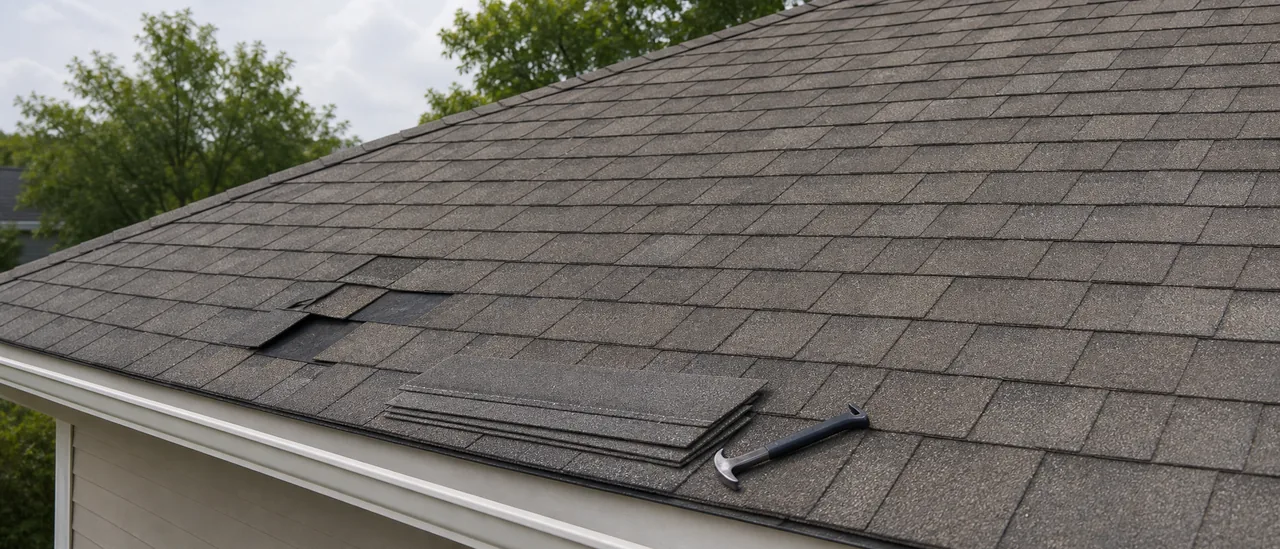
Repair a composite roof when the problem is confined to a small area and the surrounding shingles, flashing, underlayment, and deck can still support a durable repair. Replacement is usually the sounder choice when deterioration is widespread, the roof deck has significant damage, or removing a few shingles would break or loosen many more.
Here, “composite roof” means an asphalt-composition shingle system. Synthetic composite tiles are proprietary systems with different fastening and repair requirements, so their manufacturer’s instructions control.
Conditions that favor repair
Asphalt shingle roofs are assembled from separate components. The Asphalt Roofing Manufacturers Association (ARMA) notes that many components can be repaired independently without disrupting a large roof area. The National Roofing Contractors Association also publishes procedures intended for long-term repair of asphalt-shingle roof systems.
A repair is most defensible when an inspection confirms all of these conditions:
- Damage is isolated, such as a few missing or punctured shingles, a backed-out fastener, or one failed flashing detail.
- Adjacent shingles remain flat, sealed, and flexible enough to lift and reseal without cracking.
- The deck below is firm and dry beyond the repair boundary.
- Compatible replacement shingles and accessories are available.
- The repair can correct the cause, not merely cover a symptom with roofing cement.
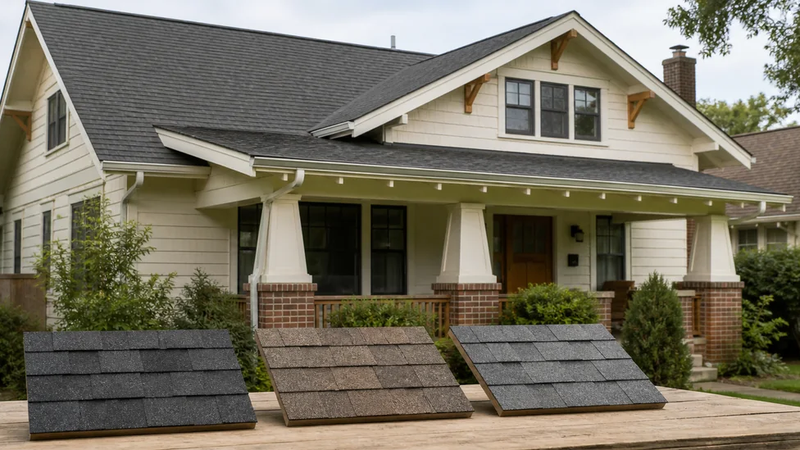
Color is a separate decision. ARMA cautions that new shingles may look different even when their type and color match, because the existing roof has weathered. A visible patch can still be technically serviceable.
When replacement becomes more reasonable
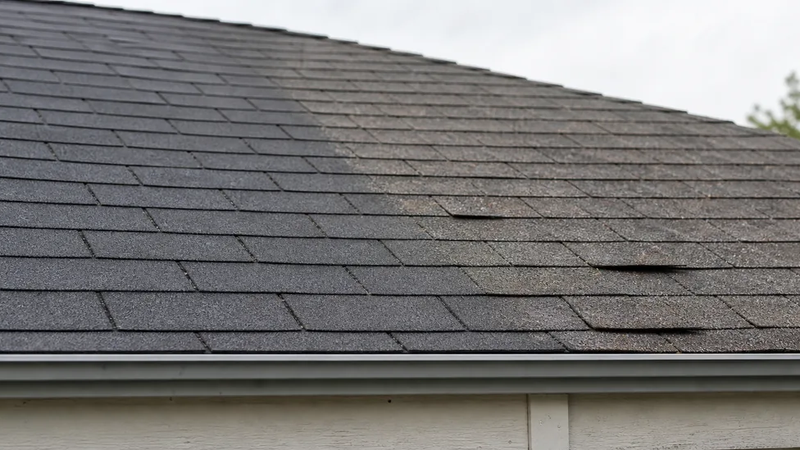
Age alone does not decide the question. Condition does. However, aging can change repairability. When brittle, curled, loose, or easily torn shingles occur across several slopes, a small patch does not address the roof-wide decline.
| Finding | Repair may still fit | Replacement is more likely |
|---|---|---|
| Damage pattern | One bounded area | Repeated damage across slopes |
| Surrounding shingles | Flat, bonded, workable | Brittle, curled, loose, or easily torn |
| Deck and underlayment | Sound outside a small opening | Widespread rot, warping, or wet areas |
| Repair outcome | Cause can be corrected fully | Patch would leave recurring weak points |
| Materials | Compatible pieces available | Discontinued profile prevents a functional fit |
One leak does not automatically require a new roof; water can enter at a single flashing or penetration. Conversely, no ceiling stain proves little about whether the covering remains serviceable. The decision should follow the roof’s condition and the proposed repair boundary, not one symptom.
A temporary patch is not a repair plan
Roofing cement or a tarp may limit water entry while materials are obtained. ARMA specifically treats cement over a punctured shingle as temporary, not a suitable long-term repair.
What the evaluation should document
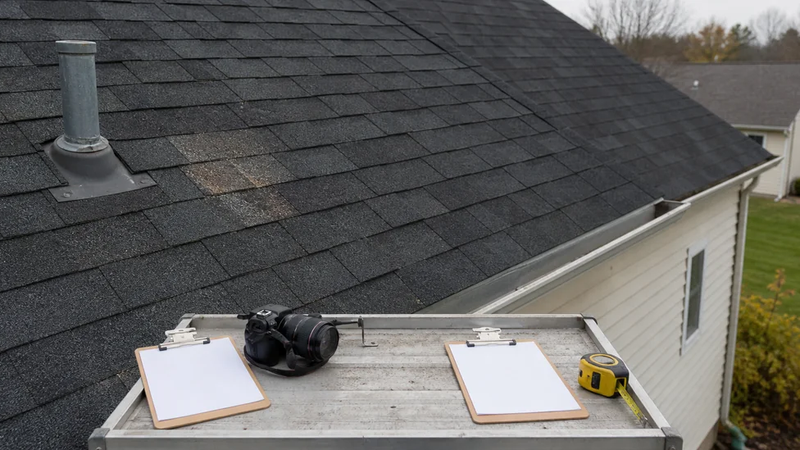
A useful roof evaluation should identify the material, approximate installation history, number of layers, damage locations, shingle flexibility, seal condition, flashing details, and any deck or attic moisture findings. It should also explain how the proposed repair will integrate with nearby shingles and whether affected underlayment or decking must be opened.
Ask for photographs and a written scope that separates permanent repairs from temporary weatherproofing. When the damage boundary, deck condition, or ability to manipulate aged shingles remains uncertain, a qualified roof evaluation is the practical next step. The conclusion should explain why repair will remain serviceable—or why replacement is necessary—rather than relying on roof age alone.