On this page
Repair when the problem is limited and the roof remains serviceable
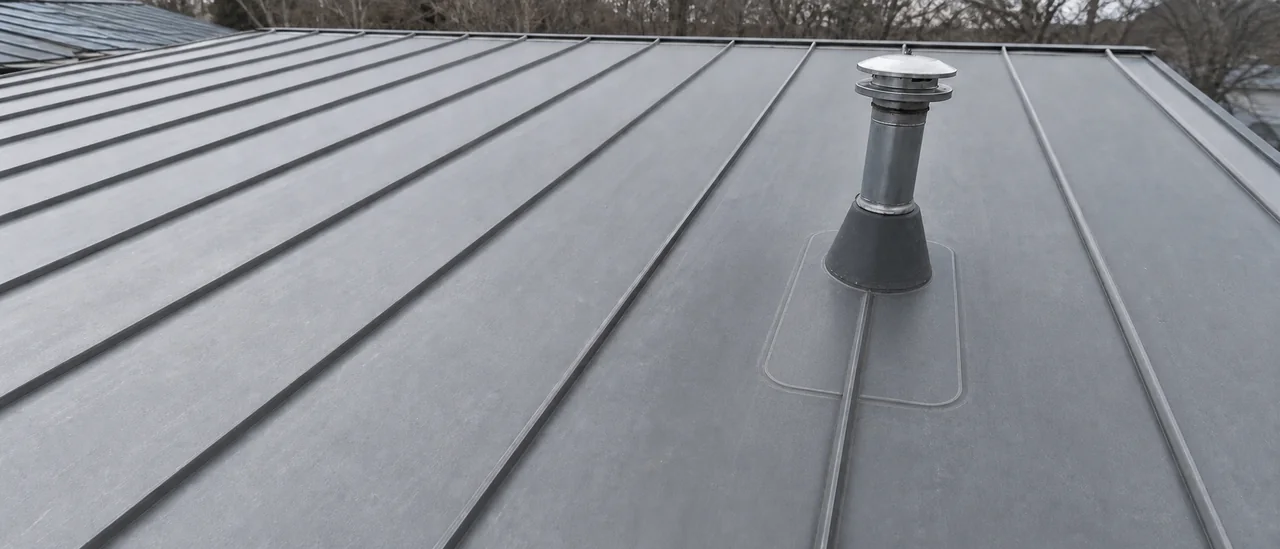
A metal roof should usually be repaired when defects are confined to a small area, the surrounding panels and substrate remain sound, and a compatible repair can restore drainage, attachment, and weather resistance. Replacement becomes the better direction when corrosion, deformation, leakage, or attachment failure is widespread—or when repeated repairs have not corrected the underlying problem.
Age alone does not settle the question. The useful test is whether the roof still works as a system after a durable, detail-specific repair.
Conditions that favor repair
Repair is more defensible when an inspection finds one or more discrete defects with clear boundaries. Examples include a damaged panel, an isolated open seam, a failed penetration flashing, a limited patch of early corrosion, or a small group of loose or deteriorated fasteners.
The repair also needs a sound area to connect to. Adjacent panels should retain usable metal and coating, the deck or framing should provide secure attachment, and wet or deteriorated materials below the roof should not extend beyond the proposed work area.
The surrounding assembly matters as much as the visible defect. Published metal-roof repair guidance makes the performance test explicit: repairs should not diminish the building's existing level of performance. A patch that merely covers the visible drip without correcting the failed detail does not meet that practical standard.
| Inspection finding | Repair is more reasonable when… | Replacement gains weight when… |
|---|---|---|
| Panels and coating | Damage is isolated and surrounding metal is sound | Corrosion, perforation, or coating failure spans many areas |
| Seams and flashings | One detail can be rebuilt compatibly | Similar details are failing across several roof planes |
| Attachment | A limited set of fasteners or clips can be corrected | Panels or substrate no longer hold attachment reliably |
| Moisture below | Wet material is localized and removable | Moisture or decay is broad, concealed, or recurring |
| Repair history | The cause is known and has not repeatedly returned | Patches accumulate while leaks continue or move |
What changes the answer
Replacement deserves stronger consideration when failures share a system-wide cause. Poor drainage, incompatible metals, restricted thermal movement, inadequate attachment, or a repeating penetration detail can make spot repairs little more than expensive whack-a-mole.
Widespread red rust, thinning or perforated panels, distorted seams, large areas of storm deformation, and an unsound deck also weaken the case for repair. So does moisture that has traveled well beyond an interior stain. The visible leak location may not be where water entered.
Components can age at different rates, however. A field study published by the Metal Construction Association found that some ancillary components on the specific low-slope coated-steel roofs studied needed remediation before the panels reached end of service. That finding supports evaluating panels, fasteners, sealants, and other details separately; it is not a lifespan promise for every metal roof.
A coating is not a structural reset
Surface preparation and a compatible coating may address limited coating deterioration. They do not restore badly thinned metal, failed attachment, damaged framing, or wet materials trapped below the panels.
Document the decision before choosing a scope
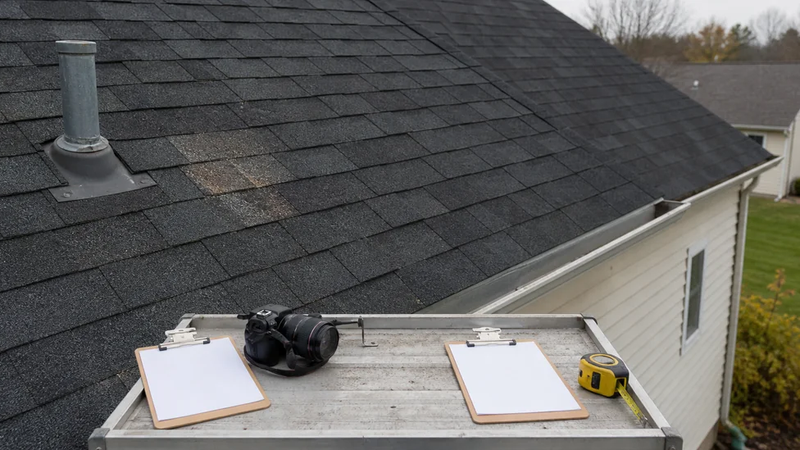
A useful evaluation maps defects by roof plane and records panel condition, seams, fasteners or clips, flashings, penetrations, drainage, and accessible conditions below the roof. It should also identify the roof profile and materials so replacement parts and sealants can be checked for compatibility.
Ask for two conclusions: what caused each observed defect, and whether the proposed work corrects that cause. When the extent of corrosion, moisture, or attachment failure cannot be established visually, targeted testing or limited openings may be needed.
The practical dividing line is durability. Choose repair when a bounded scope can restore reliable performance without depending on failing surrounding materials. Choose replacement when the defect pattern shows that the existing roof can no longer provide a dependable base for lasting repairs. A qualified roof evaluation is appropriate when hidden moisture, structural condition, or system-wide attachment remains uncertain.