On this page
Repair localized damage when the surrounding system is sound
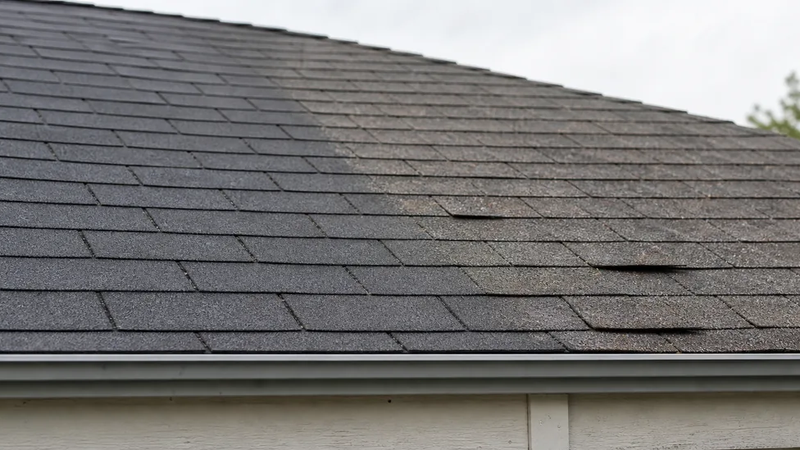
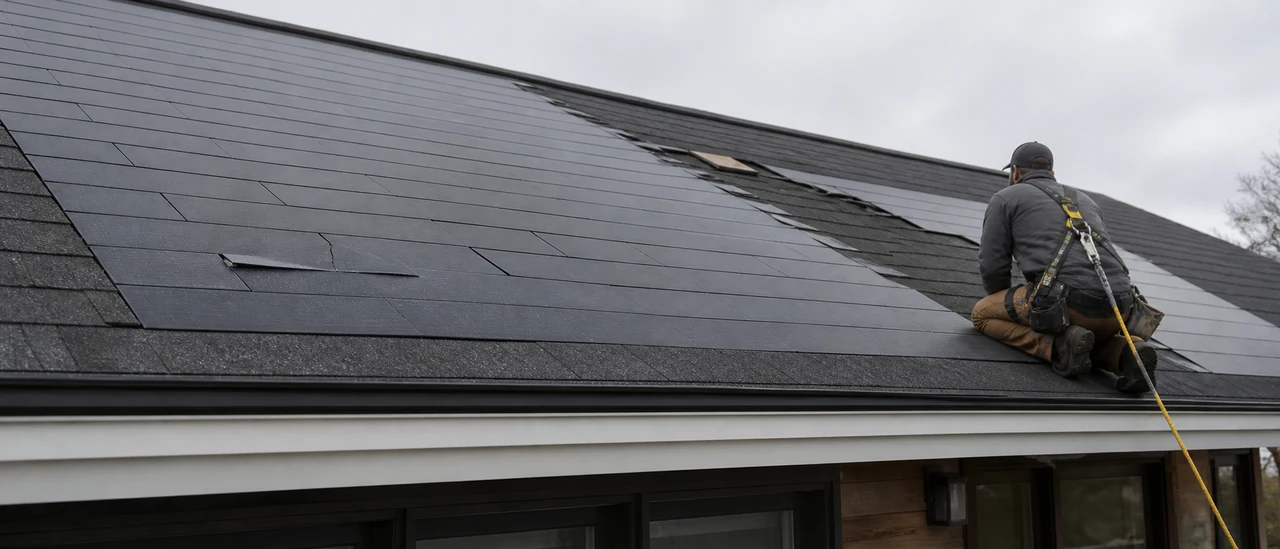
A solar shingle roof should usually be repaired when damage is confined to a small, clearly defined area and the surrounding roof can still provide reliable weather protection. Replacement becomes the better choice when defects are widespread, concealed layers are deteriorated, or a limited repair cannot restore both roofing and electrical performance.
Solar shingles are a form of building-integrated photovoltaics. Unlike rack-mounted panels, the energy-generating material is part of the roof covering itself. A repair decision therefore has two inseparable questions: can the roof keep water out, and can the photovoltaic system operate safely?
Conditions that favor repair
Repair is most defensible when an inspection finds all of the following:
- damage is limited to a few shingles or one roof detail;
- adjacent shingles, flashing, underlayment, and visible decking remain serviceable;
- the leak path, if any, can be traced and corrected within the repair area;
- compatible replacement units and approved installation details are available; and
- electrical testing isolates the fault and confirms the unaffected circuits can remain in service.
A localized repair may include replacing individual shingles, rebuilding a small flashing detail, correcting a connector problem, or repairing limited decking after the affected roof covering is removed. The finished work must restore drainage, flashing continuity, attachment, wiring protection, and the intended electrical configuration—not merely make the surface look uniform.
When replacement is the sounder scope
| Inspection finding | Repair is more plausible | Replacement becomes more plausible |
|---|---|---|
| Damage pattern | One isolated area with clear boundaries | Repeated or widespread damage across roof planes |
| Layers below | Dry, firm, serviceable materials around the opening | Wet, decayed, delaminated, or broadly compromised materials |
| Electrical condition | One identifiable, replaceable fault | Multiple faults, damaged wiring paths, or uncertain isolation |
| Compatibility | Matching units and installation details are available | Necessary units or connectors cannot be sourced or integrated |
| Remaining roof condition | Surrounding roof has meaningful service life | Other areas are near failure or need recurring repairs |
Replacement does not always mean every roof plane. A qualified evaluation may support replacing one integrated section while retaining sound sections, provided the transition can be flashed, wired, and documented correctly. Conversely, scattered failures can make a series of small patches less reliable than one coherent replacement scope.
Treat damaged solar roofing as electrical equipment
Do not lift, cut, disconnect, or probe solar shingles to investigate damage. OSHA identifies electric shock, arc-flash, fall, and burn hazards in solar work. Keep people away from loose or exposed components and have electrical isolation handled by qualified personnel.
What the evaluation should document
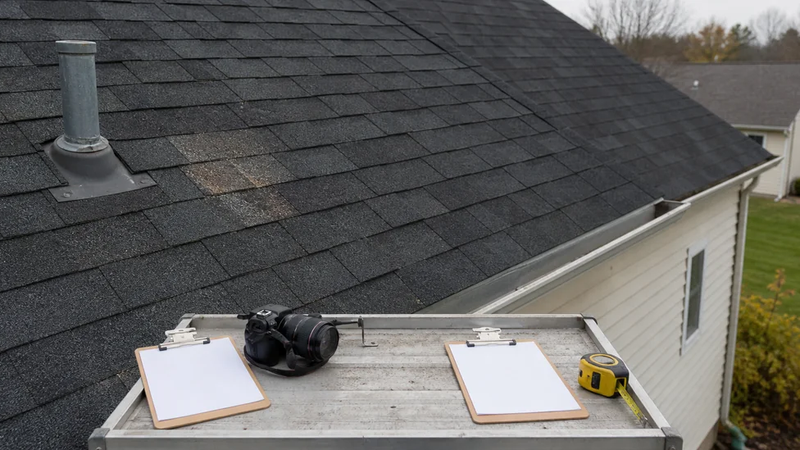
A useful scope starts with a roof plan marking damaged units, leaks, penetrations, transitions, and inaccessible areas. It should record moisture or decking findings where removal is justified, plus electrical test results, fault locations, and any circuits left out of service.
The evaluator should also confirm that replacement units, connectors, fastening details, flashing methods, and shutdown procedures are compatible with the existing assembly. Installation records, prior repair notes, wiring diagrams, and applicable warranty documents can prevent guesswork. Local permit and inspection requirements matter too; for example, one municipal reroofing guideline requires an inspection of flashing and underlayment before work proceeds, but requirements vary by jurisdiction.
The deciding question is not whether a patch is physically possible. It is whether a limited scope can restore a continuous, code-compliant roof assembly and a safely functioning electrical system without leaving known weak areas. When that cannot be demonstrated, replacement of the affected section—or the full roof—is the more supportable decision.