On this page
Repair when the problem is limited and the roof remains sound
Repair a standing-seam metal roof when the defect is isolated, the surrounding panels and seams remain serviceable, and the repair can preserve water shedding and panel movement. Replacement becomes the stronger choice when deterioration is widespread, the attachment or substrate is compromised, or opening the roof reveals wet or damaged materials across a broad area.
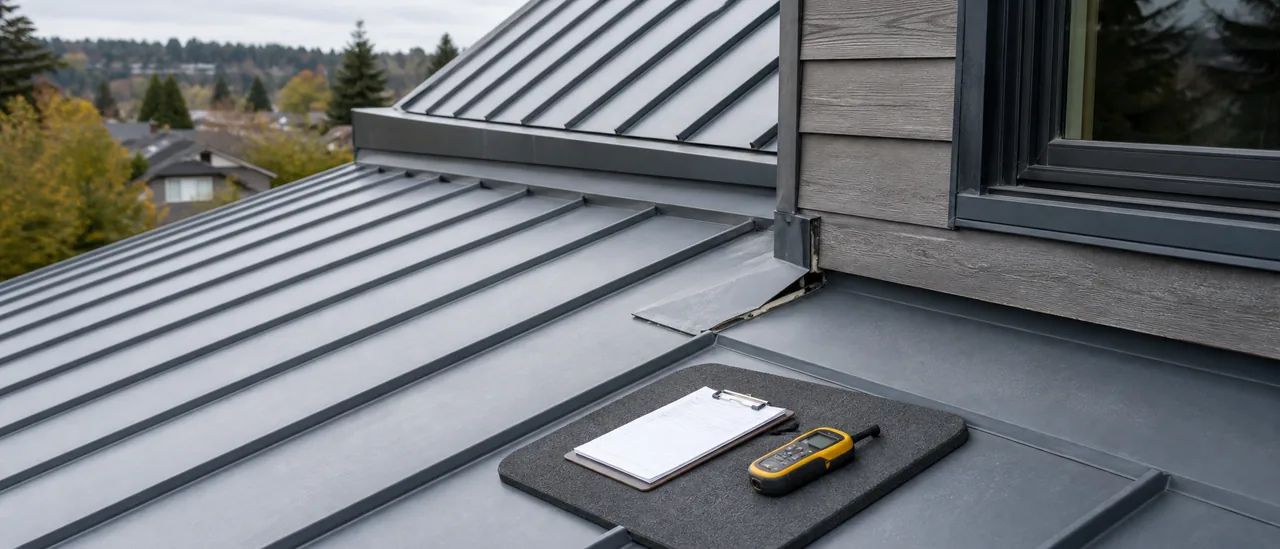
“Standing seam” describes metal panels joined by raised vertical seams. Those seams may snap together or be mechanically folded, and concealed clips often secure the panels while allowing thermal movement. That means a repair must address the roof as an assembly—not merely cover the visible symptom.
Conditions that favor repair
Localized work is reasonable when an inspection traces the problem to a defined component and the rest of the roof is in good condition. Examples include a damaged panel, a discrete flashing defect, a loose or missing trim piece, or a seal at one penetration that can be rebuilt with compatible materials.
The proposed work should also restore the original drainage and movement details. Replacement panels need a matching profile so their joints and seals engage correctly. Clips and other attachment parts must fit the particular panel system and maintain its intended movement and load path.
Age alone does not settle the question. A Metal Construction Association field study of one specific class—low-slope, unpainted 55% aluminum-zinc-coated steel standing-seam roofs—found that some corroding ancillary components could be remediated without ending the roof’s service life. That finding cannot be generalized to every metal, coating, slope, or exposure, but it shows why component condition matters more than a birthday.
| Inspection finding | Repair is more supportable when… | Replacement becomes more supportable when… |
|---|---|---|
| Panels and coating | Damage is confined and sound matching panels are available | Corrosion, perforation, or coating failure is widespread |
| Seams and clips | A few identifiable details can be restored to system requirements | Seams have failed repeatedly or attachment distress spans multiple roof areas |
| Flashings and penetrations | Leakage traces to one repairable transition | Numerous transitions are failing or past repairs obscure the water path |
| Deck, insulation, and structure | Materials below the repair area are dry and sound | Moisture, decay, deformation, or corrosion extends beneath broad sections |
When the answer changes to replacement
Repeated leaks in different locations suggest a system-level problem, especially when seams, clips, fasteners, flashings, and panels show related distress. Replacement also deserves consideration when compatible panels or proprietary components are unavailable; an improvised patch that restrains thermal movement can create another failure point.
Hidden conditions can change a repair plan. Interior staining identifies where water appeared, not necessarily where it entered. Selective openings or other appropriate investigation may reveal wet insulation, a deteriorated deck, corroded supports, or failed underlayment beyond the visible defect.
Severe wind displacement, missing roof parts, or fire-related distortion calls for a broader assessment. Industry guidance says repair-versus-replacement decisions after hail require an in-depth evaluation of the panels, existing design limits, and the completeness of the roof. Hail dents alone do not establish functional failure; coating damage, open seams, displaced components, and water entry carry more weight.
Compare complete scopes, not labels
A useful repair proposal identifies the defect, affected area, compatible materials, access needed, and how concealed wet or damaged materials will be handled. A replacement proposal should state whether it covers panels only or also flashings, insulation, underlayment, deck repairs, and attachment upgrades.
What to document before deciding
Record leak locations and dates, prior repairs, panel profile and material, coating condition, seam type, penetrations, and visible movement or corrosion. Keep original drawings, installation instructions, and warranty documents if available. They can establish which clips, sealants, details, and repair procedures belong with the system.
Because walking on metal roofing can be hazardous and can damage panels, the final scope should follow a close evaluation by someone experienced with standing-seam assemblies. The useful conclusion is not simply “repair” or “replace,” but which components failed, how far the condition extends, and whether the proposed work restores a coherent roof system.