On this page
Start before replacement becomes urgent
Begin setting money aside when your roof enters the last quarter of its reasonable service-life range. For a roof expected to serve about 20 years, that means starting around year 15—not waiting for a leak or a failed inspection.
Move that timeline forward if the roof has recurring leaks, widespread wear, repeated repairs, or an uncertain installation date. Delay it only when reliable records and a condition evaluation support a longer planning horizon.
This is a budgeting trigger, not a prediction that the roof will fail on schedule. The National Park Service reports that asphalt shingles last about 20 years on average. Other coverings and individual roofs can have very different planning ranges.
Use a planning window, not one birthday
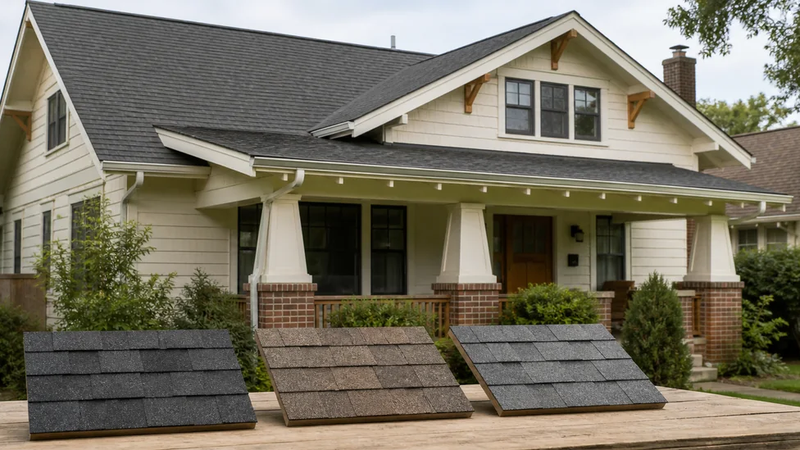
First, identify the roof covering and its approximate installation year. Permits, invoices, warranty documents, and previous inspection reports are better starting points than appearance alone.
Then place the roof in a practical planning window:
| Current situation | Budgeting response |
|---|---|
| Early in expected service, with no significant defects | Maintain a small home-repair reserve and keep records current |
| Entering the final quarter of the planning range | Begin regular replacement savings and obtain a current condition baseline |
| Age is unknown or records conflict | Treat the timeline as uncertain and prioritize an evaluation |
| Recurring leaks, broad deterioration, or repeated repairs | Accelerate the budget; condition may matter more than age |
The five-year lead in the 20-year example is a household planning rule, not an industry lifespan guarantee. It provides time to save gradually, compare the scope of future work, and avoid making a major decision during an active leak.
Let condition change the calendar
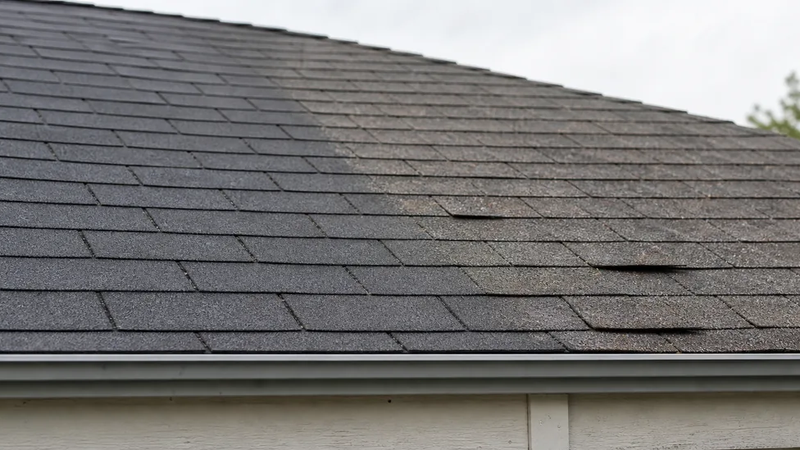
Age alone cannot tell you whether replacement is near. Curled, cracked, loose, or missing roofing; damaged flashing; persistent interior staining; and repairs that repeatedly fail all justify a closer look. One isolated defect may still be repairable, while deterioration across multiple roof areas can make a replacement reserve more urgent.
Local exposure also matters. Strong sun, freeze-thaw cycles, wind, overhanging trees, drainage problems, and inadequate maintenance can change how a roof ages. Regular exterior observations and documented maintenance help reveal whether the original planning range still makes sense.
Do not wait for water indoors
A leak is a late budgeting signal, not the starting line. If staining grows, materials are loose, or the roof may be unsafe to access, avoid walking on it and arrange a qualified evaluation of current condition.
Keep the next decision evidence-based
Review the roof after major wind or rain and update your plan when repairs reveal broader deterioration. The RICOWI field guide hosted by the Insurance Institute for Business & Home Safety evaluates current roof condition using factors that include age and weathering. It also distinguishes opportunities for repair from replacing an entire roof after weather events.
A useful planning file can be simple:
- installation date and roof-covering type;
- warranties, permits, invoices, and past reports;
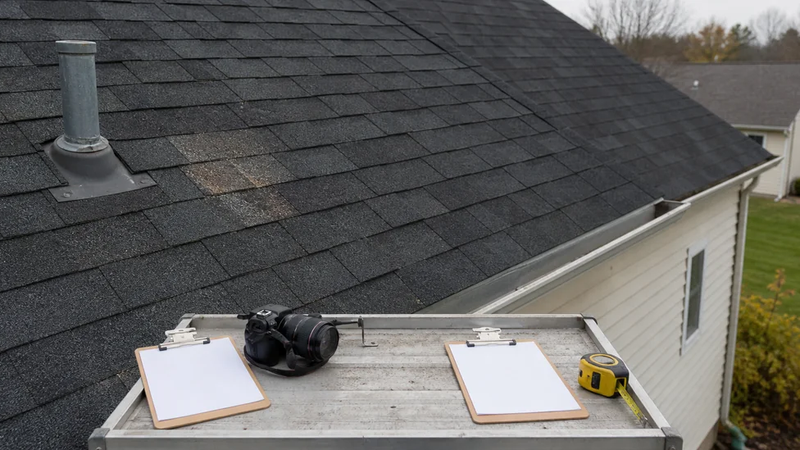
- dated photos and repair records;
- notes about leaks, drainage, and severe-weather exposure; and
- a current evaluation when age, access, or condition is uncertain.
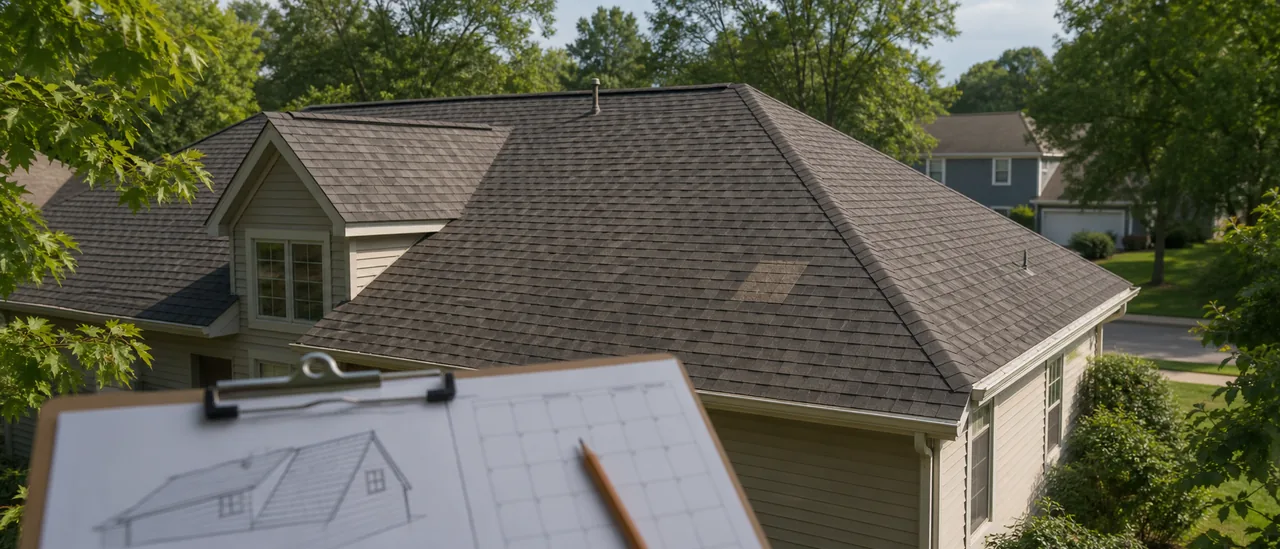
Revisit the budget each year. If the evidence still supports several years of service, continue saving at a steady pace. If defects are spreading or repairs are becoming repetitive, shorten the timeline. A qualified roof evaluation is appropriate when visible evidence and records cannot establish whether continued repair is reasonable.