On this page
Texas leads the latest major-hail count
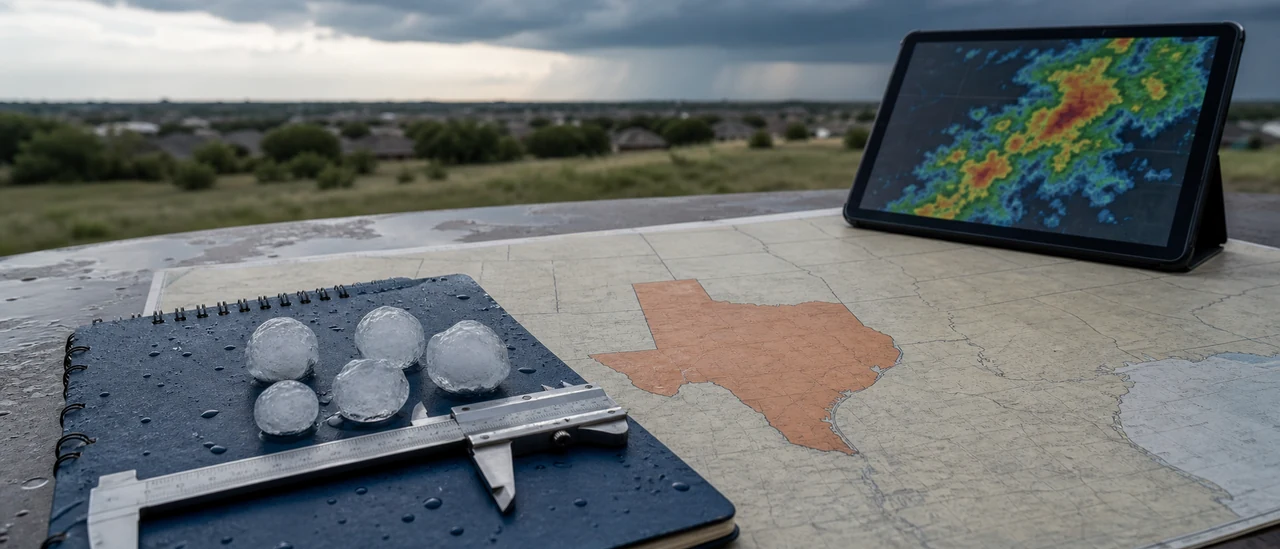
Texas is the clearest current answer—but only when “most” means the most reported major hail events. The Storm Prediction Center’s 2025 annual preliminary state totals list Texas first with 902 hail reports. Kansas was second with 375, followed by Oklahoma with 369. The National Weather Service defines severe hail as at least one inch in diameter.
That ranking describes hail occurrence, not a verified total of damaged buildings, vehicles, and crops. NOAA’s public storm records do include property-damage estimates, but they are broad estimates rather than a complete accounting of every loss. No single NOAA ranking establishes which state had the greatest total hail damage across all property in 2025.
Why “damage” changes the answer
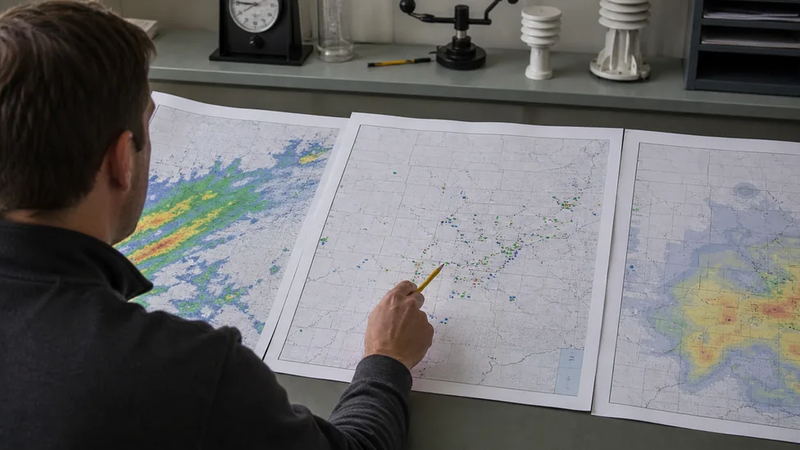
State rankings depend on what is counted and over what period. A national hail-report table counts qualifying reports. A radar-derived swath estimates where hail may have occurred. A claims table covers only the properties, policies, and costs inside that dataset.
| Measure | What it establishes | What it does not establish |
|---|---|---|
| Radar hail estimate | Where radar algorithms indicate hail or estimate its size | Hail at the ground or damage to a particular property |
| Surface hail report | Hail observed or reported at a place and time | The number of properties damaged or their repair cost |
| Damage or claims record | Documented losses within that record’s scope | Every insured and uninsured loss statewide |
The difference is not academic. State Farm’s company-specific 2022 hail-cost table ranked Minnesota first and Texas second. That does not overturn the 2025 event ranking; it shows how a different year and a narrower claims portfolio can produce a different leader.
A hail map is evidence of weather, not proof of damage
NOAA’s MESH product means Maximum Estimated Hail Size. It helps identify hail after a storm, but “estimated” matters: a radar footprint alone cannot confirm a surface observation, an impact, or a property loss.
The practical bottom line
For a short, current answer, use Texas, citing the SPC’s first-place 2025 preliminary hail-report count. “Preliminary” means reports issued shortly after events and treated as the best available data until final Storm Data are published. For a statement about actual property damage, name the dataset, year, and measure instead of treating an event map as a damage ranking.
NOAA also warns that Storm Events property and crop figures are best guesses from available information, are not adjusted for inflation, and may appear 75 to 90 days after a data month ends. Those limits make precise comparisons sensitive to reporting completeness and the date of analysis. Recheck the ranking whenever a newer full year becomes available.