On this page
Assign one local person to own the checks
The owner or person managing the house should name a reliable local contact to monitor for attic leaks. That contact might be a property manager, caretaker, trusted neighbor, or family member with permission to enter.
Their job is early detection and response—not roof diagnosis. They should know whom to call, where water can be contained safely, and how to reach the owner promptly. A vague plan in which “someone will probably look” leaves an active leak nobody’s responsibility.
What the monitor should check
The monitor should look after heavy rain, wind-driven rain, snowmelt, or another event likely to expose a known weak area. For a longer vacancy, periodic visits between weather events provide a useful second layer. The appropriate interval depends on roof condition, local weather, access, and how quickly someone could respond.
A practical check can include:
- ceilings and upper walls for new stains, bubbling paint, or dampness;
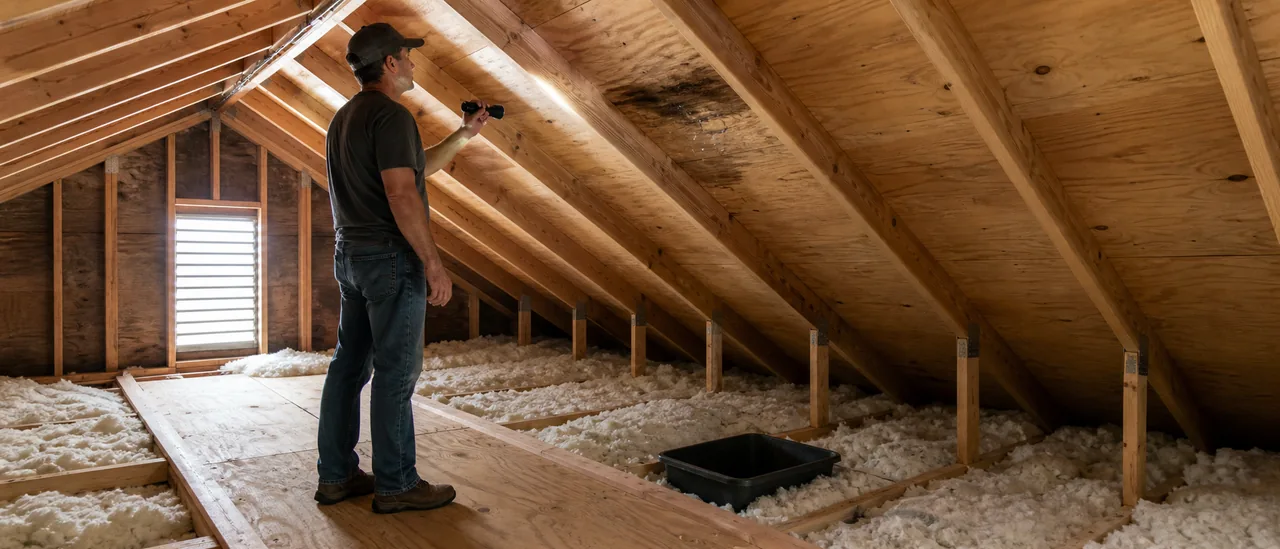
- the attic entry and safely visible roof decking, rafters, and insulation;
- containers or absorbent materials previously placed under a known drip; and
- indoor humidity or water-sensor alerts that need in-person confirmation.
Remote sensors can flag unexpected moisture or irregular water use, according to EPA guidance. They are an alerting layer, not the person in charge; an in-person check still determines what happened and what response is needed.
Give the monitor a simple escalation rule
New dripping, wet insulation, spreading stains, sagging finishes, or an electrical fixture near moisture should trigger prompt professional evaluation. The monitor should not wait for the next scheduled visit to report it.
When a professional should take over
Use a qualified roof inspector or roofing professional when a leak is active, recurring, widespread, or difficult to trace. Professional help is also appropriate when attic access lacks secure flooring, visibility is poor, or the monitor would need to climb onto the roof.
Attics can contain exposed nails, wiring, deep insulation, and fragile ceiling surfaces. ENERGY STAR advises walking only on joists or truss chords—not drywall or insulation—to avoid falling through the ceiling. A monitor who cannot inspect safely should stop at the access opening and report what is visible.
Speed matters after water is found. EPA guidance identifies attics as commonly overlooked wet areas and recommends completely drying wet areas within 48 hours to prevent mold growth. The response plan therefore needs a reachable decision-maker and a qualified backup, not merely a camera or occasional drive-by.
Practical bottom line
Accountability stays with the owner or property manager, while routine observation can be delegated to one named local person. Put the visit triggers, safe inspection limits, contact numbers, and authority to request help in writing. That arrangement gives an empty house the best chance of turning a new drip into a prompt repair decision instead of a long-running hidden leak.