On this page
Yes, but visible dents are uncommon
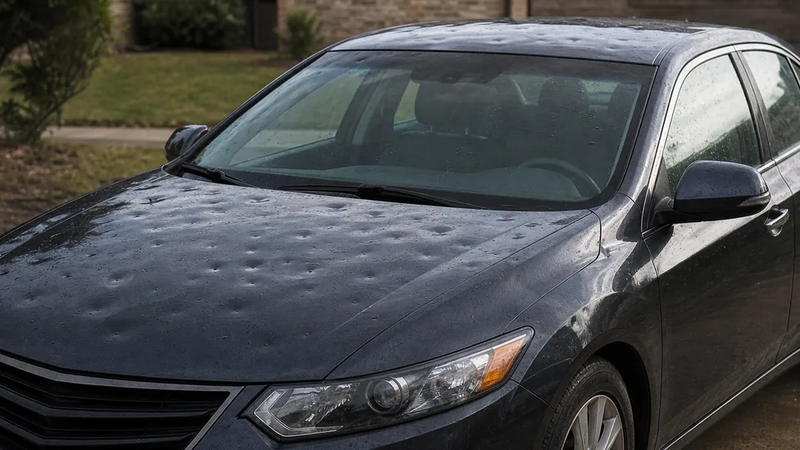
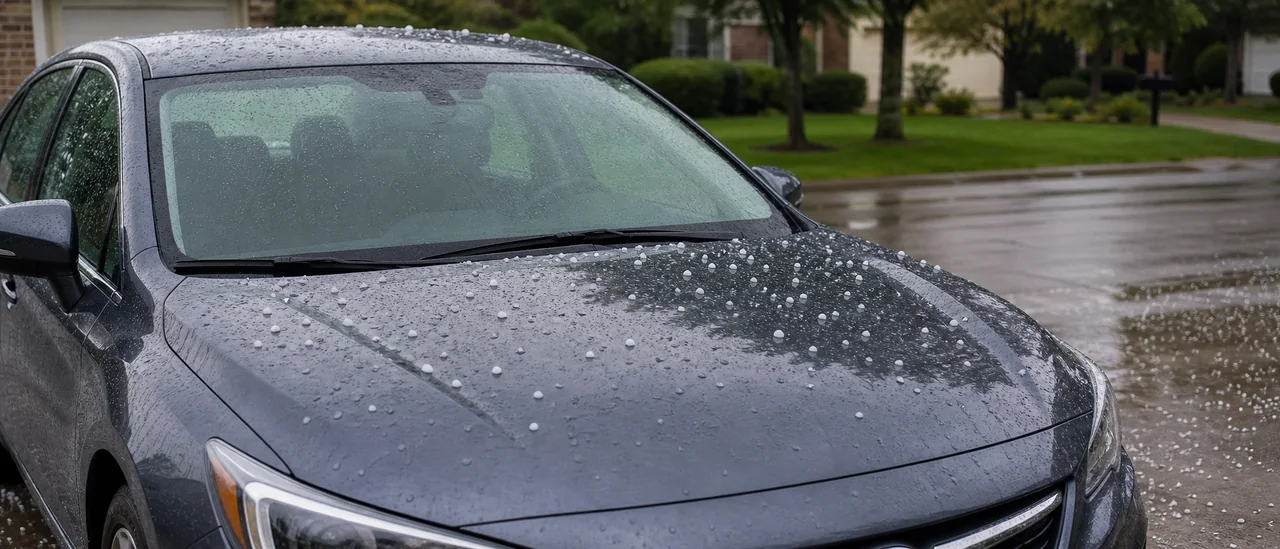
Yes—half-inch hail can damage a car, but visible dents are uncommon under ordinary conditions. A half-inch stone measures about 12.7 millimeters across, placing it below the sizes most often associated with visible body-panel damage.
That is a probability, not a no-damage guarantee. A 2024 peer-reviewed hail-damage study describes vehicle-body dents as typically beginning around 2 centimeters, or about 0.79 inch. Half-inch hail is well below that benchmark. The National Weather Service nevertheless cautions that small hail driven by powerful thunderstorm winds can cause damage.
Why size is only the starting point
Hail size matters, but one reported diameter does not describe every impact. A half-inch report may describe the largest measured stone at one observation point rather than conditions across the storm.
For half-inch hail, risk rises when:
- powerful thunderstorm wind drives the small stones;
- some stones at the car are larger than the reported half-inch observation;
- the car remains exposed through a longer or more concentrated burst; or
- vulnerable paint, trim, or body panels are struck repeatedly.
Light surface marks can also come from debris carried by the storm rather than the ice itself. A storm can therefore leave one nearby car untouched while another shows a small dent or mark.
Radar is not a damage inspection
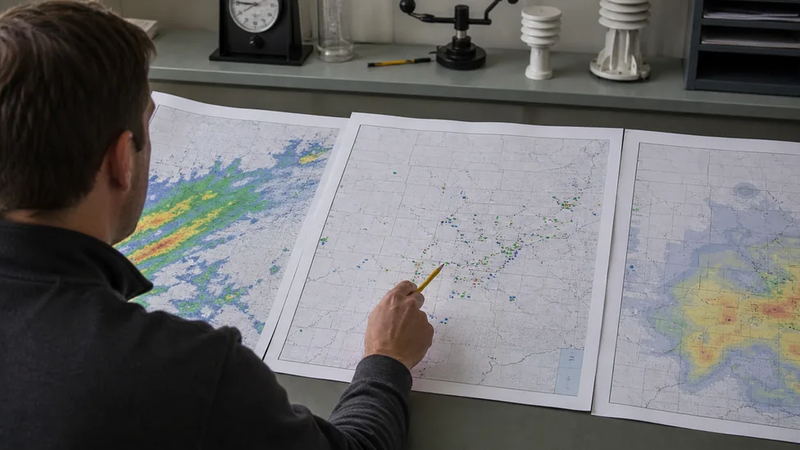
The peer-reviewed hail-damage study evaluates radar-derived size estimates and reports substantial uncertainty from radar-detection limits. Such products help assess a storm over an area; they do not measure every stone that reaches one parking space.
Three observations answer three different questions
A radar estimate describes what instruments infer within a storm. Observed hail is measured or compared with known objects at ground level. Confirmed damage requires evidence on the vehicle itself. None of these automatically proves the other two at one address.
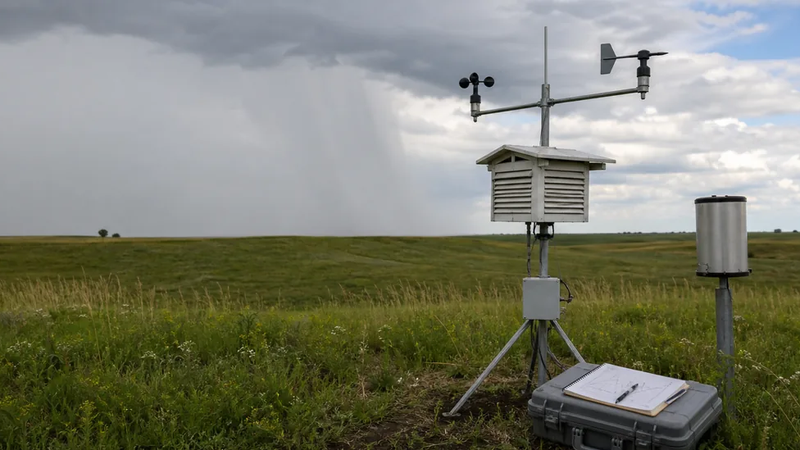
The National Weather Service asks spotters to report the largest stone and any damage separately. It recommends measuring hail with a ruler when safe, because familiar-object comparisons are only loose estimates. “Half-inch hail” should therefore mean an observed or estimated diameter, not a damage rating.
Practical bottom line
Most cars exposed only to half-inch hail will not develop obvious dents, especially when the hail is soft, brief, and falling without strong wind. Damage remains possible, so size alone cannot rule it in or out.
After the storm has passed and conditions are safe, examine the clean, dry vehicle in broad, angled light. Look across the roof, hood, and trunk for shallow changes in reflection, but treat the actual surface condition—not a radar graphic or neighborhood hail report—as the evidence.