On this page
Yes—when the problem is localized
Yes, a single roof leak can often be repaired without replacing the entire roof, provided its source is localized and the surrounding roof remains serviceable. The repair must correct the entry point and any wet or deteriorated material beneath it.
A leak is a symptom, not a measure of repair size. One ceiling stain might trace to a damaged shingle, failed flashing, an open seam, or a roof penetration. It might also begin several feet away because water can travel beneath the covering before it becomes visible indoors.
Three conditions support a localized repair
The entry point can be identified; adjacent roofing can be disturbed without breaking apart; and the deck or other concealed components need only limited correction. If one condition fails, the repair area may have to expand.
What determines whether repair is practical
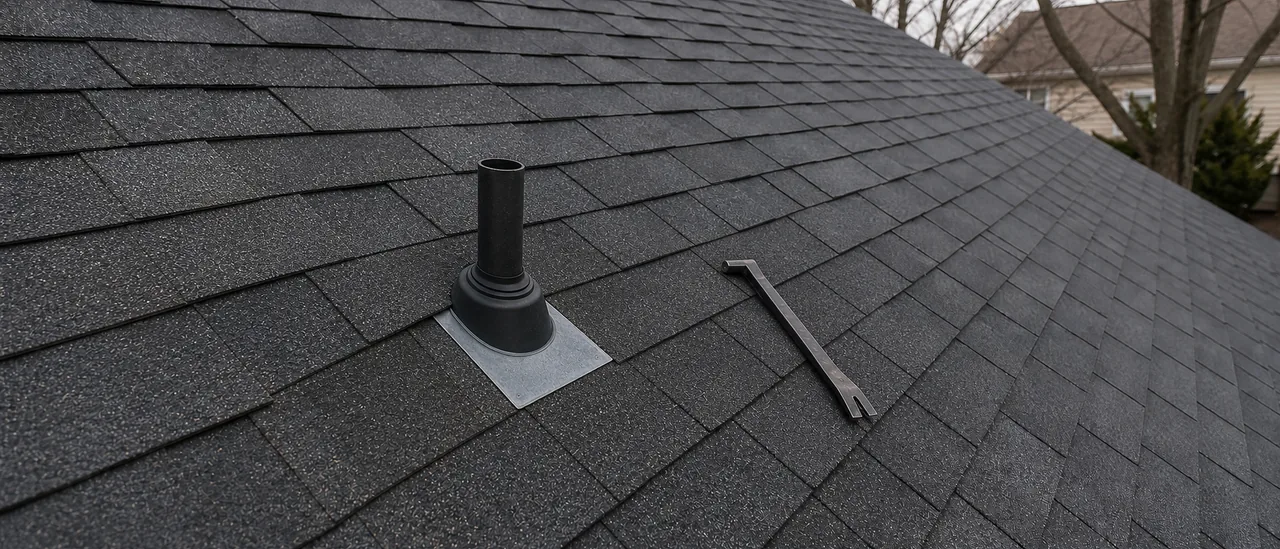
The roof type matters. Current asphalt-roofing technical guidance says most system components can be repaired independently without disturbing a large roof area. Manufacturer instructions show how an individual shingle can be removed by carefully opening adjacent seals and fasteners, then installing a same-size replacement and resealing the disturbed shingles. Tile, metal, and low-slope membrane roofs require different materials and details, so an asphalt-shingle technique is not universal.
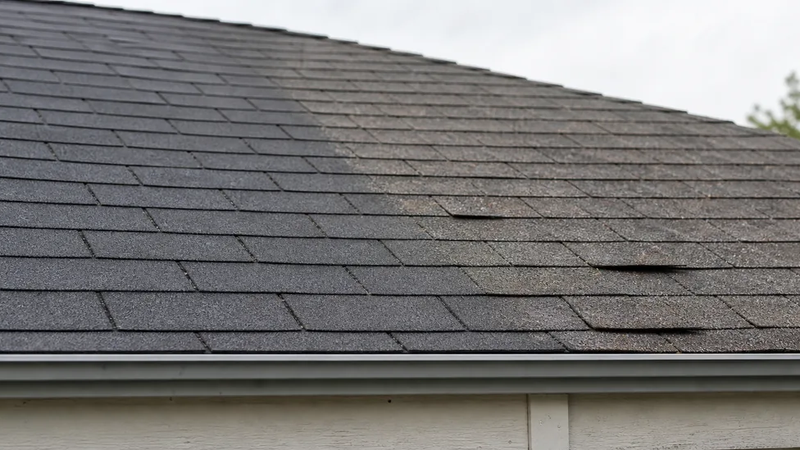
The surrounding material matters just as much as the visible defect. A sound shingle can often be separated from its neighbors, but an old, brittle, curled, or poorly adhered field may crack as the repair is opened. A compatible replacement also needs to fit the existing layout and follow the applicable installation instructions.
Hidden moisture can enlarge the scope without requiring a whole new roof. Wet insulation may need removal, and localized deteriorated decking may need replacement before the covering is restored. What matters is whether those conditions stop near the leak or continue across a broader area.
When replacement becomes more likely
One indoor leak does not guarantee one isolated roof defect. Broader work becomes more reasonable when inspection finds extensive leakage, deterioration in several areas, repeated failures, widespread loss of adhesion, or a deck problem that extends beyond a practical patch. In those conditions, a small repair may have no serviceable surrounding material to connect to.
Roof age informs that judgment, but age alone does not decide it. A newer roof can have a poorly detailed penetration; an older roof can still have serviceable surrounding material. The decisive evidence is the condition of the roof system around and beyond the entry point.
Practical bottom line
The right question is not simply how many drips appeared. It is whether an inspection can trace the entry point, define the affected area, and leave a durable connection to sound existing material. If it can, a focused repair is reasonable. If deterioration is widespread or the repair cannot tie into serviceable roofing, replacement may be the more reliable scope.
Related reading: What If Matching Shingles Are Unavailable?