On this page
An exact match is not always required for a repair
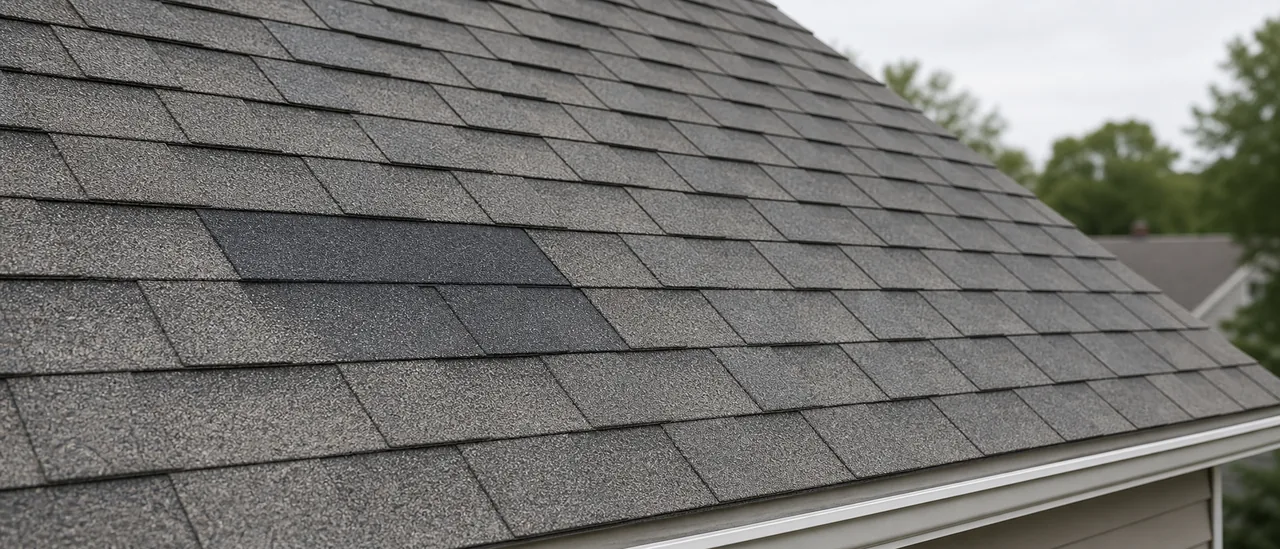
If the original asphalt shingle is unavailable, the roof does not automatically require complete replacement. A localized repair may still work when a currently available shingle fits the existing layout, can be installed correctly, and leaves the surrounding roof intact. The repair may remain visibly different.
“Matching” can mean two separate things. A functional match has suitable dimensions and installation characteristics for the repair. An aesthetic match closely resembles the existing type and color. A shingle can satisfy the first test without satisfying the second.
Similar color does not prove a suitable fit
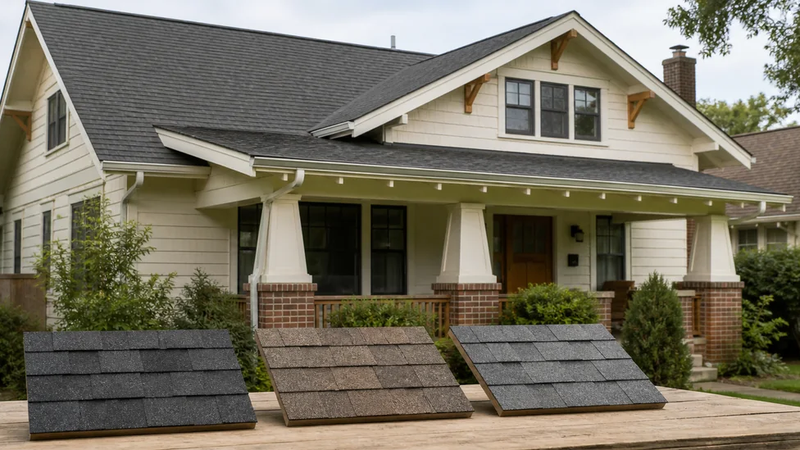
Compare the proposed replacement with an actual shingle from the roof—not only a photograph or color name. Confirm its size, exposure, profile, fastening pattern, and installation instructions before judging the appearance.
Start with identification and availability
Check leftover bundles, invoices, installation records, and the markings on a safely removed sample. Retained shingles from the original installation offer the best chance of a close match.
If none remain, the Asphalt Roofing Manufacturers Association recommends using the original color name and installation year to help locate a current option. It also notes that manufacturers may identify color blends similar to discontinued materials.
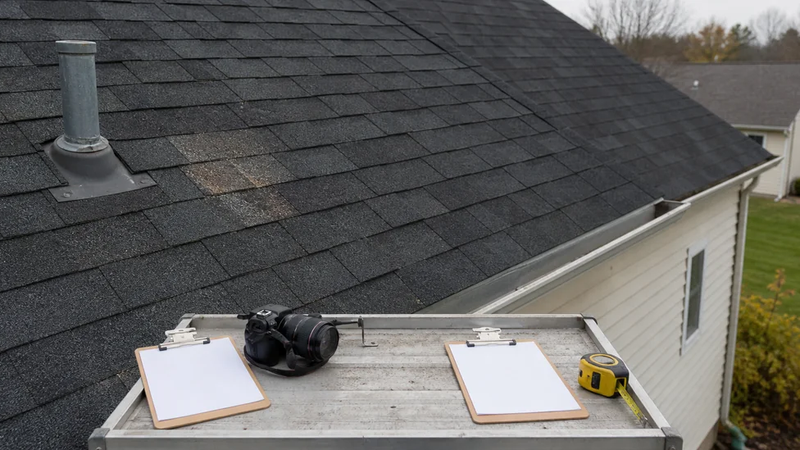
A good evaluation should document:
- the existing shingle’s type, size, profile, and approximate age;
- whether the original material or a suitable substitute is actually available;
- whether adjacent shingles can be lifted and resealed without damage; and
- how the proposed repair will look from normal viewing areas.
Expect some color difference
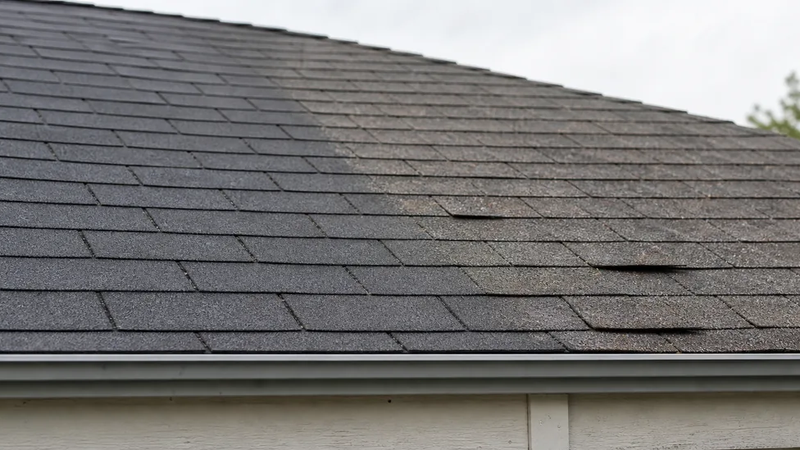
New shingles can stand out even when the original model and color are found. Existing shingles have aged outdoors, while replacement material has not. Industry guidance says this initial difference may become less apparent as the repair material ages, but a perfect visual blend should not be promised.
Appearance alone also does not determine whether the repair performs correctly. Individual asphalt shingles can often be separated and replaced within a small area. However, the replacement must fit the old layout; manufacturer repair guidance specifies that a new shingle must be the same size as the old one.
When the repair area may need to grow
A broader repair or replacement becomes more reasonable when no suitable shingle fits, nearby shingles cannot be manipulated without damage, or the proposed patch would conflict with the applicable installation instructions or local requirements. That conclusion should come from the roof’s actual construction and condition—not from color availability alone.
The practical bottom line is to separate fit, repairability, and appearance. Document each one, compare a physical sample on the roof, and obtain a written repair scope that explains any mismatch and the area that must be disturbed.
Related reading: How Soon After a Repair Should the Roof Be Reinspected?