On this page
The direct measurement
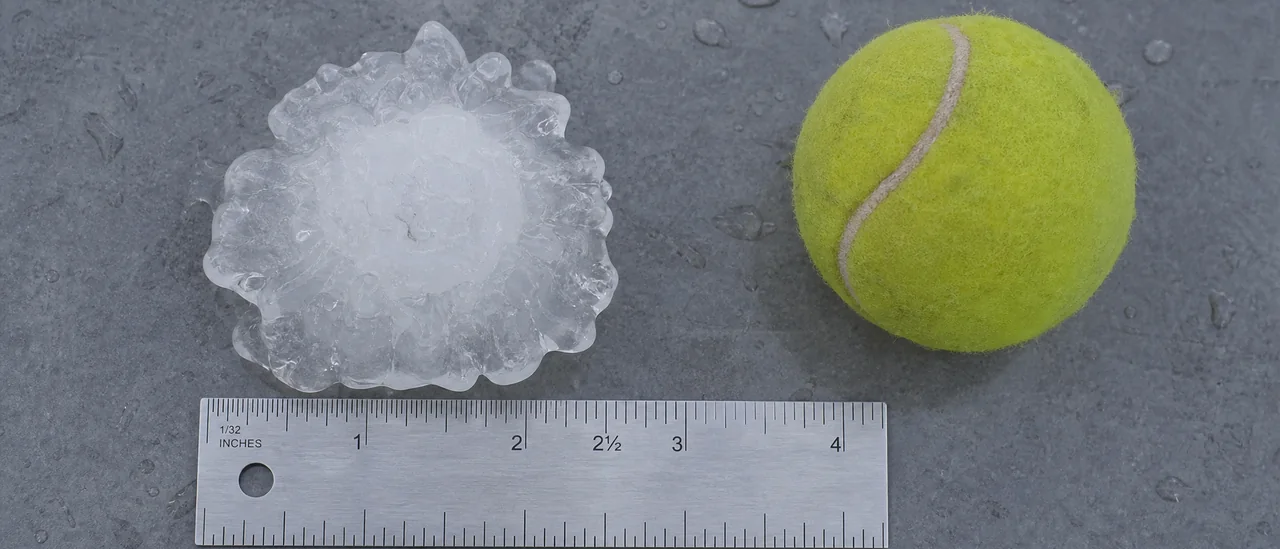
A 2.5-inch hailstone measures 2.5 inches across its widest point—about 6.4 centimeters. The National Weather Service compares that diameter to a tennis ball. It sits between the agency’s 2-inch “hen’s egg” comparison and its 2.75-inch baseball comparison.
That familiar-object label is an estimate, not a promise of a perfect sphere. Hailstones can be irregular pellets or balls of ice. A lumpy stone may therefore look larger from one angle than another.
| Reference | Diameter |
|---|---|
| Hen’s egg | 2 inches |
| Tennis ball | 2.5 inches |
| Baseball | 2.75 inches |
Why 2.5 inches is a meaningful threshold
The NWS defines a severe thunderstorm partly by hail at least 1 inch in diameter. A 2.5-inch stone is two and a half times that diameter threshold. It is plainly large hail, even though it remains below the 2.75-inch hail threshold used for the NWS “destructive” damage-threat category in severe thunderstorm warnings.
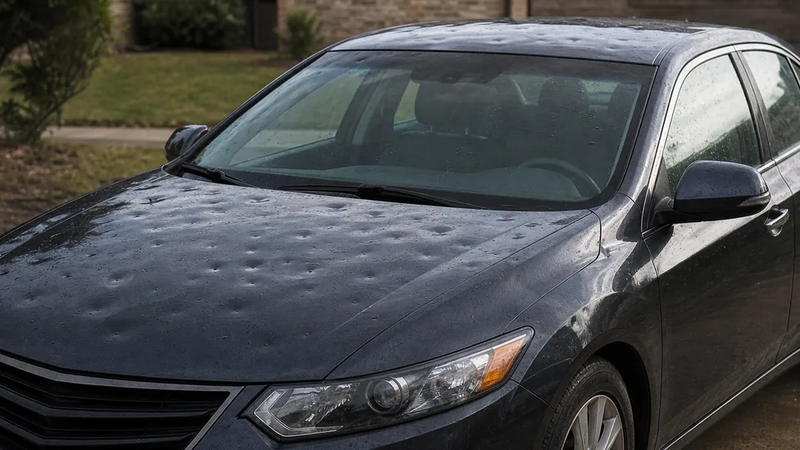
Those labels describe storm hazards. They do not establish what happened to any particular building, vehicle, or field.
Measure the stone, not the nickname
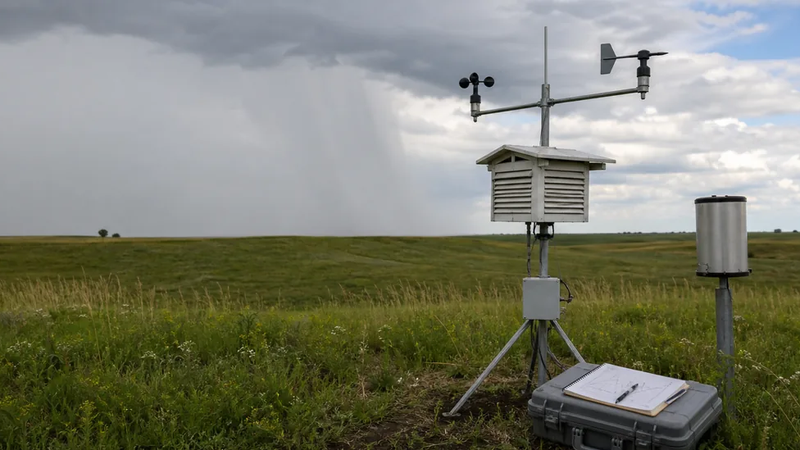
When conditions are safe, the NWS spotter guide recommends measuring hail with a ruler. Measure the largest stone across its widest dimension. If no ruler is available, a tennis ball is the standard comparison for 2.5 inches, but an actual measurement is more precise.
Timing adds uncertainty. Melting can make a stone collected later smaller than it was at impact. A report may also describe only the largest stone a person found, not every stone that fell nearby.
Three different kinds of evidence
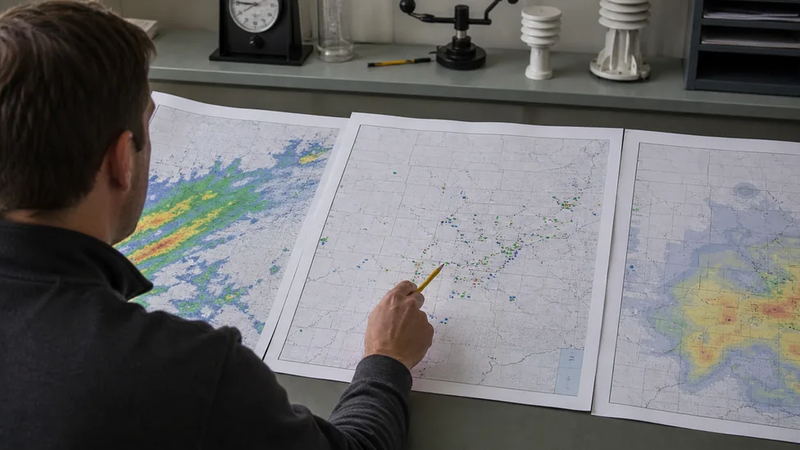
Radar estimate: Radar algorithms infer possible hail and size from signals inside a storm. Observed hail: A person measures or compares a stone at the ground. Confirmed damage: Physical damage is separately documented. None of these automatically proves the other two at one exact location.
What radar and damage reports mean
Dual-polarization radar helps forecasters distinguish hail from rain and other precipitation. NOAA’s Maximum Estimated Hail Size product can support warnings and later event verification. Its name matters: it is an estimate over an area and time period, not a ruler measurement at a specific address.
Likewise, a ground report of 2.5-inch hail confirms the reported stone and location only to the report’s accuracy. It does not confirm that every nearby place received hail of that size. Nor does hail size alone confirm property damage; impact angle, wind, stone shape, material, and exposure can vary.
The practical bottom line is simple: 2.5-inch hail means tennis-ball-size hail by the NWS comparison chart. Use a safe, direct measurement for the stone itself, radar for storm-level evidence, and separate documentation for any claimed damage.
Related reading: How Do You Measure Hail Size?