On this page
What a metal-roof inspection involves
A metal roof is inspected through a systematic visual examination of accessible panels and the components that shed water around them. The inspector identifies visible deterioration, checks likely leak paths, records the inspection method, and notes areas that could not be safely seen. This matters because a surface review can reveal repair priorities without proving the condition of every concealed component.
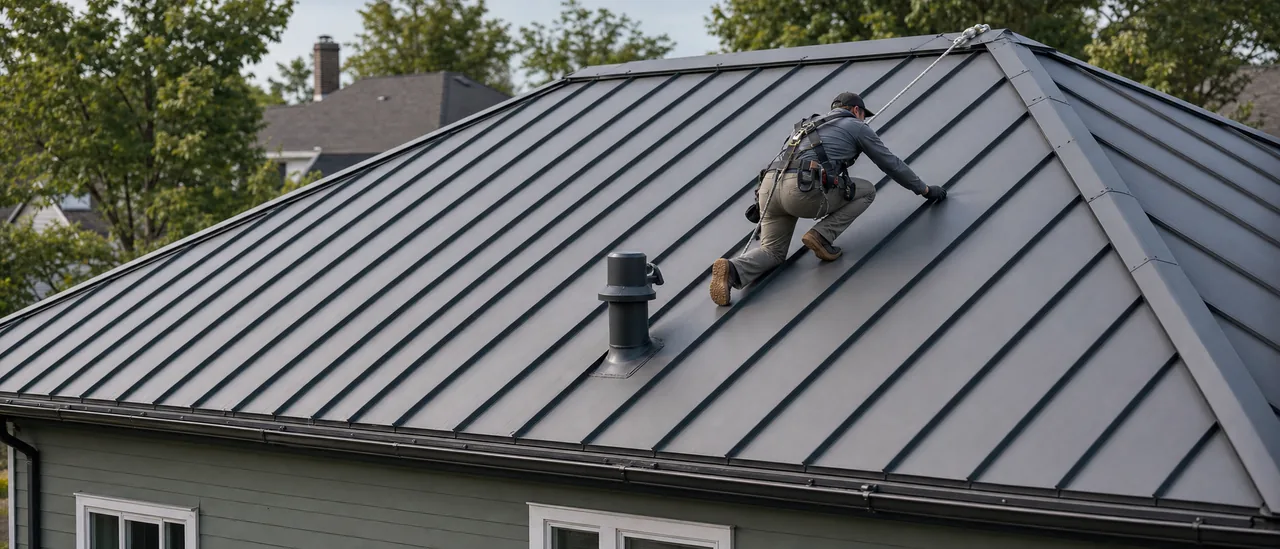
The process usually starts with an overall view from the ground or another safe vantage point. A closer view may follow from a ladder, roof edge, drone, or the roof itself, depending on height, slope, weather, surface condition, and the inspector’s safety judgment. The inspection report should state which method was used.
What the exterior check covers
The inspector follows the roof as a water-shedding system rather than looking only at the broad metal surface. A typical exterior sequence includes:
- Panels and coatings: looking for displaced or deformed panels, punctures, corrosion, open edges, and peeling or blistered finishes;
- Seams, laps, and fasteners: checking visible joints for separation and exposed fasteners for looseness, damage, corrosion, or failed washers;
- Flashings and penetrations: examining transitions at walls, ridges, valleys, vents, chimneys, and skylights;
- Drainage: checking gutters, downspouts, valleys, and low areas for deterioration, blockage, or evidence that water is not leaving normally; and
- Leak clues: comparing reported leak locations with exterior details that could admit water.
These observations are documented with locations and photographs when useful. A questionable area may receive a more detailed visual review to establish the type and extent of deterioration.
Panel design changes the inspection
Exposed-fastener panels allow direct review of many screws and sealing washers. Standing-seam systems conceal most clips and attachments, so a routine visual inspection concentrates on seams, panel movement, flashings, penetrations, and the exposed details that remain visible.
Interior evidence and inspection limits
When an attic or roof underside is readily accessible, the inspector may look for staining, damp materials, corrosion, or daylight at openings. Interior evidence helps narrow the search, but a stain may not sit directly below the exterior entry point because water can travel along framing or panels.
A standard visual inspection is not technically exhaustive. It generally does not require dismantling panels, exposing underlayment, or verifying every concealed clip and fastener. If visible movement, recurring leakage, severe corrosion, or suspected deck deterioration raises a question the visual inspection cannot answer, the report can recommend a more focused evaluation.
Practical bottom line
A sound metal-roof inspection moves from broad observation to close review, then connects exterior conditions with any interior evidence. Its value lies in documenting what is visible, where it occurs, and what remains unknown—not in promising that every hidden defect has been found.
Related reading: How Often Should a Roof Be Inspected?