On this page
The common problems
Architectural shingles are laminated asphalt shingles: extra material is bonded into layers to create thickness and a dimensional appearance. Their construction changes the look, but it does not eliminate familiar asphalt-roof problems.
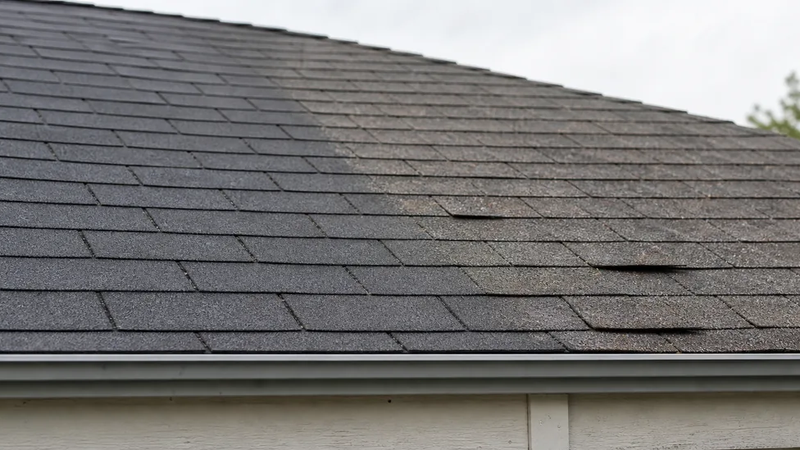
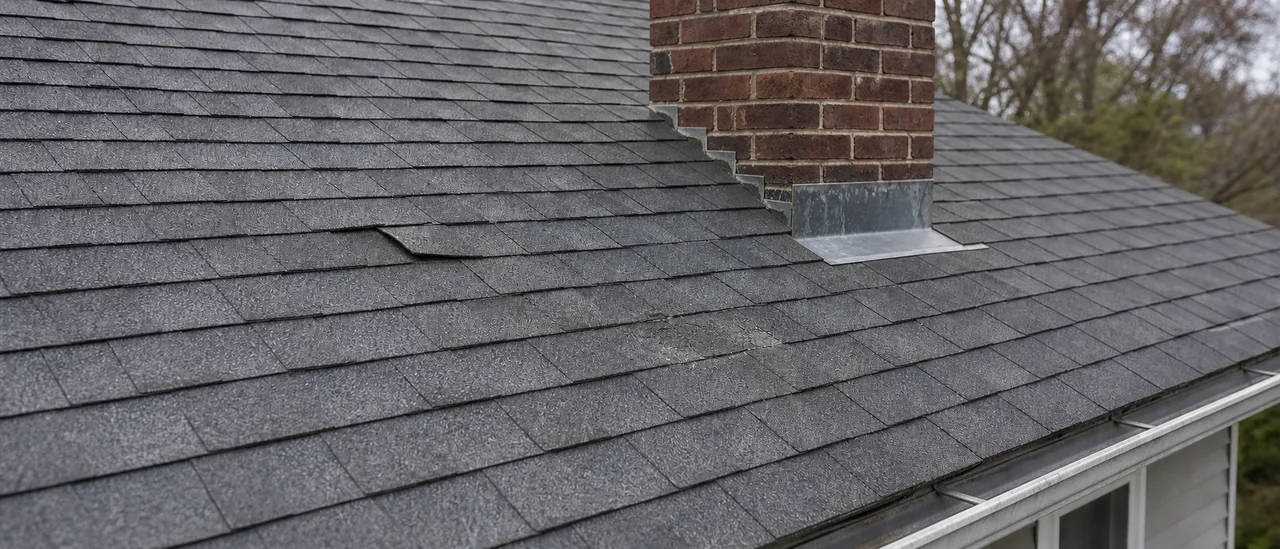
The most common visible issues are cracked, curled, warped, loose, or missing shingles; excessive granules in gutters; and deteriorated flashing. Wind can also break the seal between courses, lift edges, crease shingles, or remove them. Moisture and movement below the covering may produce raised lines or buckles.
What each problem can mean
- Cracking, curling, and surface wear: Shingles can become brittle or distorted as they weather. Broad bald areas or unusually heavy granule accumulation deserve attention because the mineral surface protects the asphalt layer.
- Lifted, creased, or missing pieces: Wind vulnerability depends on more than the shingle style. The Insurance Institute for Business & Home Safety explains that wind can lift unsealed shingles and let water underneath. Fastener placement, sealed tabs, roof edges, and exposure all matter.
- Buckling or waviness: A raised line is not automatically a defective shingle. Wrinkled underlayment, movement in wood decking, backed-out fasteners, or moisture-related deck expansion can telegraph through the roof covering.
- Flashing and detail failures: Loose or deteriorated flashing around walls, chimneys, valleys, and penetrations can admit water even when the shingle field looks serviceable.
- Localized impact or traffic damage: Punctures, tears, scuffs, and displaced granules may follow falling debris, hail, tools, or repeated foot traffic. The shape, distribution, and surrounding evidence are needed to identify a likely cause.
Appearance alone has limits
One symptom rarely proves its cause or the condition of the entire roof. Note its location, pattern, severity, nearby flashing, interior moisture signs, and whether it changes with weather before drawing a conclusion.
Important exceptions
Not every irregular shadow is damage. Architectural shingles intentionally have uneven-looking tabs and color blends, so inspection should distinguish their manufactured pattern from distortion. Likewise, a leak can start at flashing or another roof detail and travel before it becomes visible indoors.
Buckling is especially dependent on conditions. Building Science Corporation documented a hot-humid mechanism in which moisture makes wood sheathing expand, causing underlayment and shingles to buckle; the waviness can relax later as the assembly dries. Persistent or growing distortion warrants evaluation of the layers beneath, not just the exposed shingle.
Practical bottom line
Common architectural-shingle problems fall into four groups: material aging, attachment or sealing failure, movement beneath the shingles, and defects at roof details. A useful assessment identifies the pattern and extent, then connects it with installation, weather exposure, deck condition, and water-entry evidence. A single curled edge, stain, or handful of granules is a clue—not a complete diagnosis.
Related reading: What causes shingle granule loss?